In Euro 2016, England were looking forward to a quarter-final clash against France in Paris. But that never materialised. Their round-of-16 match against Iceland turned into one of the most painful days in the national team’s history.
It also marked a turning point, in more ways than one. Roy Hodgson departed after the tournament, his decision to skip scouting Iceland in person—choosing instead to join his assistant Ray Lewington on a boat trip along the Seine—becoming infamous. Since then, however, England have built a remarkable record: five consecutive quarter-final appearances. When Thomas Tuchel leads his side to Miami, it will mark England’s fifth straight last-eight showing. No other country has reached the quarter-finals of all three of the last World Cups and both European Championships.
Much of the credit goes to Gareth Southgate. His sequence of four quarter-finals is a milestone in itself. Under his leadership, England evolved into a team that expects to go deep into tournaments. This change in mindset was matched by a habit of starting strong: including Tuchel’s World Cup campaign, England have topped their group in their last four major tournaments, losing just once across 15 group-stage matches. Winning the group often provides the most straightforward route to the quarter-finals; ironically, the one time England did not do so—in 2018—it actually opened up an easier path to the semi-finals since holders Germany, their potential quarter-final opponents, had already been eliminated in the group stage.
Throughout their history, England have shown different faces in quarter-finals. Over the past decade, they have become a team capable of advancing from them. Should they beat Norway, they will have won four of their last five quarter-finals. Before that, these matches often represented their ceiling. When Southgate’s team defeated Sweden in 2018, it was England’s first quarter-final victory in 22 years, their first on foreign soil in 28 years, and their first in regulation time since 1966.
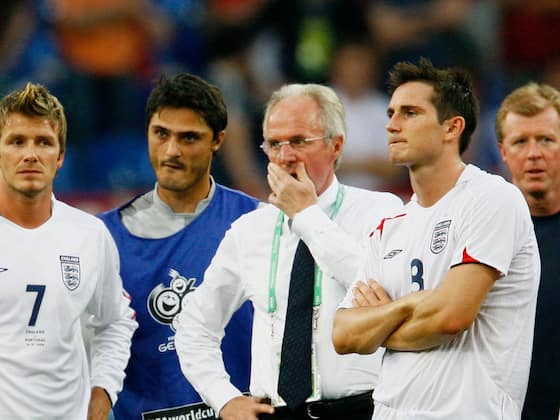
That victory represented a clean break from the past—not merely because, after Sven-Göran Eriksson’s three straight quarter-final exits, England managed only one more until 2018. The last decade has shown that, even without lifting a trophy, England have become far more adept at negotiating knockout rounds and major tournaments in general. It helps explain why some of the most impressive tournament records among English players belong to the current generation: Harry Kane, Jude Bellingham, Declan Rice, John Stones and Jordan Pickford.
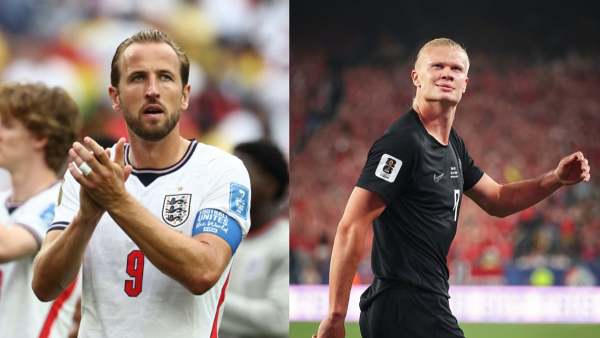
Yet it is also telling who England’s quarter-final victims have been under Southgate: Sweden, Ukraine and Switzerland—none of football’s established giants. Tuchel’s next challenge comes against Norway, a team that stunned Italy in qualifying and then knocked out Brazil in the round of 16. With one of the world’s best strikers, Erling Haaland, leading their attack, Norway are arguably among the top ten teams in world football today, though they have never reached this stage before. Success in football can be self-reinforcing: the nations that regularly win quarter-finals are often those accustomed to doing so.
Looking back, England’s quarter-final victories tell their own story. In 1990, they beat Cameroon—who were then appearing in their first World Cup quarter-final—and in 1996, they edged past Spain on penalties at Wembley.
By contrast, their quarter-final defeats have come against the traditional superpowers: West Germany in 1970, Argentina in 1986, Brazil in 2002, Italy in 2012, and France in 2022. Portugal, who eliminated England in both 2004 and 2006, might not quite fit the superpower label, but they boasted a golden generation, a World Cup-winning coach in Luiz Felipe Scolari, and home advantage in the former tournament. In 1982, under a different format, England’s effective quarter-finals came against West Germany and hosts Spain.
Managers ranging from Sir Alf Ramsey to Roy Hodgson, via Ron Greenwood, Bobby Robson and Sven-Göran Eriksson, would likely have welcomed a quarter-final against Sweden, Ukraine or Switzerland (though perhaps not Eriksson, given his struggles against his homeland). In each case, England faced opponents who had arguably advanced further than expected.
The same could be said of Norway now, particularly given that their draw set up a possible last-16 meeting with Brazil. The counterpoint, however, is that Norway possess a genuine match-winner in Haaland—something Sweden, Ukraine and Switzerland arguably lacked.
For half a century, England rarely entered a quarter-final as favourites, and while post-tournament inquests followed their exits, few of those defeats were truly catastrophic. Yet there remains a specific craft in winning matches that should be won.
England have mastered that art in the past decade. They’ve also managed to succeed where earlier teams failed. In Mexico, unlike in Spain or Portugal, they prevailed in a virtual away match against the hosts. At Euro 2020, unlike in many tournaments since 1966, they defeated Germany—though that time in the round of 16.
Quarter-finals are no longer England’s downfall. Having won only three across their entire history before this recent run, they have now claimed three in the past eight years. A fourth would mark a transformation in their identity—from a team that occasionally reached quarter-finals to one that consistently wins them.
-
Roma set €55m price tag for Manchester United target Manu Koné as Matias Soulé’s agent holds talks with Sunderland and Fulham
-
Only One Can Survive! Football Braces For Explosive Kane vs Haaland Showdown In FIFA World Cup 2026 Quarter-Final
-
'Epic, Experiential & Human': Christopher Nolan, Matt Damon, Tom Holland & Emma Thomas Discuss The Odyssey At Mumbai Press Conference

-
'Pichle Janam Mein Saanp...': Uorfi Javed Calls Out Riva Kishan's Double Stand After Voting Out Sister Dolly Javed From Alliance

-
Marco Silva targets Joao Palhinha reunion as new Benfica manager after Tottenham decline permanent deal