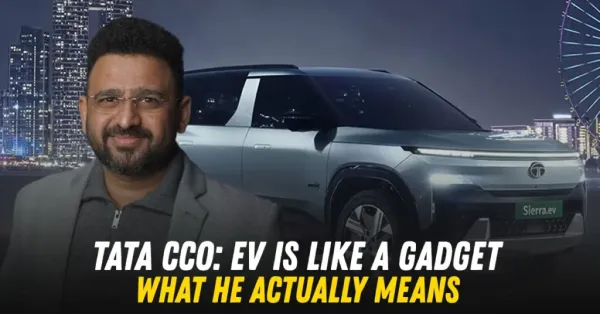
Tata Motors has launched the highly-anticipated Sierra.EV in India with an ex-showroom starting price of Rs 18.79 lakh. On the sidelines of its launch, Tata Passenger Electric Mobility’s Chief Commercial Officer Vivek Srivatsa has made an interesting remark ‘ Treat EVs like gadgets’. He was referring primarily to the way customers perceive the resale of EVs. But there is much more to the statement.
Vivek was speaking to Economic Times when he made this statement. His argument is simple: EVs are about usage and experience, not resale value.
“EVs should be bought more with a gadget mindset rather than an automotive mindset. We don’t buy our phones or laptops keeping in mind resale value. It is more about, I pay money for what I get, and the more I use it the better value I get out of it.”– says Vivek.
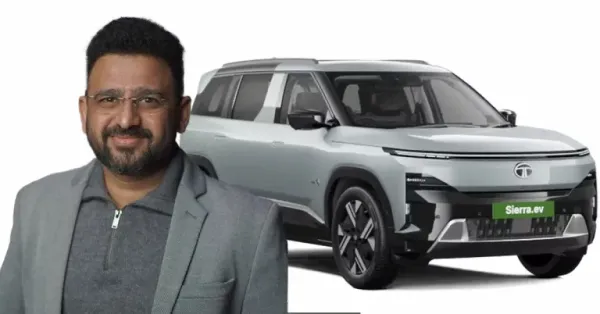
The CCO says that he has been observing an interesting trend within the Tata EV community. Even when they are offered loyalty bonuses to upgrade, many EV customers choose to keep their older EVs within the family (probably pass it down to a relative) instead of selling it off. This shows the change in ownership pattern. This is definitely not the way conventional car owners would behave. It further validates the CCO’s ‘gadget theory’.
In the case of internal combustion vehicles, we have seen that Indian car buyers focus heavily on resale value. Most people know at the time of purchase that they would keep the (internal combustion) car for 4-5 years and then sell it off. Resale value is a strong concern there. For some, it may even shape purchase decisions.
Vivek says that this mindset does not fit EVs. He compares electric vehicles to phones and laptops, as mentioned above. This is true to a good extent. In the case of electric cars and SUVs, people prefer to own the ones with the most modern technologies and the maximum number of features.
Electric vehicles have been evolving rapidly. In the past few years, we have seen their abilities increase exponentially. EVs have gone far beyond the previous idea of a modest, cost-effective way of commuting. They now pack insane performance, deliver much longer range figures, and come with overwhelming arrays of features. All these happened in a relatively short span of time.
For instance, the Sierra.EV comes with 349 bhp and 504 Nm. It gets all wheel drive (AWD) which Tata Motors calls Quad Wheel Drive (QWD). The range topping variant costs just under Rs 26 lakh. Terrific pricing for an SUV that does 0-100 kph in 5.8 seconds!
The BMW 330Li with the 2.0L TwinPower turbo-petrol engine has roughly the same performance (identical 0-100 kph time). It has 258 hp and 400Nm on offer and costs around Rs 60 lakh, ex-showroom. The value factor is clear, from a performance perspective.
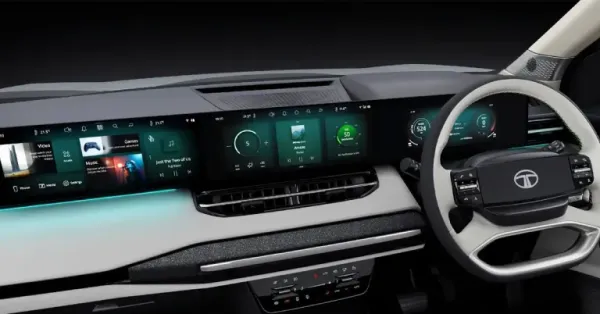
Even in the case of features, the Sierra.EV offers a lot. From a huge panoramic sunroof, to more advanced features like 540 degree camera with transparent view, Summon mode (remote parking), in-car payments and much more. Most of these are unheard of in the mass-market segment. The computing power of EVs have increased manifold over the past few years.
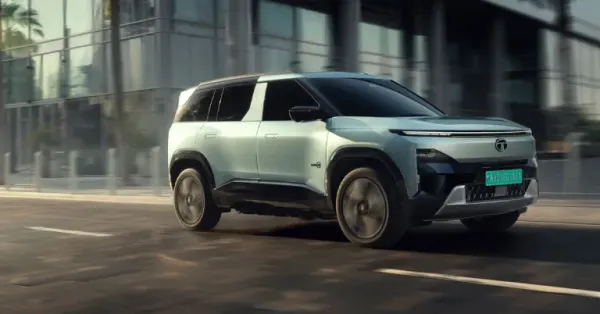
Two battery packs are offered on the Sierra.EV – 63kWh and 75kWh. There used to be a time when EVs used to come with 30-40kWh units and that period was not too long ago! The step-up in battery sizes and their charging speeds happened rather quickly.
These patterns are similar to the ones seen in gadgets. Mobile phones, for example, show very similar patterns of evolution. There is even a theory explaining the rapid technological progress in gadgets, called Moore’s law.
It states that the number of transistors on a microchip doubles roughly every two years. This means processors get exponentially faster, smaller, and more energy-efficient over this period. This gives newer smartphones more computing power, speed, packaging efficiency and other desirable traits. Looks like the same is playing out in the case of EVs as well.
On the flipside, the fast-evolving technology also makes EVs obsolete faster. This will in the longer run, lead to a steep drop in their resale value. But, as the CCO said, users are not much bothered about the poor resale. They buy EVs to use them, and not to sell them off and make money out of it.
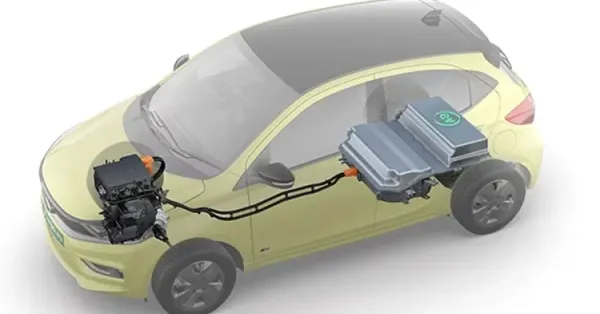
The demand may be high for fresh purchases. In comparison, pre-owned electric vehicles have a less-vibrant story. Reasons like battery health concerns and other vehicle- uncertainties prevent many from buying used EVs.
Additionally, EVs have shorter product lifecycles. This means that they get updated more frequently. People generally do not wish to buy a pre-facelift or pre-update model. All these lead to a lower resale value than internal combustion counterparts.
Mr. Srivatsa admits that a proper used EV market needs to develop. This is important not just for resale, but also to make EVs affordable for buyers in smaller towns. He says the government can help by reducing interest rates on used EV loans. Financing for used cars is quite expensive now. Tata also plans to build trust by offering better battery checks and extended warranties for used EVs.
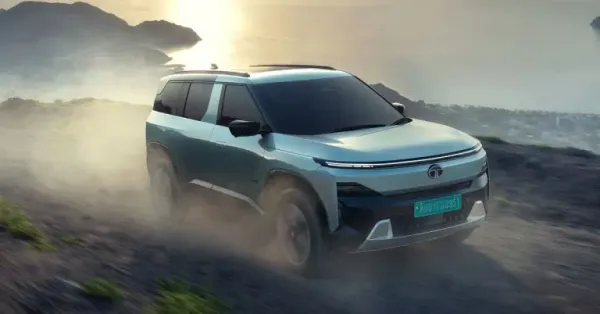
Mr. Srivatsa also talked about the Sierra.EV’s positioning in the Tata Motors line-up and who it is meant for. He said that the product targets upper middle-class families with average monthly incomes of over 1 lakh rupees. These buyers mostly live in tier-one and tier-two cities, and possibly own one or two cars already.
The Sierra.EV is for people who want a vehicle to show the status and be practical enough for daily use. Tata believes there is a gap in the market for such an EV, and the Sierra aims to fill it. Its launch timing is also important. EV adoption has spiked in recent months, driven by the global fuel concerns. The West Asia war created fear about fuel availability. This encouraged many to switch to EVs.
-
Chelsea criticised after deleting Enzo Fernandez post during England’s World Cup semi-final defeat to Argentina

-
Wangchuk fast Day 19: Political support grows, BJP silence questioned
-
Family of Hyderabad man stabbed in US appeals to MEA for help

-
Puri Rath Yatra: Crowd Surge Caught On Camera, Videos Show Injured On Stretchers

-
Top 10 | ABP LIVE Evening Bulletin: Top News Headlines from 16 July 2026 - Evening