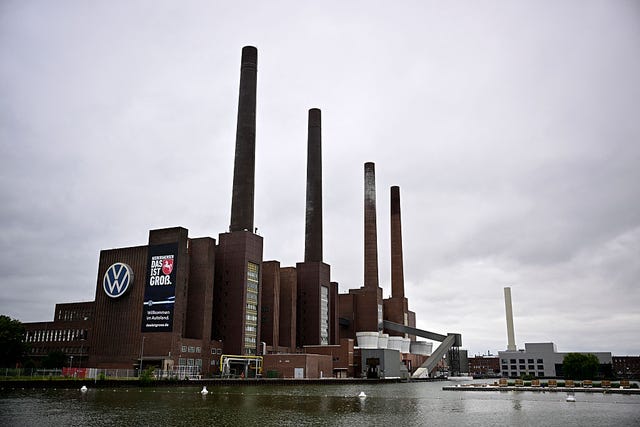
After a supervisory board meeting held at Volkswagen’s headquarters in Wolfsburg on Thursday, the German automotive giant announced sweeping plans to reorganise its operations across all its brands. The restructuring will primarily focus on reducing the group’s total production capacity within its facilities and trimming its current model line-up by as much as 50 percent.
The company’s executive board outlined its future strategy, stating that models from less profitable or less attractive market segments will be phased out, with potentially half of the existing range being discontinued. This move is part of Volkswagen’s broader effort to prioritise higher profit margins rather than overall sales volume to ensure long-term financial health. Earlier in April, CEO Oliver Blume had already revealed intentions to scale back global production capacity from 12 million vehicles per year to around 9 million—a plan reaffirmed during the latest announcement.
“The cost reductions we have implemented so far under the current programmes are insufficient given today’s economic and geopolitical conditions. We must fundamentally rethink our business model and deliver structural, sustainable improvements,” said CFO Arno Antlitz in an official statement. “We can only accomplish this by significantly reducing complexity—across our product range, technological platforms, production volumes, and decision-making layers.”
As is often the case, a reduction in production capacity is expected to bring workforce implications. According to Reuters, insiders have indicated that Oliver Blume has discussed the possibility of cutting up to 100,000 jobs due to the planned closure of four manufacturing plants in Germany. Although these reports have not been officially confirmed, they have already sparked widespread protests at Volkswagen’s production sites throughout the country.
Volkswagen currently faces a challenging environment—domestic overcapacity, lacklustre performance of its electric vehicles, increasing competition from China, and tariff pressures from the United States have combined to create a complex scenario for the automaker. Despite these hurdles, the company continues to produce several well-regarded models, particularly under its premium brands. The implications of these restructuring plans for Porsche, Lamborghini, and Audi remain uncertain, though even these high-end marques may not be entirely insulated from the cuts. In any case, this year is shaping up to be one of the most eventful in recent memory for the global automotive industry, marked by bold and far-reaching decisions from one of its most iconic manufacturers.
-
Monsoon Tips: Store jaggery, sugar and salt in this way during rains, they will remain completely safe from dampness.

-
Shahrukh Khan bought the ancestral house in Delhi for ₹ 37 crore, where he spent his days of struggle with Gauri.

-
Washing Machine Care: What To Do In Monsoon?

-
Nana Patwari told the media that the entire case is fake, my fault is that I am Jitu Patwari’s brother, Congress President retorted.

-
Will your car get spoiled by E20 petrol? Nitin Gadkari said- ‘This is all a rumour’