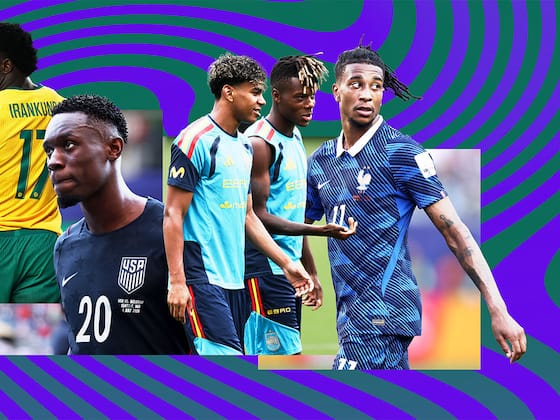
With 48 nations participating, the 2026 FIFA World Cup has become the most globally inclusive tournament in football history. This inclusivity is reflected not only in the number of teams but also in the diversity of players, many of whom come from multicultural and multi-ethnic backgrounds.
Football and politics have always been intertwined, and the 2026 edition is no exception. The lead-up to the tournament witnessed significant political influence, particularly from United States President Donald Trump, who sought to place himself at the centre of global attention. FIFA President Gianni Infantino cooperated closely, praising Trump as a saviour of both the world and football itself. Remarkably, Infantino awarded him the FIFA Peace Prize less than three months before Trump declared war on Iran, one of the World Cup participants.
In addition to political posturing, the event was marked by high ticket prices, steep public transport costs, and frequent advertising interruptions disguised as hydration breaks — all examples of what many have termed the “Americanization” of football, even though Mexico and Canada are co-hosts.
Such influence is not unique to this tournament. Recent World Cups, including Qatar 2022, demonstrated how football serves as a powerful geopolitical stage. FIFA continues to claim neutrality, yet the organisation often benefits from political associations that it publicly distances itself from.
This global spectacle stands in direct contrast to the political rhetoric of hardline nationalism, such as that promoted by the Trump administration and others worldwide. For these leaders, “true” citizenship is narrowly defined by race, culture, or behaviour. Similar attitudes have surfaced in various European nations, where politicians have attempted to define what it means to be British, French, German, or Spanish in increasingly restrictive terms.
Anti-immigrant sentiments have grown, with some leaders vilifying migration altogether. Former Hungarian Prime Minister Viktor Orban, for example, stated in 2022 that Europeans should not mix with non-Europeans and once mandated that migrants live in shipping containers. His comments were particularly striking given that Hungary’s defender Loïc Négo, born in France with Guadeloupean roots, played a crucial role for the national team.
The 2026 World Cup, therefore, emerges as a powerful counter-narrative. With 48 teams competing, national squads are more diverse than ever, transforming the tournament into a celebration of multiculturalism and shared identity.
Curaçao offers one of the clearest examples of this diversity. Only one player, Tahith Chong, was born in the island nation; the rest hail from the Netherlands, trained in Dutch academies, and hold Dutch passports. Yet representing Curaçao gives them a renewed sense of belonging and purpose. When the team qualified for the World Cup, celebrations erupted not just in Willemstad but also across Dutch cities, demonstrating the shared cultural bond.
Nearly a quarter of all players in the 2026 tournament represent countries where they were not born. These athletes embody the idea of imagined communities, embracing national identities formed by choice, heritage, or circumstance rather than birthplace alone. This is especially true for many players of West African descent, for whom football often represents both hope and escape.
A study cited by The Conversation revealed that 13% of young people in Ghana and 10% in Gambia dream of becoming professional footballers. However, limited local opportunities push many to seek careers abroad. While a few fortunate players move through official club transfers, others rely on informal or risky migration networks to pursue their dreams.
Spain international Nico Williams’ story reflects this struggle. His parents journeyed from Ghana to Spain in 1994, crossing the Sahara Desert while his mother was pregnant with his brother Iñaki. Many in their group perished, and upon arrival, the family was detained before being advised to claim asylum as Liberian refugees. The civil conflict in Liberia at the time enabled them to remain in Spain, where their sons ultimately rose to footballing prominence.
Similarly, Alphonso Davies’ childhood was shaped by the Second Liberian Civil War, which forced his parents to flee to Ghana. Born in the Buduburam refugee camp near Accra, Davies experienced severe deprivation before his family resettled in Canada five years later. There, he joined a free after-school football program, a common pathway for many children from immigrant backgrounds. His rise to stardom with Bayern Munich stands as a testament to resilience born from hardship.
In France, suburban communities known as banlieues have become breeding grounds for football excellence. These working-class neighbourhoods, populated by families from across Africa, have produced legends such as Kylian Mbappé, Riyad Mahrez, Paul Pogba, Thierry Henry, and Patrick Vieira. Narrow streets and high-intensity street matches in these areas foster creativity and raw skill long before formal training begins.
Australia’s Nestory Irankunda shares a similar tale. His parents fled Burundi’s civil war in 2005, walking to Tanzania, where Nestory was born the following year. When he was three months old, the family migrated to Perth and later settled in Adelaide’s Parafield Gardens, a working-class area where his football journey began. His World Cup debut goal against Türkiye was more than just a sporting achievement—it was a story shaped by politics and perseverance.
Stories like those of Williams, Davies, and Irankunda are now common across the World Cup stage. They serve as poignant reminders that football is inherently political, shaped by migration, identity, and global movement. Without these mixed heritages, the tournament would lose much of its colour and human depth.
While leaders like Trump and others cling to rigid notions of identity, football thrives on diversity and unpredictability. Spain’s UEFA EURO 2024 victory perfectly illustrated this, with Williams on one wing and Lamine Yamal—whose parents hail from Morocco and Equatorial Guinea—on the other. Their creativity redefined a Spanish side long in search of attacking flair.
In the United States, Folarin Balogun, born an American citizen, emerged as the standout performer for the USMNT at the 2026 World Cup. His impact was so significant that political intervention reportedly postponed his red-card suspension ahead of the Round of 16 clash with Belgium.
France’s dominance, too, owes much to its immigrant communities. Star player Michael Olise proudly identifies with four nations—France, Algeria, Nigeria, and England—symbolising the layered identities that define modern football.
Rigid definitions of nationality may aid political agendas, but they stifle the spirit of sport. Football, especially at the World Cup, thrives on uncertainty, diversity, and the human stories that transcend borders. The 2026 tournament stands as a testament to that vitality—a celebration of people who have endured unimaginable journeys, fought for better lives, and found freedom through the world’s most beloved game.
-
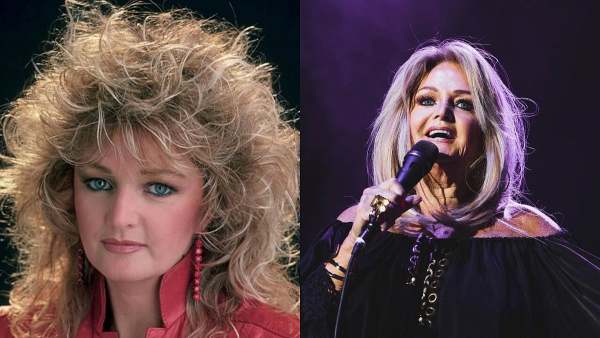
Welsh Singer Bonnie Tyler, Voice Behind 'Total Eclipse Of The Heart', Dies At 75
-
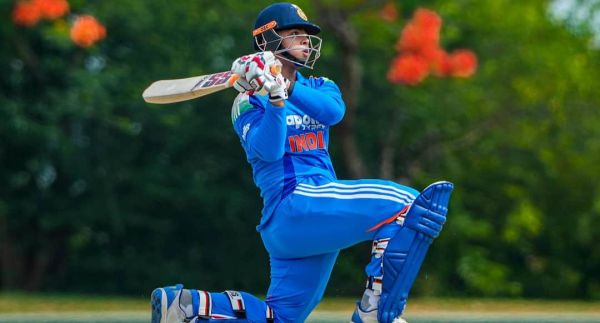
Vaibhav Sooryavanshi Unleashes Carnage In England, Smashes Runs At 168 Strike Rate
-
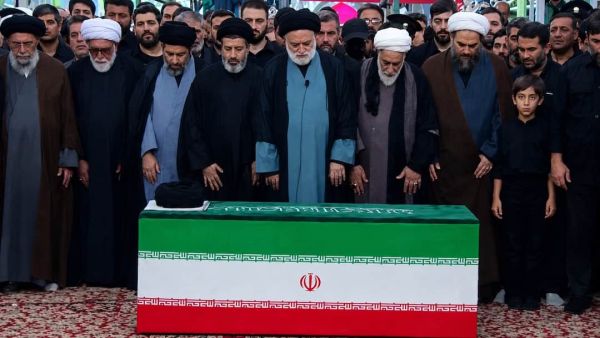
Ayatollah Ali Khamenei Laid To Rest In Mashhad Amid Renewed US-Iran Hostilities
-
Are frozen blueberries unsafe? FDA recalls blueberries sold in 8 states

-
Why King Charles can't avoid this snack, reveals former royal butler; detailed recipe inside