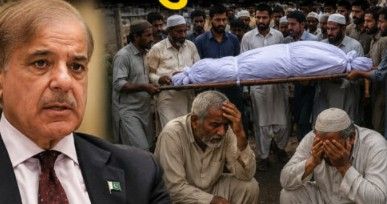
Pakistan Inflation Crisis: The impact of ever-increasing inflation in Pakistan is now clearly visible beyond people’s everyday life, even on sensitive processes like funerals. The situation has become such that after the death of a family member, performing respectable last rites has become a big financial challenge for many families. Due to rising prices, poor and middle class people are forced to resort to borrowing and lending.
Inflation increases funeral expenses
In many cities of Pakistan including Rawalpindi, almost every essential service to funeral has become more expensive than before. There has been a continuous increase in the prices of shrouds, grave digging, burial arrangements and other essential items. The works for which earlier the society and neighbors used to cooperate, now have to be paid for separately.
Thousands of rupees spent on a funeral
According to local reports, a normal funeral now costs around 50 to 60 thousand Pakistani rupees. The total expenditure on shroud, items used in religious rituals, preparation of the grave, labor and other arrangements is continuously increasing. If the family gets a concrete grave or a marble one installed, this amount becomes more.
Lack of space in graveyard becomes new challenge (Pakistan Inflation Crisis)
Along with inflation, lack of vacant space in cemeteries is also becoming a serious problem in many cities. In some places, due to non-availability of land for new graves, a situation is emerging like re-using old places. Due to this, the process of last rites is becoming more difficult than before.
Inflation rate decreased, but people’s problems persist
Government data shows that the pace of inflation is lower than before, but common people are not getting any significant benefit from it. The huge increase in food prices, electricity, fuel and rent over the years has almost wiped out people’s savings. In such a situation, the sudden funeral expenses are pushing families into financial crisis.
It is a challenge for the government to provide relief under IMF conditions.
The Pakistan government is under pressure to maintain fiscal discipline under its financial agreements with the International Monetary Fund (IMF). For this reason, it is not considered easy for the government to give relief package or subsidy on a large scale. Experts say that until the income of common people increases and inflation is not completely controlled, such problems may persist.
The most painful picture of economic crisis
The current economic situation of Pakistan shows that inflation is not limited only to food or daily expenses. Now it is affecting even the most emotional and difficult times of people’s lives. The compulsion to take loan for the last rites is an indication that the burden of the economic crisis is falling most on the weaker sections of the society.
-
‘Would You Do The Scene Without Clothes?’ Saif Ali Khan Recalls Vishal Bhardwaj’s Request On ‘Omkara’ Set

-
Stay One Step Ahead This Monsoon With These 5 Smart Lifestyle Habits

-
iQOO Z11 Lite 5G Is Almost Here: Here's What We Know Before The Launch

-
Who Is Arnav Paparkar? Indian Teen Ending 36-Year Wimbledon Drought

-
CBSE Class 10 Second Board Result 2026 This Weekend? Check Big Update Here, And Steps To Download Scorecard