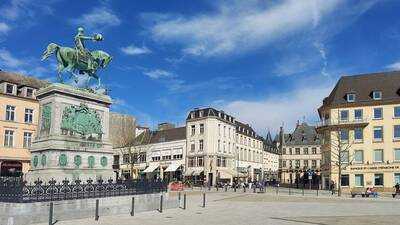
Luxembourg is one of Europe’s smallest countries, yet its name has travelled far beyond its borders. It appears on financial headlines, European Union documents and world maps, but the story behind the name itself reaches back more than a thousand years. Long before Luxembourg existed as an independent state, the area was centred on a rocky outcrop crowned by a small fortified structure. Over time, that fortress became the heart of a growing settlement, then a political territory, and eventually a sovereign nation. The modern name "Luxembourg" did not emerge all at once. Instead, it evolved gradually through centuries of language changes, dynastic rule and urban growth, all beginning with a single medieval castle.
The medieval castle behind Luxembourg's name
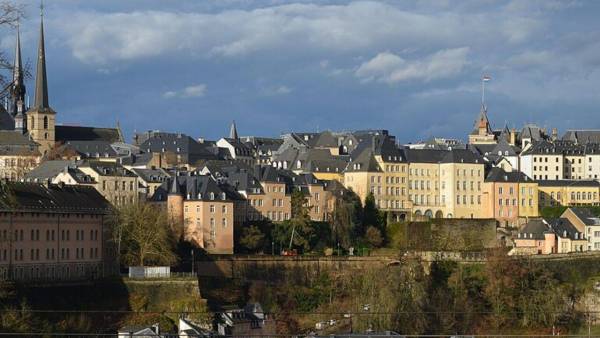
, the origins of Luxembourg’s name can be traced to the year 963, when a nobleman named Siegfried of Ardennes acquired land overlooking the Alzette River. On this strategic site, he established a fortified stronghold known as Lucilinburhuc .
The word came from an old Frankish form that is generally understood to mean " little fortress " or "small castle". At the time, it referred only to the fortification itself rather than any wider territory. Yet the location proved valuable. Built on cliffs with natural defensive advantages, the fortress attracted activity around it and quickly became the focal point of the surrounding region.
Names often outlive the places that first inspired them. In this case, the designation attached to a small castle would eventually become associated with an entire country.
How a fortress settlement grew into Luxembourg City
As people settled near the fortress, a community began to take shape. Religious buildings appeared nearby, including what is now known as St Michael’s Church. Trade also followed, with markets developing around important crossroads close to the fortified site.
The castle remained the dominant landmark, so the name linked to it naturally spread to the surrounding settlement. Over generations, Lucilinburhuc changed through local usage, linguistic shifts and regional influences. Medieval spellings varied considerably, but the name gradually evolved into forms that more closely resembled modern Luxembourg.
By the High Middle Ages, the settlement surrounding the fortress had expanded beyond its original limits. Defensive walls enclosed a larger urban area, and the growing town became an increasingly important centre of regional power.
How the House of Luxembourg spread the name across Europe
The name gained wider recognition as the descendants of Siegfried expanded their influence. Through alliances, inheritance and territorial acquisitions, the family increased its holdings and established itself among the significant noble houses of the region.
According to WorldAtlas , one of Siegfried’s descendants, Conrad, became Count of Luxembourg, helping transform the place name into a dynastic title. The association worked both ways: the ruling family took its name from the territory, while the territory became more widely known through the prominence of its rulers.
During the following centuries, members of the House of Luxembourg rose to positions of remarkable influence within Europe. Several became kings, and one branch produced Holy Roman Emperors. As their status grew, so did the recognition of Luxembourg as a political entity rather than merely a settlement built around a fortress.
From medieval fortress to independent nation
The territory continued to change hands over the centuries. Different European powers, including the Habsburgs, the French and the Spanish, exercised control at various times. Political borders shifted repeatedly, but the name endured.
A significant milestone came in the fourteenth century when Luxembourg was elevated from a county to a duchy. Later, after the upheavals of the Napoleonic era, it became a grand duchy in 1815. Full independence followed during the nineteenth century, allowing Luxembourg to emerge as the sovereign state recognised today.
Despite these transformations, the country retained a name rooted in its earliest history. What began as Lucilinburhuca, a description of a small medieval fortress, survived centuries of political change and linguistic evolution. Modern Luxembourg, both the nation and its capital city, still carries the legacy of that tenth-century stronghold, preserving in its name a direct link to the place where its story first began.
-
Air India, AI Express planes come face-to-face on same runway at Mumbai airport

-
HP: Cloudburst hits Kullu’s Garsa Shilanala; wet spell to continue till Jul 13

-
Gurugram submerged: Road cave-ins, unending traffic jams add to woes; corporates advised WFH

-
Bengaluru police defend whistleblower's arrest in daycare abuse case

-
How ageing affects our eyes