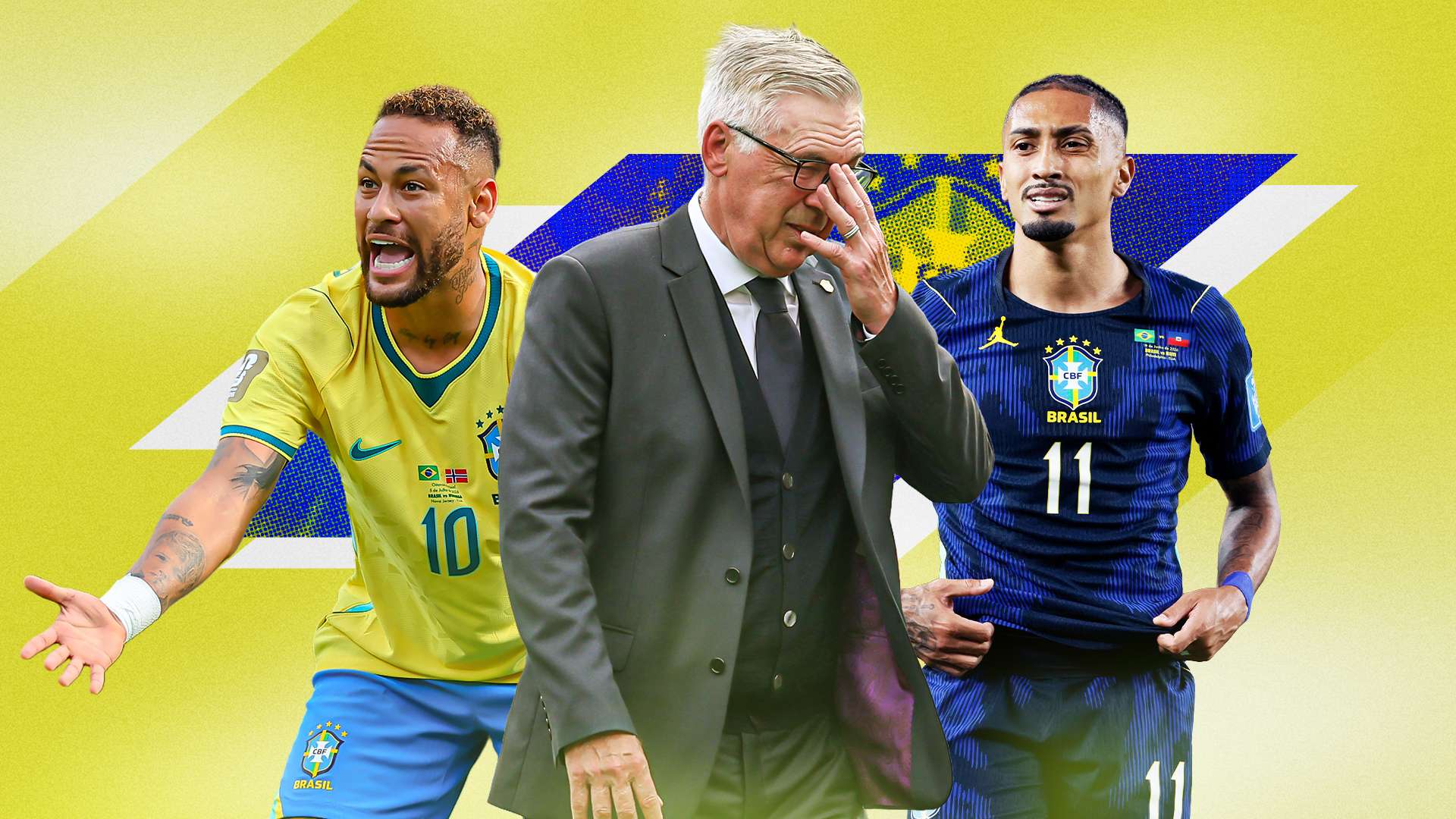
The fallout from Brazil’s disastrous World Cup campaign has begun in earnest after the five-time champions were unceremoniously knocked out by surprise package Norway, thanks to the brilliance of Erling Haaland. In truth, the Selecao never truly found their rhythm in North America, constrained by an ageing and disjointed squad that often depended on Vinicius Jr to deliver moments of magic.
As the disappointment of their last-16 defeat in New Jersey sinks in, major questions are being raised about head coach Carlo Ancelotti. The Italian was expected to restore Brazil to football’s elite when he took charge a year ago, but now his position appears increasingly uncertain back home, even as he insists this marks "the start of a new cycle" rather than the end. In hindsight, some of his decisions proved costly.
So, where exactly did things unravel for Brazil at the 2026 World Cup? Here’s an in-depth look at the key reasons behind their early exit.
Ageing Squad Issues
Much of Brazil’s downfall can be traced back to Ancelotti’s team selection, particularly his loyalty to a group of veterans amid a perceived shortage of emerging talent. The three goalkeepers in the squad were aged 33, 32, and 38, while the defenders averaged 31 years of age. Among them were former Juventus full-backs Danilo and Alex Sandro, both of whom looked well past their prime. In midfield, 34-year-old Casemiro remained a key figure, while 32-year-old Fabinho also received significant playing time.
Younger players like Bournemouth’s Rayan (19) and Botafogo’s Danilo (25) offered glimpses of promise, but Ancelotti admitted after the tournament that fresh energy was urgently required. “We need some young talent, some top-level players coming into Brazilian football,” he said. “This team has a strong core, but we need new players too.”
The Neymar Gamble
One of Ancelotti’s most debated choices was recalling 34-year-old Neymar. Under pressure from fans and media, the coach included the Santos icon despite his injury-plagued recent years. Neymar’s last international appearance had come in October 2023, and his fitness concerns quickly resurfaced—he sustained a calf injury just before the tournament, ruling him out for the first two group matches. He managed only 14 minutes as a substitute against Scotland, where he looked far from match sharp.
Ancelotti opted not to use Neymar in the tense last-32 win over Japan, and though he featured briefly in the round of 16 against Norway, his contribution was limited to a late penalty in what is likely to have been his final appearance for the national team.
Selection Oversight
Neymar’s minimal impact made the exclusion of Chelsea forward Joao Pedro even harder to justify. The 24-year-old had registered 29 goal contributions in his first season at Stamford Bridge and was widely expected to be part of the squad, potentially even as Brazil’s starting striker. Ancelotti himself admitted, “He probably deserved to be on this list.”
Brazilian legend Ronaldo Nazario didn’t hold back in his criticism after the elimination: “I have to be honest, this defeat began with decisions from the bench. I can’t understand why Joao Pedro was not selected—he’s in top form and could have added something different.”
Midfield Mess
The midfield was another area of concern. Ancelotti’s reliance on ageing players left Newcastle star Bruno Guimaraes shouldering much of the creative and defensive burden. The initial squad contained just five central midfielders, one of whom, Lucas Paqueta, is primarily an attacking playmaker. When right-back Wesley was injured, Manchester United-bound Ederson was called up as a replacement, but neither he nor Danilo received much playing time.
Guimaraes performed admirably, contributing four assists, but he was overworked and under-supported. Following the Norway defeat, Ancelotti acknowledged the problem: “We have to think about the future. It’s clear that in midfield, we need to make some changes.”
Penalty Confusion
Another controversial moment came when Guimaraes stepped up to take a crucial first-half penalty against Norway, which was saved. Many expected Vinicius Jr, Brazil’s top scorer at the tournament, to take responsibility. However, Ancelotti later explained that the decision had been data-driven. “We did statistics,” he said, “and Raphinha was the best penalty-taker, followed by Neymar, then Bruno Guimaraes, and after that Martinelli. So we chose Bruno.”
Injury Woes
While Ancelotti’s selections were questionable, his cause was not helped by a series of injuries that severely depleted his squad. Before the tournament, key players such as Eder Militao, Rodrygo, and Estevao Willian were already unavailable, depriving Brazil of their first-choice right-back and two potential attacking threats.
During the tournament, their misfortune continued. Neymar’s setback was expected, but Raphinha and Paqueta also suffered hamstring injuries—Raphinha in the second group game against Haiti and Paqueta during the knockout tie with Japan—further limiting Brazil’s attacking options.
‘Not the End, but a Beginning’
Despite the disappointment, Ancelotti struck a defiant tone after the exit. “A defeat is the beginning of a new adventure,” he said. “We need to keep improving and find new ideas. This is not the end—it’s the start of a new cycle.”
He added, “We will respond to this setback with renewed motivation and reassess our players. The work we’ve done has been good, but football is like this—you must sometimes manage the pain of defeat. I am used to it.”
-
USMNT Player Ratings vs Belgium: Pulisic, Dest and Freese Struggle as Familiar Round of 16 Exit Ends World Cup Journey
-
"Who Are You To Call Me Unworthy?": Paraguay Senator Celeste Amarilla Demands Apology From Kylian Mbappe, Threatens Legal Action
-
MP Board Class 5, 8 Re-Exam Result 2026 Declared At rskmp.in; Direct Link Here
-
I&B Ministry Says Satluj Was Released Without Completing Certification Process, Alleges IT Rules Were Violated
-
Shanaya Kapoor Rocks Gujarati Ghagra-Choli At Anshula's Mumbai Wedding With Rohan Thakkar