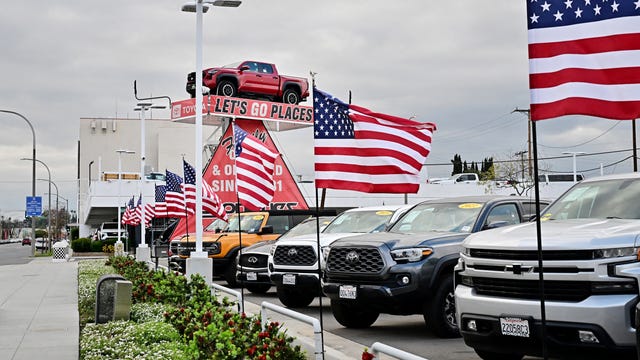
If you’ve recently checked new car prices and felt they were unusually high, you’re not mistaken. The average price of a new vehicle in the United States climbed to nearly $52,000 last month, breaking the previous record set in the previous summer. While demand for new cars remains strong, these rising prices are having a significant impact. According to a new report from Edmunds, around 24 percent of new car buyers opted for an 84-month or longer loan term during the second quarter of 2026. Although 84-month loans aren’t a fresh concept in the automobile market, the number of customers relying on them has surged sharply in recent years. That 23.9 percent figure marks an all-time high, as does the proportion of buyers choosing loans extending 73 months or longer, which reached 36.5 percent in Q2, up from 27.3 percent a decade earlier.
The average monthly payment for new vehicles offers a clear picture of why such long-term loans are becoming more common. As of Q2 2026, the average monthly payment stood at $777. Even with longer loan terms, payments remain high primarily because consumers are borrowing more money. Edmunds reported that the average buyer financed $44,156 in Q2, up from $42,388 the previous year. At the same time, down payments have been shrinking. The average down payment on a new vehicle was $5,815 in Q2, down from $6,433 a year ago. Down payments averaged just 11.6 percent of the total purchase price last quarter — the lowest level recorded since Q3 2020.
“The Q2 data perfectly highlights the tough reality of today’s new-vehicle market: affordability has become such a major challenge that buyers are stretching their finances to the limit just to afford a new car,” said Jessica Caldwell, Head of Insights at Edmunds. “When you see loan durations reaching record highs, down payments dropping, and monthly payments hitting unprecedented levels, it’s an unmistakable signal of long-term financial strain.”
Caldwell further added, “Sadly, this is the new normal for car buyers. Unless we witness a significant change in manufacturer incentives, a meaningful reduction in interest rates, or a shift toward more affordable vehicle options — none of which seem likely anytime soon — consumers will continue walking this financial tightrope.”
Another critical factor contributing to this trend is the combination of negative equity from previous purchases and rising interest rates. In Q1 2026, the average new car buyer owed $7,813 more than the car’s actual value, with the average vehicle being 4.3 years old. Both figures represent record highs, with negative equity rising 42 percent compared to five years earlier. Meanwhile, low-interest financing has become increasingly rare; only 1.2 percent of new vehicle sales in Q2 involved a 0-percent APR loan.
“Extending loan terms beyond six or seven years might make monthly payments appear more manageable today, but it’s essentially a mathematical trap,” explained Ivan Drury, Director of Insights at Edmunds. “When you combine a 7.0 percent APR with an 84-month loan and a smaller down payment, you’re committing to paying nearly $10,000 in interest on average. Stretching the term just to afford a pricier car means you’ll build equity at a very slow pace, leaving you highly exposed to negative equity when it’s time to trade in.”
The challenge isn’t limited to new car buyers either. Used car financing in Q2 2026 also showed concerning patterns. The percentage of used car buyers paying over $1,000 per month reached a record 6.2 percent, while the average used vehicle loan amount rose to $30,414, up from $29,080 a year ago. Across the board, vehicles are becoming increasingly difficult for the average American buyer to afford.
-
How Volkswagen's huge workforce became a liability

-
Koo Cofounder Mayank Bidawatka Shuts New Startup PicSee

-
Bengal: 3 held for minor's rape and murder in Baruipur, BJP leader detained for helping suspect flee

-
Baba Barfani Vanishes Early: Amarnath Ice Lingam Shrinks to 1 Foot Within 5 Days, Experts Explain Why

-
Jayasree Kalathil, Mini Chandran, Murali Ranganathan, Shefali Jha win NIF Translation Fellowships