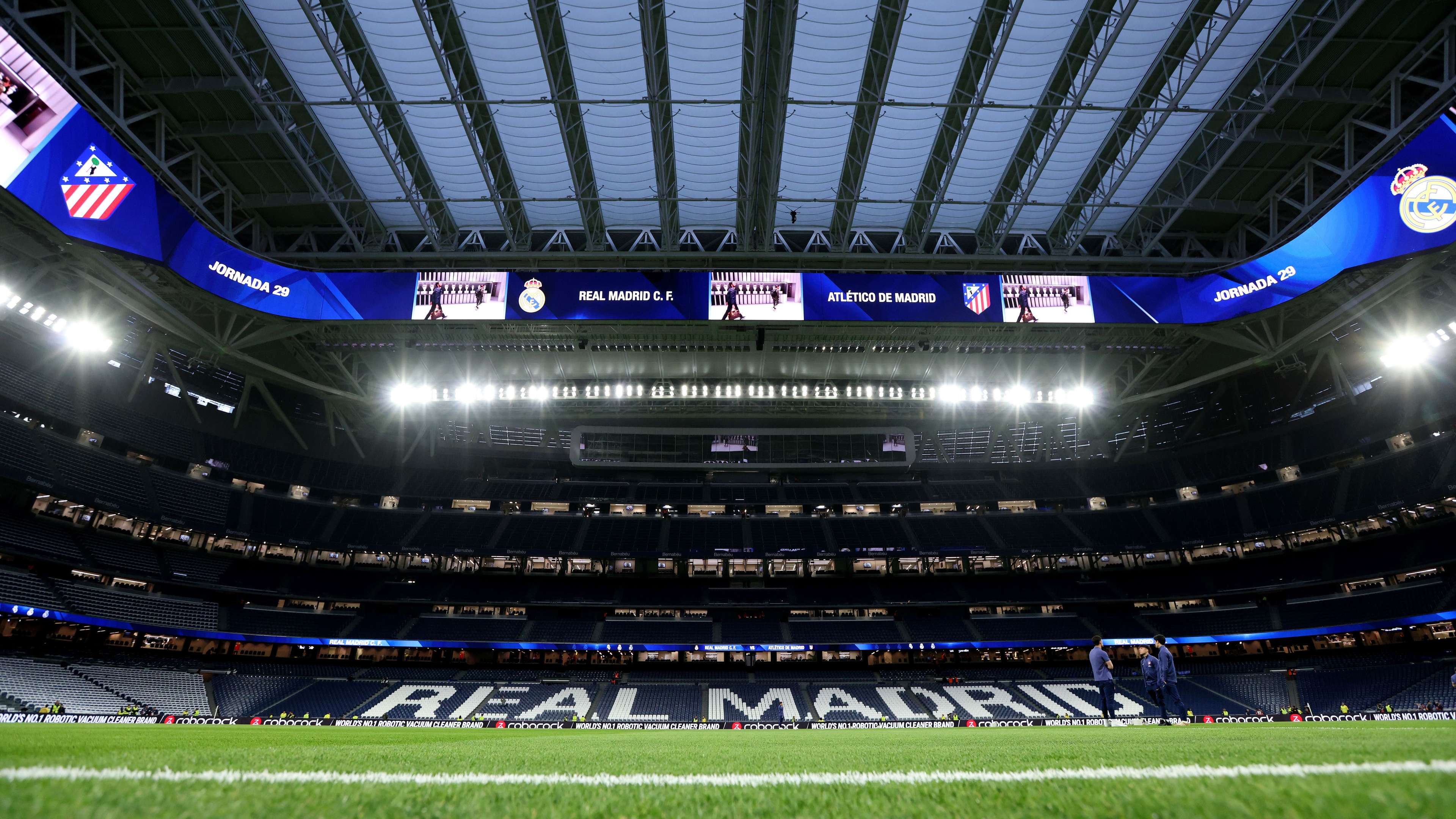
The contest to determine which stadium will host the 2030 FIFA World Cup final is gathering pace, with Spain officially backing both the Santiago Bernabeu and the soon-to-be-completed Camp Nou as potential venues. Meanwhile, Morocco remains a formidable challenger with its proposed 115,000-capacity Casablanca Stadium, part of an ambitious set of infrastructure developments aimed at securing the honour of hosting football’s biggest match.
Spain pushes for the grand finale
As the 2030 World Cup is set to be jointly hosted by Spain, Portugal, and Morocco—with special centenary fixtures also planned in South America—the question of where the trophy will ultimately be lifted has evolved into a matter of national significance for the co-host nations.
Royal Spanish Football Federation (RFEF) president Rafael Louzan expressed “full confidence” that the final will take place on Spanish soil. According to him, Spain’s early leadership in the bidding process gives it both the moral and logistical advantage over its Moroccan counterparts.
The duel between Spain’s iconic arenas
Louzan made it clear that if the final is to be played in Spain, it must be held at one of the two legendary stadiums that define Spanish football. “The World Cup final has to be at Camp Nou or at the Bernabeu,” he declared during a media briefing, underlining his conviction that the ultimate match should be staged in one of these world-renowned venues.
He further justified Spain’s claim over Morocco’s Casablanca Stadium, despite its projected 115,000-seat capacity. “It would not be understood if Spain were not the venue for the World Cup final,” Louzan said. “There can be no doubt that Spain has to host the final because this World Cup was born in Spain, between Spain and Portugal, and Morocco joined later.”
Infrastructure and capacity in focus
The Santiago Bernabeu has emerged as the leading candidate given its completed state and cutting-edge facilities following its extensive renovation. However, Louzan acknowledged that the scale and ambition of the reconstructed Camp Nou make it a formidable contender. He emphasised that the final decision lies with FIFA but noted that both Spanish venues meet the highest standards for a global event of this magnitude.
“The choice of the final venue has to be assessed by FIFA. Madrid’s stadium is spectacular, Barcelona’s is being finished and it is true that it will have a difference of 25,000 more spectators, and that is not a minor detail, it is an important detail,” Louzan remarked, highlighting the capacity advantage of the Catalan capital’s venue.
Spain defends its claim against Morocco
Even as Spain debates internally between its own stadiums, the RFEF is firmly focused on ensuring the final remains within Spanish borders. Morocco’s proposal has been strong, but Spain continues to lead the organisational framework of the 2030 World Cup. Louzan reminded that the origins of the joint bid lie firmly within the Iberian Peninsula, reinforcing Spain’s position as the rightful host of the final match.
He concluded: “The final word belongs to FIFA and we are going to defend Spain’s interests. Spain has to be the venue for the final, it has led this World Cup, we have 55 percent weight in the organization.”
-
Borussia Dortmund step up efforts to prevent Manchester United’s move for Waldemar Anton

-
Sandro Tonali seals £100m move to Tottenham, reveals the ‘magic’ that inspired his switch from Newcastle to north London

-
‘Neymar builds on what Ronaldinho created’ – Former Brazil star Juliano Belletti explains how 2002 World Cup champion inspired the nation’s all-time top scorer after emotional retirement
-
Declan Rice unfazed by altitude as England celebrate memorable Azteca victory and prepare for World Cup quarter-final against Norway

-
Rapidly Spreading Claremont Fire Triggers Emergency Response in Boise Foothills