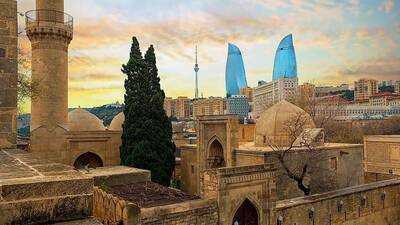
Baku sits on the edge of the Caspian Sea, where ancient stone walls stand not far from modern towers and offshore oil platforms. The city has existed for centuries as a trading port, a religious centre and later one of the world's most important oil-producing regions. Yet despite its long and well-documented history, the origin of its name remains uncertain. Historians, linguists and local traditions have proposed different explanations over the years, each reflecting a different chapter of the region’s past. Some theories connect the name to Persian language influences, while others link it to people who once lived on the Absheron Peninsula . What is clear is that the story of Baku’s name is closely tied to the many cultures that have shaped the city over time.
Origin of Baku's name and its connection to Persian culture
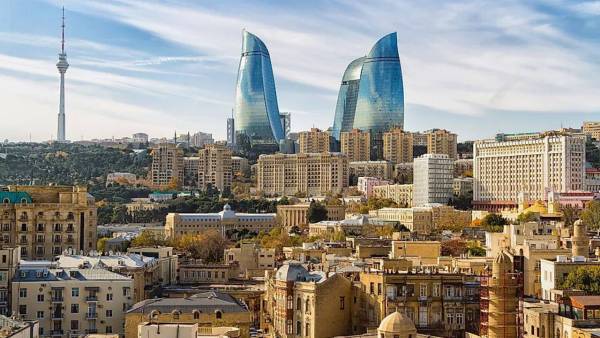
one widely discussed explanation traces the name Baku to ancient Persian roots. A traditional interpretation links it to Bagavan, a phrase often translated as “City of God”. This theory reflects the deep historical influence of Persian civilisation across the South Caucasus and fits with the area's long-standing religious significance.
Another Persian-derived explanation has become equally well known. It suggests that Baku developed from Badkube or a similar expression meaning “the city where the wind blows” or “wind-beaten place”. Anyone who has visited the city can understand why this idea gained popularity. Strong winds regularly sweep across the Absheron Peninsula, giving Baku a reputation for gusty weather that continues today. Even so, some historians have questioned whether this explanation can be fully accurate because references to the city appear to predate the term itself.
Ancient tribal roots behind Baku's name
, some scholars believe the city's name may be connected to ancient tribes that once inhabited the peninsula. Among the names mentioned are Bakan and Bagi, groups believed to have lived in the region many centuries before the Common Era.
This interpretation shifts attention away from language and towards population history. Throughout antiquity, the Absheron Peninsula lay along important routes linking the Caucasus, Central Asia and the Iranian world. Communities arrived, settled and disappeared over long periods, leaving traces in local place names. If the tribal theory is correct, Baku's name may preserve the memory of people whose own histories have largely faded from written records.
Long history of Baku and the evolution of its name
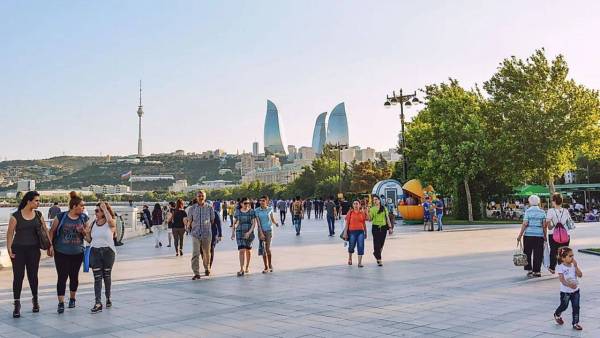
Part of the difficulty in identifying the true origin of the name lies in Baku's remarkable age. Archaeological evidence suggests human activity in the surrounding area stretches back thousands of years. Ancient settlements, trade routes and religious sites all existed long before many historical records were created.
The city was already known to the wider world during classical antiquity. References to a settlement in the area appear in ancient geographical works, and over subsequent centuries Baku became associated with natural gas vents, sacred fires and maritime trade. As different empires and cultures passed through the region, names could have evolved, been translated or adapted into new languages. That process makes it difficult to determine exactly which version came first.
Enduring mystery behind Baku's name. There is no single explanation that has achieved universal acceptance among historians. The Persian-derived theories remain influential because of the region's longstanding cultural links with Persia, while the tribal interpretation continues to attract interest because it may reflect an even older layer of local history. What emerges from these competing ideas is a picture of Baku as a crossroads city. Its name appears to carry echoes of several different worlds: Persian language and culture, ancient tribal communities, maritime trade and the winds that shape daily life along the Caspian coast.
-
Ram Temple Donation Row: SIT Finds 70 Suspicious CCTV Incidents, Recovers Rs 81 Lakh
-
Senegal's power struggle: Referendum to decide on constitutional reform
-
NoBroker's Future Is Beyond Home Listings, But Will Profits Follow?

-
Zero-sugar diet could come with risks, says study of mice

-
Microsoft Announces Major Job Cuts: What This Means for Xbox and the Gaming Industry