5
The Election Commission of India has consistently maintained that Indian EVMs are among the safest voting systems in the world.
Elections in India are not merely a means of changing governments; they are the greatest test of democracy. At a time when the world’s largest democracy conducts elections involving nearly 980 million voters, every question raised about the voting system becomes a matter of national debate.
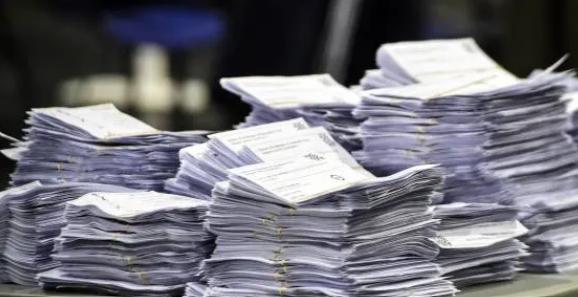
Several opposition parties have written to the Chief Justice of India, demanding that elections once again be conducted through ballot papers or, at the very least, that an independent review of the reliability of Electronic Voting Machines (EVMs) be undertaken.
The opposition argues that in a democracy, it is not enough for elections to be free and fair; public confidence in the electoral process must also remain completely intact. Interestingly, Congress and other opposition parties had raised a similar demand before the 2019 elections, reiterating their call for a return to the ballot paper system and advocating a cap on election expenditure. Since then, several opposition parties, including Congress, have won Assembly elections and formed governments in various states.
You Might Be Interested In
The BJP has countered by arguing that a return to paper ballots would revive the era of booth capturing. The government has repeatedly refused to revert to the ballot paper system, maintaining that EVMs have made the electoral process faster and more secure.
The Election Commission of India has consistently maintained that Indian EVMs are among the safest voting systems in the world. According to the Commission, these machines are not connected to the internet, Wi-Fi, Bluetooth, or any external network and, therefore, cannot be remotely hacked. The Supreme Court has also upheld the constitutional validity of the EVM system in several important cases and has rejected demands for a complete return to ballot paper voting.
The debate is not merely about machines. It is also about India’s electoral history, booth capturing, violence, administrative reforms, voter confidence, and the credibility of democratic institutions.
There was a time when elections in many Indian states were synonymous not just with voting but also with violence, booth capturing, ballot box theft, and severe administrative challenges. From the late 1960s until the 1990s, particularly in Bihar, eastern Uttar Pradesh, parts of West Bengal, and several other states, “booth capturing” became one of the biggest challenges to Indian democracy.
Booth capturing meant that armed groups would seize polling stations, hold election officials hostage, drive away genuine voters and then stamp large numbers of ballot papers in favour of a single candidate. In many cases, ballot boxes were either stolen or replaced altogether.
This was not merely a political allegation. Parliament, the Election Commission, courts, the media, and numerous studies on elections have documented the problem extensively. The Election Commission was often compelled to cancel polling and order re-polls in many areas.
Indian electoral history records numerous such incidents. Complaints of booth capturing emerged in several states during the 1971 and 1977 elections. By the 1980s, booth capturing had become a common expression in Bihar’s electoral vocabulary. During the 1985 Bihar Assembly elections, re-polling had to be conducted at several polling stations. The 1991 Lok Sabha elections were particularly challenging due to terrorism, political violence, and ballot box theft. Throughout the 1990s, the Election Commission had to deploy central security forces at thousands of sensitive polling stations.
As journalists, we personally witnessed incidents in Bihar, Uttar Pradesh and West Bengal where ballot boxes were looted at gunpoint.
Former Chief Election Commissioner T.N. Seshan repeatedly described booth capturing as the greatest threat to democracy. During his tenure, major electoral reforms were introduced, including stricter election management, voter identification systems, greater deployment of central security forces and tougher enforcement of election laws. His name is regarded as a defining turning point in India’s electoral history.
Seshan famously declared: “The Election Commission derives its power from the Constitution, not from the government.” This statement became the defining identity of a more assertive Election Commission.
He ensured strict enforcement of the Model Code of Conduct, enhanced monitoring of election expenditure, imposed tighter controls on weapons, increased the deployment of security forces, identified sensitive polling booths, strengthened the protection of polling officials, improved systems to prevent bogus voting and made re-poll procedures more effective.
While these reforms significantly reduced electoral violence, they could not entirely eliminate one fundamental problem: as long as voting remained paper-based, large-scale ballot stuffing and ballot box theft remained possible.
This led to serious consideration of technological solutions.
The first experiment with EVMs took place in 1982 in some polling stations of Kerala’s Parur Assembly constituency. However, legal disputes followed because there was no clear legislative provision at the time. Parliament subsequently amended the law and made the necessary changes to the Representation of the People Act.
In 1998, EVMs were reintroduced on a limited scale. Their use in selected constituencies in Rajasthan, Madhya Pradesh and Delhi proved successful, prompting the Election Commission to expand their deployment in phases.
The 2004 Lok Sabha elections marked a historic milestone in Indian democracy. For the first time, every polling station in the country used EVMs. It became the world’s largest electronic election, with millions of voters casting their ballots entirely through electronic means. India had decisively entered the age of digital voting.
Incidentally, it was in the same election that the Congress party came to power and governed the country for ten years. Even today, Congress governs states such as Karnataka, Kerala, Himachal Pradesh and Telangana. In Tamil Nadu, a new political party led by actor Vijay has come to power. The Aam Aadmi Party governs Punjab, while the Jharkhand Mukti Morcha rules Jharkhand.
Yet, following electoral defeats in states such as Haryana and West Bengal, Congress and its allies have increasingly blamed the Election Commission and EVMs. As the saying goes, “A bad workman blames his tools.” Voters may have rejected these parties because of their declining credibility, but the blame is being directed towards the Modi government and the Election Commission.
Most election experts agree that EVMs have significantly curtailed the widespread ballot-box theft, mass ballot stamping and large-scale booth capturing that characterised the ballot paper era. Even if a group temporarily captures a polling booth, the speed and control mechanisms built into EVMs prevent the kind of mass voting manipulation that was possible with paper ballots.
In 2017, the Election Commission publicly challenged political parties to demonstrate tampering with authorised Indian EVMs under prescribed conditions. Some parties declined to participate, while others objected to the conditions set by the Commission. The Election Commission later stated that no political party had been able to prove tampering under the prescribed process.
-
YouTuber Raavan booked under UAPA, fifth arrest in four days

-
Haryana Police detain robbery case accused in Hyderabad

-
Ali Khamenei’s 3 Sons Break Down In Tears At His Funeral In Tehran

-
CPI(M) slams mass layoffs by IT company in Kerala, blames Centre's labour codes

-
Manipur's Draft Electoral Rolls Released with High Inclusion Rate