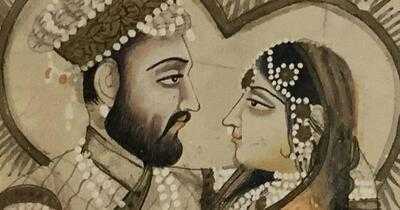
Aurangzeb’s princely harem began slowly to take shape after he was granted adult status in 1634, but filling out his larger princely household was a greater priority. Although his growing wealth and high status should have made it relatively easy to recruit people, campaigns in Bundelkhand and then his appointment to the governorship of the Deccan, a recently conquered but still unsettled part of the empire, slowed things down. This is suggested by, among other things, the longer than normal gap – three years – between officially becoming an adult and his first marriage in 1637. But by the time of his first marriage, to Dilras Banu, his household was sufficient for a new bride and an emerging princely harem.
The choice of Dilras Banu as a bride for Aurangzeb was very important. As a descendant of Shah Isma‘il I, founder of the contemporary Safavid dynasty of Iran, she was from an extremely prestigious lineage. This branch of the Safavids had moved to Mughal India in the 1590s and contracted many marriages with the Mughal royal family – including with Emperor Shah Jahan, his uncle Prince Parvez, and Aurangzeb’s older brother Prince Shuja‘. Dilras Banu’s father, Shahnawaz Khan, was a longstanding...
Read more
-
Can inspectors return to Iran's nuclear sites?

-
After WhatsApp, Centre seeks responses from Telegram and Signal on usernames: Reports

-
India-Japan ties 'should not target' Beijing, says China

-
Fiction pick: When a multinational company's employee joins protests despite discouragement

-
RSS urges Hindus to thwart 'anti-national' conspiracies on Ram temple donation embezzlement case