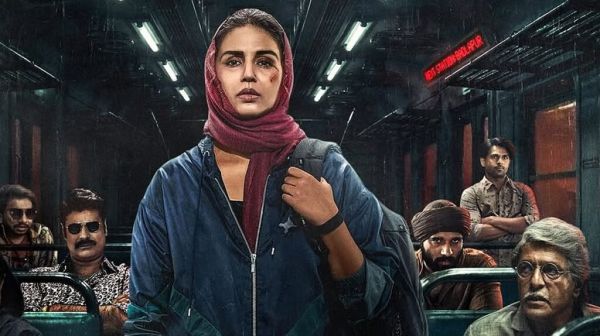
It is rather poetic that a large part of Baby Do Die Do unfolds in a rain-soaked Mumbai. There can be no better homage to a city that loves to embrace the greys when the time arrives. Amidst the mayhem of this crowded and clouded city, writer-director Nachiket Samant finds a moment to capture a droplet as it falls from a bridge, landing amidst a sea of umbrellas wading through Mumbai streets. Later in the film, a character compares people to little rivers that willingly merge into the chaotic sea that is the city itself. In those moments, Baby Do Die Do captures a level of gravitas which is rare and riveting, and it is these moments that lift the film above any an average noir-thriller.
Directed by: Nachiket Samant
Cast: Huma Qureshi, Sikandar Kher, Rachit Singh, Chunky Pandey, Seema Pahwa
Written by: Nachiket Samant, Gaurav Sharma, Jasmeet K Reen, Parveez Sheikh
When you think about it, Baby Do Die Do has a rather familiar storyline — Baby Karkarmar (Huma Qureshi) is a cold hit(wo)man whose decision to hang the boots, after she desires to settle down with her partner Siddhu (An earnest Rachit Singh), are met with resistance and threats to her personal life. It’s the way Nachiket stages this familiar tale against a comic book-like Mumbai that catches your attention. You might be tempted to label this as a dark comedy even though it doesn’t go after laugh-out-loud humour, as fun as it is. The writer-director team (Nachiket and writer Gaurav Sharma, working with a story by Jasmeet K Reen and Parveez Sheikh) derives a sense of fun from playful execution instead, particularly in the first half, keeping things consistently interesting before the plot gets going.
The opening sequence, shot in Black and White, is a thing of sublime beauty, and also a lesson in how editing can help create a mood. There is ample and inventive use of split screen — a simple conversation between two people sitting face-to-face becomes a tense visual play of fade-ins and fade-outs. A light song sequence (Arjun Iyer’s score remains a splendid force throughout) is staged like a silent short film, in sync with the ‘silent love story’ it traces. The Mumbai skyline looks futuristic, and yet the problems of this universe are very much contemporary, and almost a little too timely. The sense of filmmaking adventure reflects in the tiniest of details how how the makers choose to show a phone screen.
-
Cristiano Ronaldo’s Age and His Record-Breaking Football Journey

-
19-year-old traveler wins lawsuit against Chinese airline over 10-minute earlier departure

-
Korean glass hair trend, get shiny and smooth hair like glass, follow this step by step routine

-
Politician who investigated spyware abuses had his phone hacked with Pegasus spyware

-
Odisha to install four more Doppler radars soon: Minister