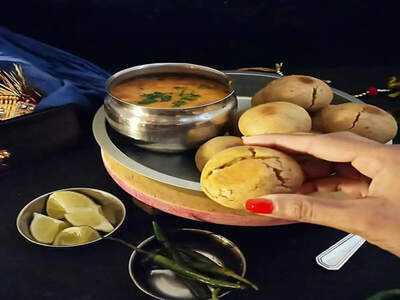
The delightful flavor of Rajasthani Dal-Bati is significantly influenced by the kneading technique used for the *bati* dough. Many home cooks struggle to achieve the perfect texture, resulting in *batis* that are either too hard or undercooked inside, despite using the right ingredients. The key to success lies in avoiding common mistakes during the dough preparation process. To achieve *batis* that are crispy on the outside yet soft within, mastering the kneading method is crucial.
**Ingredients Needed for Bati**
3 cups of wheat flour
½ cup of semolina (sooji)
¼ cup of gram flour (besan) - optional
1 teaspoon of carom seeds (ajwain)
Salt to taste
5 to 6 tablespoons of desi ghee
Lukewarm water as needed
**Kneading the Dough Correctly**
Begin by placing the wheat flour in a large mixing bowl and incorporating the semolina. This addition enhances the texture of the *bati*, giving it a desirable crispiness. Next, mix in the gram flour, carom seeds, and salt thoroughly.
The next step is vital: adding the *moyan* (shortening). Incorporate 5 to 6 tablespoons of desi ghee into the flour, mixing it well with your hands. The mixture should hold its shape when pressed into a fist, indicating the right amount of *moyan*. Too little will lead to hard *batis*, while excessive ghee can cause them to crack.
Gradually knead the dough with lukewarm water. Remember, the *bati* dough should be firmer than *roti* dough to maintain its shape during cooking. Once kneaded, cover the dough and allow it to rest for 15 to 20 minutes. This resting period is essential to prevent cracks in the *batis*.
**Tips for Perfect Bati**
After the dough is ready, divide it into equal portions and roll them into balls (*loiyas*). Avoid over-smoothing or pressing them too tightly; a gentle touch ensures even cooking.
Cook the *baati* in an oven, *tandoor*, or on a stovetop at low heat. High temperatures can burn the outside while leaving the inside raw. Once cooked, gently press the hot *baatis* and generously drizzle desi ghee over them to enhance the authentic flavor of Dal-Baati.
Common Mistakes to Avoid:
- Do not knead the dough too soft.
- Do not skimp on the *moyan*.
- Allow the dough to rest before shaping the *baatis*.
- Avoid cooking over high heat.
- Ensure the *baatis* are of uniform size.
-
Malik Tillman’s sensational free kick revives American hopes despite Folarin Balogun’s controversial red card: Key takeaways from USMNT’s World Cup win over Bosnia and Herzegovina

-
World Cup Day 21: Kane saves England while Belgium shock Senegal in late drama

-
How the Azteca's Altitude Could Test England in Their 2026 World Cup Clash with Mexico

-
Spain vs Austria: Full list of presenters, pundits, and commentators for World Cup clash

-
Harry Kane’s 2025-26 goal tally places him among football’s modern-day greats: Comparing his record-breaking season with Messi and Ronaldo