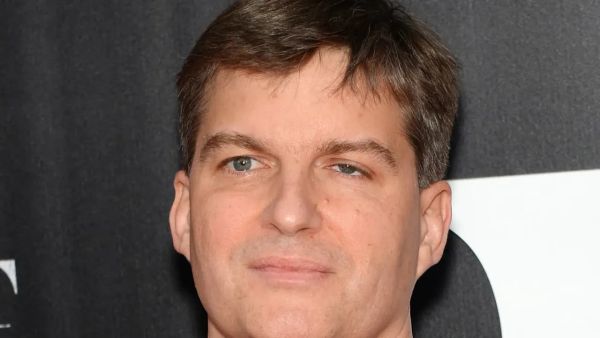
Burry revisited his early years growing up in Silicon Valley after watching an interview with venture capitalists Marc Andreessen and Ben Horowitz.
- Burry traced his journey from stress-testing hard disk drives at IBM and building custom PCs in college to launching his first stock-picking website.
- He recalled winning an IBM Thomas J. Watson Scholarship after high school, which funded his tuition at UCLA and secured summer internships at the company’s research facilities in Silicon Valley.
- Outside of work, Burry spent his summers hunting for discounted computer parts, building custom PCs and participating in the pre-internet bulletin board system community.
Michael Burry believes the most important investing lesson of his career didn't come from predicting the housing crash; it came years earlier, after watching one of Silicon Valley's biggest technology giants fade during the dot-com era.

Long before founding Scion Capital, Burry learned a lesson that transformed his view of technology bubbles. He added that the same investing framework remains relevant as companies pour billions into AI infrastructure.
Burry revisited his early years growing up in Silicon Valley after watching an interview with venture capitalists Marc Andreessen and Ben Horowitz.
The investor traced his journey from stress-testing hard disk drives at International Business Machines Corp. (IBM) and building custom PCs in college to launching his first stock-picking website, arguing that one lesson from those years has remained relevant across multiple technology booms.
How IBM And The Pre-Internet Era Shaped Burry
Burry recalled winning an IBM Thomas J. Watson Scholarship after high school, which funded his tuition at UCLA and secured summer internships at IBM's research facilities in Silicon Valley.
There, he stress-tested hard disk drives, learned to analyze data using APL and witnessed firsthand the bureaucracy of one of the world's biggest technology companies.
Outside of work, Burry spent his summers hunting for discounted computer parts, building custom PCs and participating in the pre-internet bulletin board system, or BBS, community.
He described the late 1980s and early 1990s as “an exhilarating and wondrous time,” saying he was fortunate to experience Silicon Valley as personal computing and networking began to take off.
The Investing Lesson That Stayed With Burry
Burry said returning to Silicon Valley in 1998 and finding IBM's once-bustling Cottle Road campus largely deserted changed the way he viewed the dot-com boom. The rapid decline of a company that had once been at the center of the technology industry reinforced his skepticism toward market euphoria.
"That something so huge, vibrant and important could disappear so fast greatly informed my interpretation of the 1998-2000 bubble as I lived it from my workplace on Sand Hill Road," Burry wrote.
“The Big Short” investor also shared notes from his initial research on WorldCom in 2000, saying he questioned whether the telecom company's earnings justified its acquisition-driven growth after accounting for its cost of capital.
Calling it a "timeless theme" that remains relevant today, Burry said investors should ask the same question of companies undertaking massive spending campaigns: "What will the ROIC be?", a comment that implicitly echoes the debate surrounding today's AI infrastructure investment boom.
At the time of writing, the SPDR S&P 500 ETF (SPY), which tracks the S&P 500 index, was up 0.19%, while the Invesco QQQ Trust ETF (QQQ) rose 0.3%.
The iShares Expanded Tech-Software Sector ETF (IGV) is down 17% over the past 12 months, while the iShares U.S. Technology ETF (IYW) is up 43%.
For updates and corrections, email newsroom[at]stocktwits[dot]com.<
-
7 Bollywood Films Releasing This July: Alpha, Dhamaal 4, Baby Do Die Do And More Set To Hit Theatres

-
E2W Registrations Grow 5% MoM In June To 1.81 Lakh Units, TVS Retains Top Spot

-
Finance Ministry Approves ₹1.25 Lakh Cr Outlay For Semiconductor Mission 2.0

-
Supreme Court refuses bail to Asaram in 2013 rape case

-
Translated fiction: 14-year-old Gibran's conservative father wants him to get employed in a mosque