Car enthusiasts are well aware of the phenomenon of model bloat. The same trend that has caused the current BMW M5 to weigh nearly 2,000 pounds more than its earliest version has also contributed to the steady increase in length, width, and hood height across vehicles of all types — from subcompacts that are now larger than ever to massive pickup trucks designed for heavy-duty tasks. However, a European organisation believes it has a tax-driven approach to address this issue.
According to a study released last week and highlighted by Carscoops, the European advocacy group Transport & Environment has proposed setting maximum permissible vehicle widths across Europe. It also recommends revising both tax and parking fee structures to account for the total dimensions of vehicles. Additionally, the proposal suggests that regulatory benefits for electric vehicles should be restricted to models measuring less than approximately 13 feet and eight inches in length.
The group’s research indicates that the average new car grows by nearly half an inch in length every year. The same data also shows that vehicles are becoming about two-tenths of an inch wider, taller overall, and higher at the hood line annually. These combined increases result in higher energy consumption, reduced parking availability, and increased risks for pedestrians — all of which, in theory, could be managed by reducing the average size of vehicles. If the current trend continues, the study warns that some urban areas could lose up to 14 percent of their street parking capacity by the year 2040.
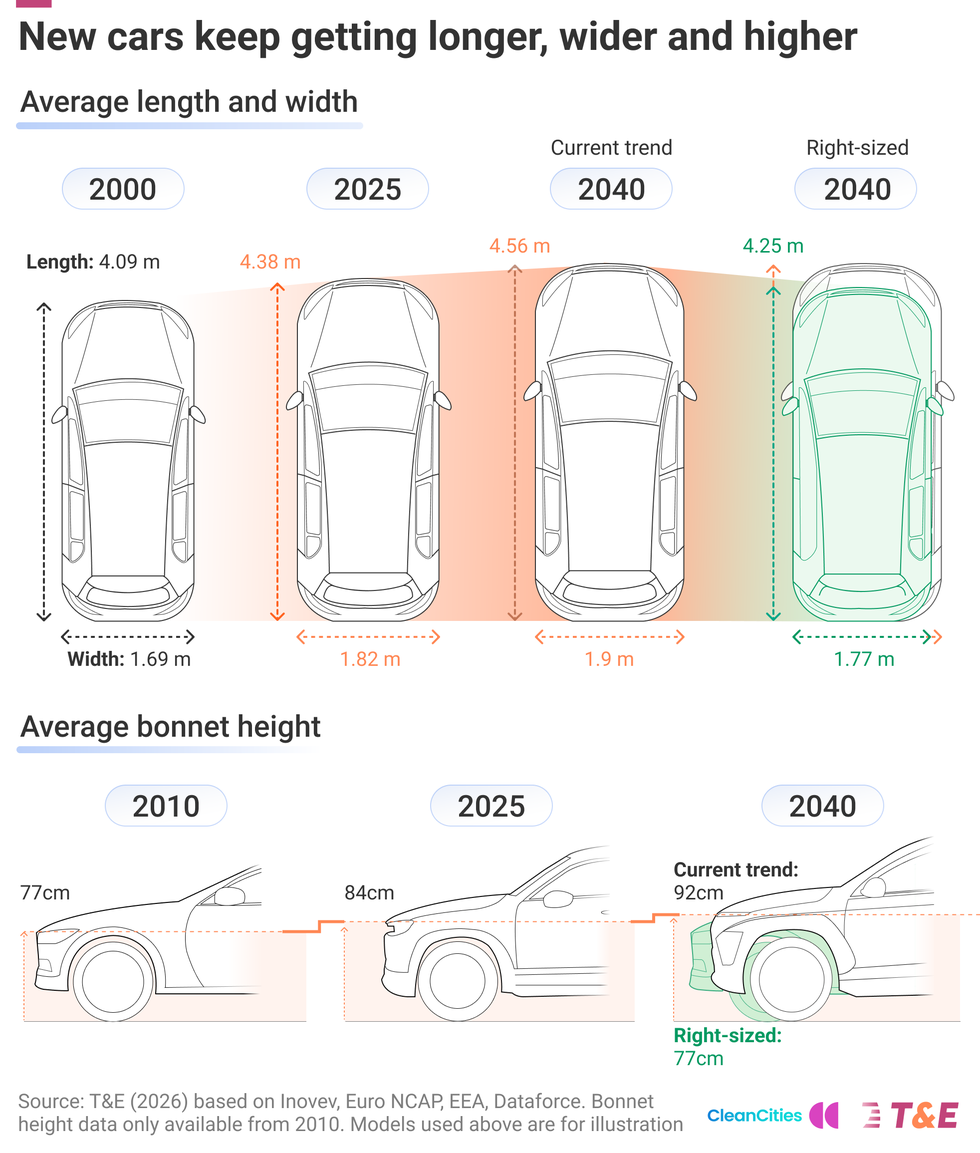
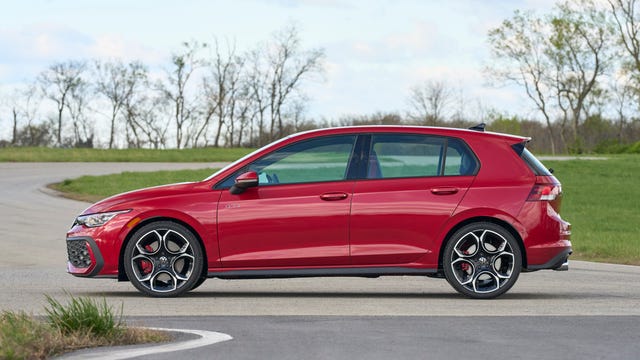
The objective of this initiative is to promote “right-sizing” as an alternative to the ongoing “carspreading” trend. Essentially, the plan aims to use a system of financial incentives and penalties to encourage a reduction in average vehicle size by 2040. As illustrated above, the study projects that if current trends persist, average vehicle dimensions would increase to 4.56 metres in length, 1.9 metres in width, and 0.92 metres in hood height by 2040. However, by implementing the proposed measures, these figures could be reduced to “right-sized” dimensions of 4.25 metres in length, 1.7 metres in width, and 0.77 metres in hood height. Notably, these numbers are nearly identical to those of a Volkswagen Golf.
While these proposed changes may appear bold, they could be the decisive measures needed to counter the problem of model bloat. Convincing buyers who prefer larger, taller, and wider vehicles may prove challenging, but enthusiasts nostalgic for the era of lightweight, compact sports sedans with shorter wheelbases might find the idea more appealing.
-
Gandhinagar PM eBus Sewa Sees Strong Launch With 3,500 Passengers On Day One

-
UN Chief António Guterres Warns AI & Emerging Technologies Are 'Supercharging' Global Terrorism Threats

-
'This Will Increase Scams': Internet Reacts To WhatsApp's New Username Reservation Feature

-
Maharashtra TET 2026 Paper Leak: SIT Intensifies Hunt Across Bihar, Haryana, UP And Delhi As Mastermind Still Absconding

-
'I Am Done': Director Rahul Ravindran Quits X After Death Threats Against His Kids Over Claims Linking The Girlfriend To Ketan Agarwal Murder Case