England’s campaign at the 2026 World Cup has taken an unexpected turn, with the team now facing a major issue in what was once their most well-stocked position — right-back. Just three matches into the tournament, the Three Lions have lost all three of their designated players for that role. Reece James, Tino Livramento, and Jarell Quansah are all sidelined with injuries, leaving manager Thomas Tuchel under growing pressure for some puzzling squad decisions.
Fortunately for Tuchel, his call to include the adaptable Djed Spence in the squad has proven crucial. The Tottenham Hotspur defender, originally taken as a backup left-back, is now set to be redeployed on the right side of defence for the knockout rounds.
While England can be grateful for Spence’s versatility, serious questions remain about how a position once full of options has become so thin. The situation is made even more glaring given that Trent Alexander-Arnold was left out of the squad altogether.
Though England are still expected to overcome their round-of-32 clash against DR Congo, the right-back issue could easily become a tactical weakness that future opponents will look to exploit in the later stages of the tournament.
Injuries bite
The injury woes began when Arsenal’s Ben White suffered a season-ending knee problem in May. Livramento of Newcastle United, who had struggled with fitness throughout the 2025-26 campaign, was ruled out before the first match due to a calf injury sustained in training ahead of the opener against Croatia.
Starting right-back Reece James then limped off during the goalless draw with Ghana on matchday two. With Tuchel having already used all his substitutions, James was forced to stay on the pitch, aggravating what was later confirmed to be a serious hamstring strain — one that could rule him out for the rest of the tournament.
Matters worsened when his replacement, Jarell Quansah, twisted his ankle in the final group game against Panama. The setback effectively left England without any of the players initially selected to play on the right side of defence.
‘Of course I am worried’
Following Quansah’s injury, Tuchel expressed clear concern about the growing list of casualties at right-back.
“A classic ankle twist and he is in pain,” the England boss said about Quansah’s condition. “He mentioned he’s had it before and it’s a matter of days. His leg is elevated and on ice.
“Naturally, of course, I’m worried about the right-back situation. We’ve suffered another injury in that position. It will be a tough race for both Reece James and Jarell Quansah to feature again in this tournament, but it’s our job to find solutions — and we will.”
Questionable calls
Tuchel’s concern is well-founded, as he will undoubtedly face criticism if England’s lack of depth at right-back proves costly. While it’s true he couldn’t have predicted every injury, some of his earlier choices have raised eyebrows.
Livramento’s fitness record in the 2025-26 season was poor — four separate injuries limited him to only 17 Premier League appearances, including a thigh issue that kept him out for the final five weeks. That alone should have raised major concerns.
Despite Tuchel insisting that “no one could have foreseen James’ injury,” the former Chelsea manager should have been fully aware of the defender’s persistent hamstring problems. The 26-year-old had missed several matches during the club season due to the same issue and hadn’t started back-to-back games since March. Nevertheless, he was still selected to start against Costa Rica in a friendly and then in group fixtures against Croatia and Ghana.
When Livramento was ruled out, Tuchel’s decision to call up centre-back Trevoh Chalobah instead of experienced Real Madrid right-back Trent Alexander-Arnold — coupled with his belief that Quansah could serve as cover — further fuelled the debate over his squad management. The selection was already controversial when announced in May, and with injuries mounting, those criticisms have only intensified.
From promise to problem
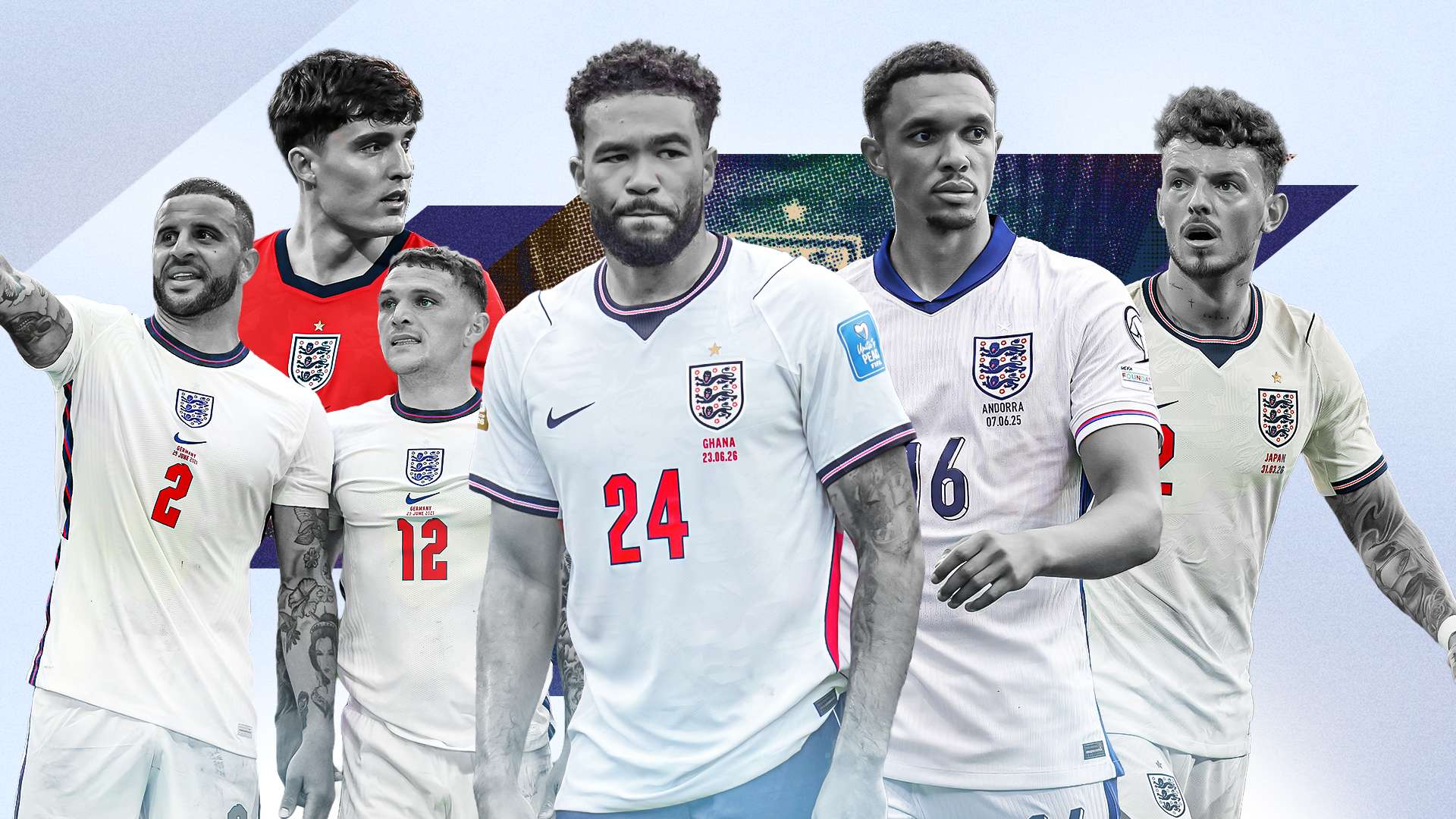
It’s striking how quickly England’s right-back riches have faded. Only a few years ago, Kyle Walker was winning trophies with Manchester City and considered among the world’s best in his position. Kieran Trippier was a consistent performer on both flanks, while Alexander-Arnold and James were seen as future stars. Ben White also emerged as a reliable option after excelling for Arsenal.
Meanwhile, players like Livramento, Aaron Wan-Bissaka, Kyle Walker-Peters, James Justin, Tyriq Lamptey, Max Aarons, and Rico Lewis were all regarded as exciting prospects.
However, things have since taken a downturn. Walker and Trippier have both retired from international duty following Euro 2024, while James and Livramento continue to battle injuries. White’s fallout with the previous coaching team left him out of contention, and Alexander-Arnold appears to have fallen out of Tuchel’s plans, having been called up only once since the German took over.
Others have failed to fulfil early expectations. Wan-Bissaka, for instance, switched allegiance to DR Congo — ironically, England’s next opponents — after finding himself well down the pecking order even during his peak years at Manchester United.
An unlikely solution
The player who could now benefit most from England’s defensive dilemma is Djed Spence — who wasn’t even selected for that position originally.
Spence was included as backup to Manchester City’s Nico O’Reilly at left-back, though Tuchel noted his ability to “play both sides” when explaining his inclusion in the squad for North America.
“He was excellent every time he played for us,” Tuchel said last month. “He loves defending, he’s the fastest player in our squad, and he relishes one-on-one battles. That’s what makes him a special full-back for us. He can play both sides.”
Now, with James, Livramento, and Quansah all unavailable, the Tottenham defender is expected to step into the right-back slot for the knockout stages — a remarkable twist in his international journey.
A remarkable rise
Spence’s selection for the World Cup was one of Tuchel’s most debated choices, but the manager will now feel vindicated. At 25, the versatile full-back has an opportunity to cement his place and silence his critics once more.
Back in 2021, while at Middlesbrough, Spence was loaned to Nottingham Forest by Neil Warnock, who warned him that his career could drift into non-league football within five years if he didn’t change his attitude. Fast forward to 2026, and he’s preparing to start for England in the World Cup knockouts.
His journey at Tottenham Hotspur hasn’t been smooth either. After moving from Fulham’s academy, he endured loan spells at Rennes, Leeds United, and Genoa before finally establishing himself in 2024-25. Initially overlooked by Antonio Conte, Spence’s perseverance earned him his first England call-up in September last year — making history as the first Muslim to represent the senior men’s team.
Earlier in this tournament, Tuchel was seen publicly admonishing Spence during training, and again when he started at left-back against Ghana. But Spence has made a career out of proving doubters wrong. Once considered one of England’s most promising attacking full-backs, he now has the chance to redefine his reputation on football’s biggest stage — turning a national team crisis into the ultimate personal redemption story.
-
Gehlot asks Rajasthan govt to share Yamuna water project MoU with public

-
Police, Meerut district admin meet 250 DJ operators for peaceful Kanwar Yatra-2026

-
UP CM holds review meet on development, law and order

-
'Fake' MP sticker, flag on SUV provokes search; vehicles seized in Delhi's Lado Sarai

-
Steve Clarke justifies signing new long-term deal weeks before stepping down as Scotland coach