
28 June 2026
Hydration breaks have become a prominent talking point at the 2026 World Cup, with many wondering just how much they are influencing matches. Here’s a closer look at the data behind the debate.
For those new to football, the controversy might seem puzzling. Each half now includes a three-minute hydration break midway through the 45 minutes — a logical adjustment considering the intense summer heat across North America. After all, in such conditions, pausing to rehydrate appears to be common sense.
Football, however, is one of the few major sports without natural, extended breaks. For many fans, the uninterrupted 45 minutes of play is a key part of the game’s rhythm and intensity. Thus, these newly introduced stoppages have divided opinion among traditionalists.
Not everyone has welcomed the change. Critics suggest the breaks serve commercial purposes, as broadcasters in many countries — though notably not in the UK — air three minutes of advertising during these intervals. FIFA president Gianni Infantino, however, has insisted that “there is no additional revenue” generated for the organisation from these pauses.
From a sporting perspective, some believe hydration breaks interrupt the game’s momentum. The concern is that such pauses can hinder the team in control while giving the opposition time to reset. United States women’s team head coach Emma Hayes even dubbed them “momentum breaks.”
Of course, momentum naturally shifts in football. Injuries, substitutions, and stoppages when the ball goes out of play all create pauses. Even within continuous play, a single event — a big tackle, a crucial save, or a near miss — can alter the dynamic. Crowd energy also frequently sparks new waves of intensity.
But the notion that a drinks break might ‘artificially’ alter a match’s natural flow has been harder for some to accept. So, are the 2026 World Cup hydration breaks truly changing the rhythm of matches?
There’s no definitive answer. Some matches have appeared to swing after these breaks, reinforcing the belief that they matter.
In the Netherlands’ 5-1 victory over Sweden, for instance, the Netherlands had dominated before the first hydration break, recording four shots to Sweden’s one and an expected goals (xG) of 1.34 to 0.03. After the break, Sweden head coach Graham Potter switched from a back five to a back four. Between the break and half-time, Sweden outshot the Netherlands eight to one, with 0.44 xG compared to 0.03. Clearly, the match shifted, and the pause gave Potter time to adjust tactics directly with his players.
Still, was the change due to the break itself? Sweden were already trailing 2-0, and Potter’s tactical tweak might have produced similar results regardless. Game context — with Sweden chasing the game — likely played a significant role.
Germany coach Julian Nagelsmann noted that the hydration break during the first half of their 7-1 win over Curaçao allowed him to reinforce instructions as his side adapted to their opponent’s diamond midfield. “Very few teams do that anymore,” he explained. “The water break was actually helpful to reiterate what we had already discussed.”
Before that pause, Germany’s xG stood at 0.64; afterwards, it rose to 1.82. The score was 1-1 during the break, and Germany led 3-1 by half-time. Yet again, it’s hard to say whether the break itself was decisive. Given Germany’s superiority, they may well have pulled ahead without it.
A similar pattern appeared during Switzerland’s 4-1 win over Bosnia-Herzegovina. Bosnia had enjoyed their best spell before the second-half hydration break, with 34 touches in the final third compared to just 13 before the first-half pause. But after the break, Switzerland surged, producing 1.67 xG (including a penalty) compared to 0.31 before it. Switzerland coach Murat Yakin later revealed he had deliberately waited for the hydration break to make substitutions so that “the opponent can’t react immediately.”
Yakin introduced three substitutes; Johan Manzambi scored twice, and Rubén Vargas added a goal and an assist. “Maybe that was the edge we had,” Yakin said, noting that using the break for substitutions could be strategically beneficial. Still, it’s possible the same changes would have worked without the pause.
Jordan midfielder Amer Jamous, following their 3-1 defeat to Austria, said the drinks break came just as his team “were controlling the game.” Jordan conceded twice after the second-half break. Yet, even here, the data tells a mixed story — Jordan had 0.15 xG before the break to Austria’s 0.3, indicating Austria’s superiority regardless of the stoppage.
It’s also common in football for action to increase later in each half. At this World Cup, there have been more shots, goals, and xG after hydration breaks than before — but that trend matches the natural flow of most matches. Premier League games during the 2025–26 season, which did not include hydration breaks, followed the same pattern, with even sharper rises after the midway point.
In both tournaments, matches were effectively split into halves — by a hydration break in the World Cup and by elapsed time in the Premier League. In both cases, game situations influenced play: teams are typically more cautious early on and more aggressive late, chasing goals as the clock winds down — naturally leading to more scoring chances and momentum swings.
While many 2026 World Cup matches have seemed to pivot around hydration breaks, far more have shown no such effect. Often, the difference is perception — when momentum changes after a break, we notice it; when it doesn’t, it passes without comment.
What’s certain is that the 2026 World Cup has felt different to watch, with hydration breaks altering the viewing rhythm. Given the mixed reactions, it seems unlikely that such pauses will become standard practice beyond this tournament.
-
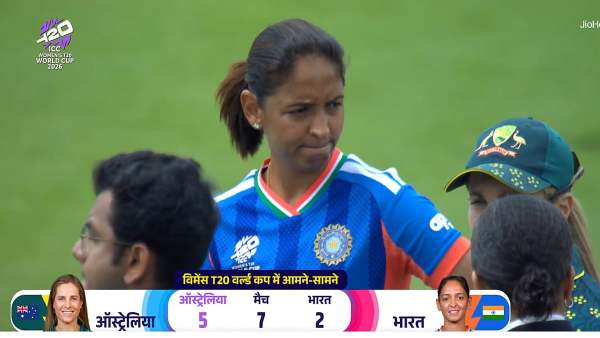
India Vs Australia ICC Women's T20 World Cup 2026 Weather Report: Is Rain Likely To Interrupt Crucial Clash At Lord's?
-
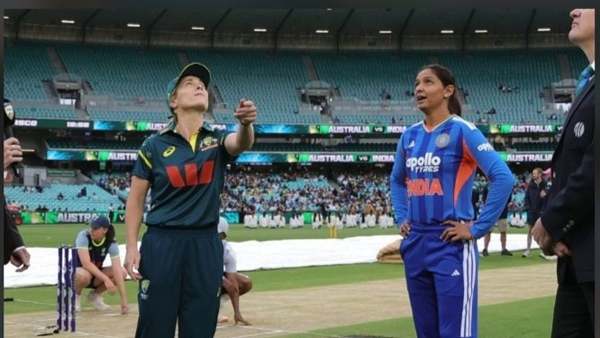
IND W Vs AUS W: Harmanpreet Kaur Wins Toss, Opts To Bat Against Australia In Must-Win ICC Women's WC26 Match
-
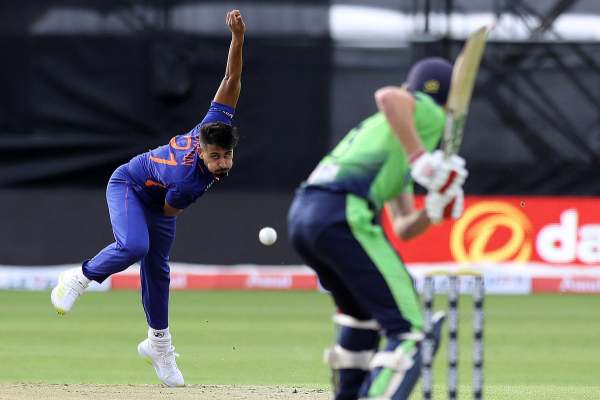
Suryansh Shedge, Prince Yadav Make India Debuts In Series-Deciding T20I Against Ireland
-
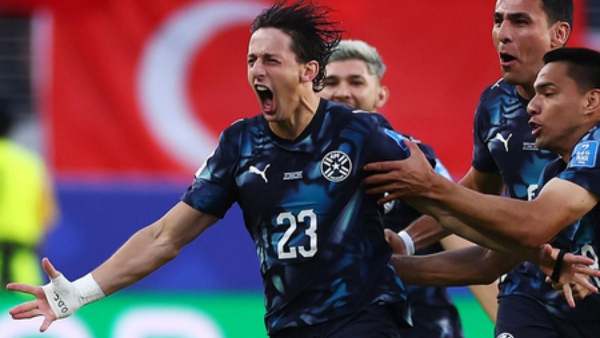
Germany Eye Knockout Revival Against Resilient Paraguay In FIFA World Cup Round Of 32
-
RRB Technician Recruitment 2026: Applications Begin June 30 For 6,565 Grade 1 & Grade 3 Posts