Scotland’s head coach departs with numerous cherished memories, having made qualifying for major tournaments a regular occurrence—albeit with a few notable stumbles along the way.
Steve Clarke’s tenure as Scotland’s manager has officially come to an end.
After seven years at the helm and guiding the national team to three major tournaments, Clarke has stepped down with immediate effect, despite having signed a new long-term deal just weeks before the World Cup began.
Scotland’s failure to progress beyond the group stage prompted his decision. However, he leaves behind a wealth of unforgettable moments for the Tartan Army to celebrate in the years ahead. Here’s a look back at the highs and lows of Clarke’s time in charge.
When Clarke took over, Scotland hadn’t reached a major tournament since the 1998 World Cup and had been absent from the European Championships since 1996. That drought came to an end just 18 months into his leadership.
Scotland began their Euro 2020 qualifying campaign disastrously with a 3-0 loss to Kazakhstan, which led to Alex McLeish’s departure and Clarke’s subsequent appointment. Though his side lost four consecutive games, finishing third was enough to earn them a play-off berth.
Both their semi-final against Israel and final against Serbia went to penalties. In the latter, Serbia equalised in the 90th minute to force extra time, but Scotland held their nerve magnificently. They converted all ten spot kicks across the two shootouts, with David Marshall making one decisive save in each to send Scotland to the delayed pan-European tournament.
At Euro 2020, Scotland finished bottom of Group D, which included Croatia, the Czech Republic, and England. However, they earned immense respect with a valiant goalless draw against England at Wembley, a performance hailed as a moral triumph. The final whistle told the story: while Gareth Southgate’s men were booed off by their own fans, the Scots were cheered passionately by their travelling supporters.
After breaking their long tournament drought, Scotland set their sights on qualifying for their first World Cup in 24 years. They lost only once in group play—to Denmark—but avenged that defeat in the reverse fixture at Hampden Park. Unfortunately, Denmark had already sealed qualification as group winners.
Scotland entered the play-offs again, facing Ukraine in the semi-final. Callum McGregor’s goal gave them brief hope at 2-1, but Ukraine sealed the 3-1 result in stoppage time, extending Scotland’s wait for a World Cup appearance.
In Euro 2024 qualifying, Scotland were drawn alongside Spain, a formidable opponent. Yet, Clarke’s men stunned the footballing world with a 2-0 victory at Hampden Park, courtesy of Scott McTominay’s brace. Clarke later described that night as the “blueprint” for his team’s approach. Scotland went on to defeat Norway, Georgia, and Cyprus, comfortably securing second place and booking their spot at a second consecutive Euros.
Euro 2024 brought renewed optimism. Unlike Euro 2020—where simply qualifying was an achievement—this time expectations were higher. Scotland’s hopes were dashed early as Germany opened the tournament with a dominant 5-1 victory. A 1-1 draw with Switzerland kept their chances alive, but a heartbreaking 100th-minute goal in the 1-0 loss to Hungary saw them finish bottom of the group once again.
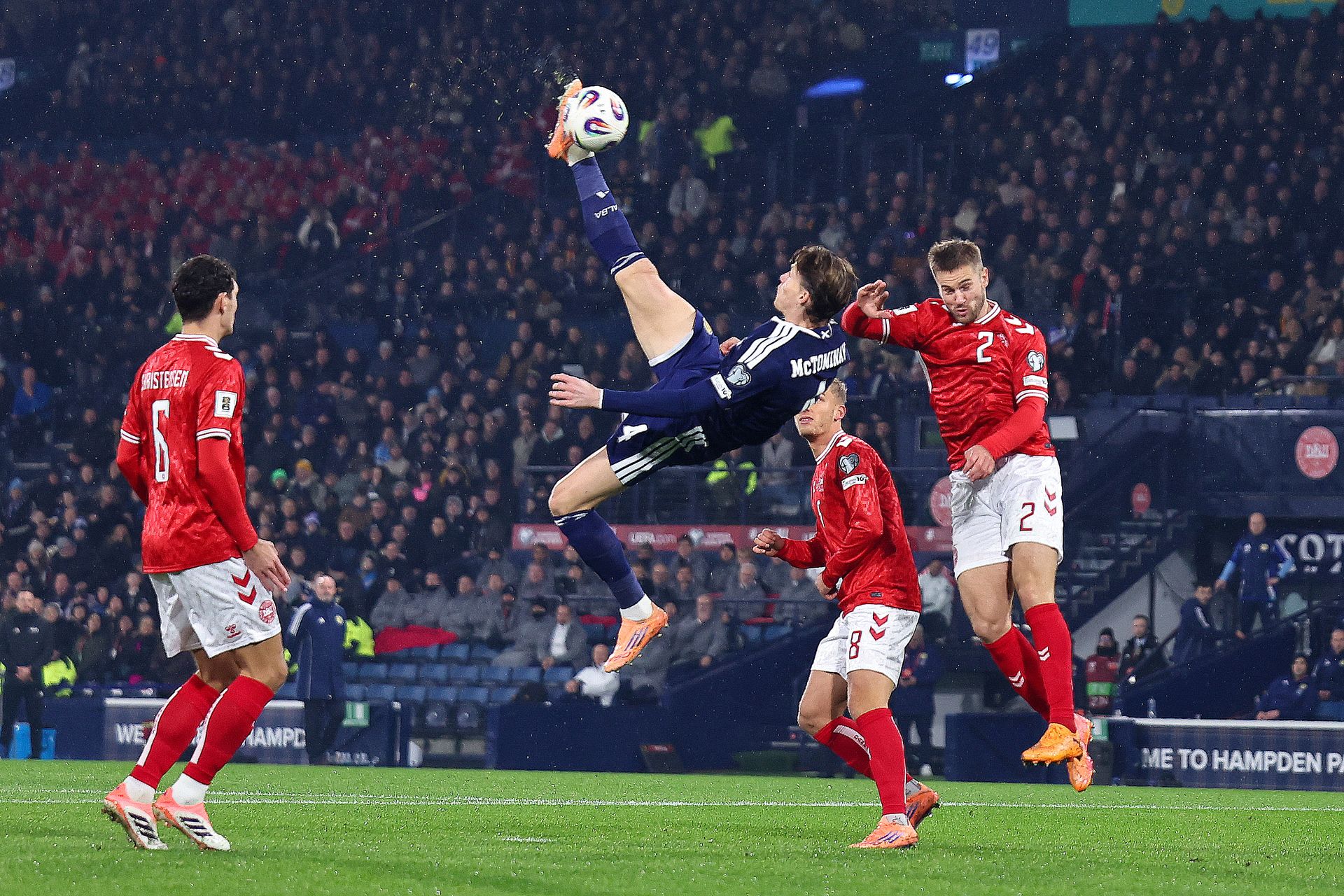
Among the unforgettable moments under Clarke was Scotland’s dramatic 4-2 win over Denmark at Hampden. Scotland needed victory to qualify directly for the World Cup. The game had everything: Scott McTominay’s overhead kick, a Denmark penalty, Lawrence Shankland’s strike, a late equaliser, and finally Kieran Tierney’s 93rd-minute goal. But the true highlight came when Kenny McLean lobbed Kasper Schmeichel from halfway to seal the win—ending Scotland’s 28-year wait for a World Cup appearance.
At the 2026 World Cup, Scotland achieved another milestone by winning their first World Cup match since 1990, defeating Haiti 1-0 in Boston thanks to John McGinn’s first-half goal. For many in the Tartan Army, it was a moment they had waited decades to witness.
However, their momentum faltered. A 1-0 loss to Morocco, courtesy of a second-minute goal, left Scotland needing a result against Brazil to stay alive. Instead, defensive lapses proved costly as Brazil cruised to a 3-0 win. Scotland’s slim hopes of advancing were extinguished soon after, and within an hour of their elimination, Clarke announced his resignation.
Steve Clarke leaves a legacy defined by resilience, tactical progression, and the restoration of pride in Scottish football. Though his tenure ended in disappointment, his achievements—returning Scotland to major tournaments and rekindling national belief—will endure as defining chapters in the country’s modern football history.
-
Sunday Special: Want to try a new weekend special recipe? Then make restaurant style ‘mutton chop’ at home.

-
Non-Sticky Upma Recipe: Make delicious Rava Upma in 10 minutes, follow these easy steps for this

-
Smart Ways to Remove Washing Machine Odors

-
Lottery started for Vi users! Get 3 Months of Spotify Premium Free… How? Know in detail

-
Now, not only humans, even pigeons will train AI, America’s new experiment for early detection of diseases like cancer