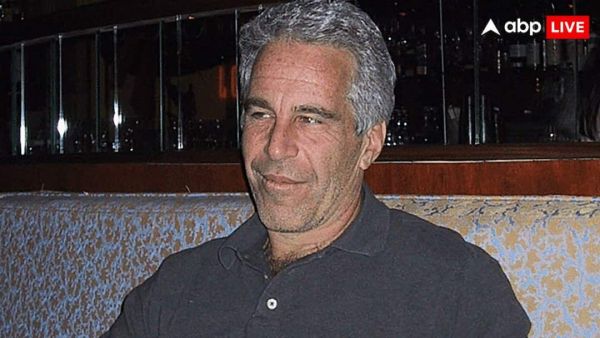
When Roza arrived in the United States from Uzbekistan in 2008, she believed she was beginning a modelling career after French fashion scout Jean-Luc Brunel promised her a future "beyond her dreams."
Instead, according to The Telegraph, she found herself working for Jeffrey Epstein at a Palm Beach office while he was serving an 18-month prison sentence. Years later, Roza alleged that Epstein sexually abused her during that period, repeating those allegations before Congress in May.
Her account has renewed attention on the office where Epstein worked during his prison term—an arrangement that has long been criticised for allowing him significant freedom despite his conviction.
A Prison Sentence That Allowed Daily Work Outside Jail
Epstein began serving an 18-month sentence in June 2008 after pleading guilty to state charges of soliciting prostitution and soliciting a minor.
Although multiple victims had cooperated with investigators and several were minors, Epstein was permitted to join a work-release programme that allowed him to leave the Palm Beach County Stockade every day.
He spent those hours at a Palm Beach office operated under the name Florida Science Foundation, which he claimed existed to support scientific research and required his daily presence.
Epstein also told officials the organisation had been operating for about 15 years. However, records later showed it had been registered only in November 2007, months before he entered prison. The paperwork was filed by his attorney, Jack Goldberger.
Questions Over The Florida Science Foundation
The office occupied a 3,881-square-foot suite on the 14th floor of a building on South Australian Avenue.
According to The Telegraph, more than 1,000 documents linked to the foundation suggest there was little evidence of meaningful scientific activity.
Instead, the office contained luxury furnishings, entertainment equipment, expensive décor and personal belongings. During his incarceration, Epstein reportedly received items including an iPod, a desktop computer from his New York residence, luxury leather samples, DVDs, books and redirected magazine subscriptions at the office.
Among those publications was The Nabokovian, a magazine devoted to Vladimir Nabokov, whose novel Lolita was known to interest Epstein.
Prosecutors Raised Early Concerns
The work-release arrangement drew objections almost immediately.
Epstein's lawyers applied for the programme on the same day he entered jail, arguing that his background in physics made it necessary for him to continue supporting scientific initiatives through the Florida Science Foundation.
Assistant State Attorney Ann Marie Villafana questioned those claims, noting that the organisation had only recently been created, contrary to Epstein's assertion that it had existed for 15 years. She also pointed out that his lead attorney maintained an office in the same building.
Despite those concerns, Epstein was approved for work release in October 2008 and travelled daily between jail and the Palm Beach office for the remainder of his sentence.
Multiple Women Later Alleged Abuse Took Place There
Several women later alleged that the office became a location where Epstein continued sexually abusing victims while technically serving his prison sentence.
One former ballet dancer, identified in court records as Priscilla Doe, described the Florida Science Foundation as "a cover" that enabled Epstein to continue exploiting women.
Another woman, who told investigators she first met Epstein at the age of 17, told the FBI in 2019 that she was taken to the Palm Beach office during his imprisonment.
According to an FBI report, she alleged Epstein asked her and another woman to massage him while topless, requested that they pinch his nipples and masturbated while wearing an ankle monitor. The report also stated that the officer supervising Epstein generally remained near the office entrance.
A separate civil lawsuit alleged women regularly visited Epstein at the office, watched films with him and, in some cases, transported him under work-release arrangements.
Victims Also Encountered Epstein During Legal Proceedings
The building housing the Florida Science Foundation also accommodated a court-related service used by some of Epstein's accusers for depositions and medical examinations.
Legal records show that several victims unexpectedly encountered Epstein inside the building while attending appointments, leading to cancelled sessions in some cases.
One such incident occurred in November 2009, after Epstein had left prison and was serving the remainder of his sentence under house arrest.
A woman identified as Jane Doe No. 3 alleged Epstein attempted to intimidate her by staring directly at her.
Her lawyer later stated, "We ran into Jeffrey Epstein who is present in the building and in violation of three court orders."
The lawyer added: "He made direct eye contact with me and obviously to me appeared to have recognised me. I did my best to shield my client, but obviously there was a moment of contact and she is now crying hysterically and unable to compose herself."
The Office Also Hosted Influential Contacts
Records indicate the office continued to function as a hub for Epstein's professional and social connections during his sentence.
Among those reportedly linked to the office were Sarah Ferguson, who visited on two occasions in 2009, Lord Mandelson, who communicated with Epstein via Skype, and German businessman David Stern, who arranged for documents to be delivered there.
One recorded email from April 2009 showed Epstein asking for suggestions of people who might attend a gathering in Florida.
He wrote: "give me a list of who you think would enjoy a get together in florida„ smart , out of the box types."
The list he received reportedly included Elon Musk among 33 suggested names.
Foundation Closed Soon After Epstein's Release
Epstein was released from jail in July 2009, roughly five months before completing his sentence, and continued under house arrest.
Police later questioned his movements after discovering he was absent from the Palm Beach office during scheduled work hours and had travelled to New York.
By August 2009, authorities found the Florida Science Foundation's name had already been removed from the office door.
The foundation officially closed in April 2010. During its existence, records indicate it made only one science-related contribution—a $10,000 donation to a student gadget competition. The company itself was dissolved five months later.
Calls For Fresh Investigation
Attorney Gloria Allred, who has represented more than two dozen Epstein survivors, welcomed renewed attention on Epstein's 2008 plea agreement.
She told The Telegraph, "I am very happy that there is new attention to Jeffrey Epstein's sweetheart deal' in 2008 in Florida in which he was allowed to enter a plea to two state felonies rather than more severe federal sex trafficking charges."
Questioning the purpose of the Palm Beach office, she added, "His 'office' appears now not to have been a real business office for a Florida Science Foundation, but instead was what I will call 'a play house for a predator', where a number of women were brought and then sexually abused."
Allred also called for a fresh congressional investigation into how the work-release arrangement was approved.
The Florida Science Foundation remains central to broader questions surrounding Epstein's 2008 plea agreement and the extent to which he retained freedom, resources and influential connections while serving a sentence for serious offences.
-
Youri Djorkaeff reveals how one quick decision and team unity led France to their 1998 World Cup glory

-
Sadhguru Calls Packaged Food Dead And Months Old. Experts Explain If Its True

-
Polka dot dress worth 7 thousand, Dior bag, Khushi Kapoor stunned in Arjun Kapoor’s party

-
Which pulses should a patient with high uric acid eat?

-
India’s 1st hydrogen train completes Delhi-Jind trial at 120 Kmph