The United States may have reassured India that future AI technologies will not be abruptly withdrawn, but the sudden restriction on Anthropic’s advanced models has exposed a critical reality of the AI age: nations that rely on foreign-controlled digital infrastructure remain vulnerable to geopolitical decisions beyond their control, accelerating the global push for technological self-reliance and digital sovereignty.
A Reassurance That Raises Bigger Questions
The United States has sought to reassure India that access to advanced artificial intelligence technologies will not be abruptly withdrawn in the future. Yet the very need for such assurances highlights a deeper and more uncomfortable reality: in the emerging AI era, technological dependence has become a strategic vulnerability.
The controversy erupted earlier this month when the Trump administration imposed export controls on national security grounds, preventing foreign nationals from accessing Anthropic’s most advanced AI models, Fable 5 and Mythos 5. The company subsequently suspended access to the models worldwide without warning, sending shockwaves through governments, businesses and researchers that had integrated the technology into their operations.
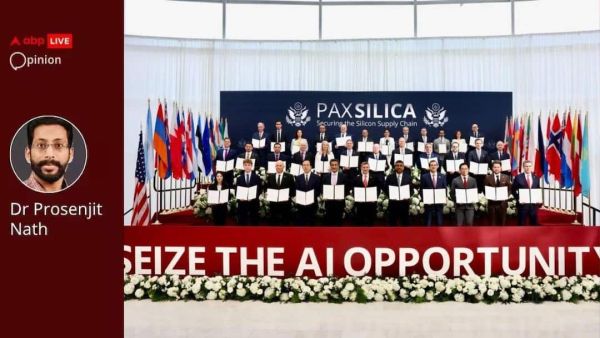
India was among the countries most concerned by the sudden move. Speaking after discussions at the Pax Silica summit in Washington, S. Krishnan, Secretary of India’s Ministry of Electronics and Information Technology, revealed that American officials had assured New Delhi that future access to technology, once granted, would not be arbitrarily terminated. While this commitment may offer temporary comfort, the incident itself has already altered perceptions about the reliability of global AI supply chains.
AI Is Now A Geopolitical Asset
For years, many countries assumed that access to cutting-edge digital technologies would remain largely governed by market principles. The Anthropic restrictions demonstrate that artificial intelligence is rapidly becoming a geopolitical asset, subject to the same strategic calculations that have long shaped access to semiconductors, energy resources and advanced military technologies.
Washington’s justification is understandable from its own perspective. The United States remains locked in an intense technological competition with China, and American policymakers increasingly view AI leadership as a matter of national security. Officials argue that unrestricted access to frontier AI models could create risks ranging from cyber threats to military applications. In this environment, governments are naturally inclined to place security considerations above commercial interests.
The Trust Deficit For America's Partners
However, allies and partners see a different problem. If access to critical AI tools can be revoked overnight through political decisions in Washington, countries that depend heavily on American technology face significant uncertainty.
The issue is not merely about one company or one set of AI models. It concerns whether nations can safely build digital economies on platforms they do not control.
This explains why the Anthropic episode has triggered discussions about "digital sovereignty" across the world. French President Emmanuel Macron criticised the restrictions as excessively nationalist, while leaders in Canada and Europe warned about the dangers of overreliance on a handful of foreign AI providers. Their concerns reflect a growing consensus that technological autonomy is no longer a luxury but a strategic necessity.
Why The Stakes Are High For India
India’s position is particularly important. As one of the world’s largest digital economies and a future AI powerhouse, India cannot afford to become dependent on external technologies that may be subject to sudden political restrictions.
New Delhi has invested heavily in semiconductor manufacturing, digital public infrastructure and indigenous AI capabilities. The recent controversy strengthens the argument for accelerating these efforts.
At the same time, the United States remains an indispensable partner. The Pax Silica initiative, designed to create China-free AI supply chains, demonstrates Washington’s desire to build a network of trusted technological partners. The expansion of the initiative to include European countries and several nations in Latin America reflects the growing strategic importance of securing supply chains for semiconductors, logistics and critical minerals.
The Pax Silica Contradiction
Yet Pax Silica also reveals an underlying contradiction. The United States wants partners to participate in a common technological ecosystem while retaining the authority to restrict access to key technologies whenever security concerns arise.
Such an arrangement inevitably raises questions about trust and reciprocity. Partnerships thrive when participants feel secure, not when they fear the possibility of sudden exclusion.
Digital Sovereignty Is Becoming A Strategic Imperative
The broader lesson extends beyond India and the United States. Artificial intelligence is becoming the defining infrastructure of the twenty-first century. Nations that lack domestic capabilities will increasingly find themselves vulnerable to decisions made elsewhere.
Whether those decisions originate in Washington, Beijing or any other technological centre, dependence creates leverage.
For India, the correct response is not disengagement from the United States. Cooperation with American firms and institutions remains essential for innovation and growth. But cooperation must be be accompanied by a determined push for indigenous research, domestic AI models, semiconductor capacity and resilient technological ecosystems.
Strategic partnerships are valuable, but self-reliance provides insurance against geopolitical shocks.
The Bottom Line
The United States’ assurance to India may help repair confidence in the short term. Nevertheless, the damage has already been done.
The Anthropic episode has reminded governments worldwide that, in the age of artificial intelligence, access to technology can become a political instrument. As global competition intensifies, the pursuit of digital sovereignty will no longer be viewed as protectionism—it will be seen as prudence.
-
OpenAI names Prabhjeet Singh as Managing Director for its India ops

-
Shock In Belfast! India Lose To Ireland In Shreyas Iyer's Captaincy Debut By 34 Runs

-
Breaking The Bird Barrier: Scientist Decodes Zebra Finch Language

-
'Proof Of Residence Is Mandatory Eligibility Condition': Bombay HC Upholds RTE Admission Rejection

-
22 more Iranian crew repatriated via Pakistan after US seizure