
What is Group Life Insurance?
Group life insurance is designed to offer simple and quick protection. It is provided under a single policy that covers all eligible employees.
In most cases:
- The employer pays the premium
- The coverage is linked to your salary or company policy
- The policy remains active only while you are employed
This makes it easy to access and useful in the early stages of your career. However, the coverage is standard across the organisation and may not reflect your personal financial responsibilities. It works well as a base level of protection, but not as a complete plan.
Gaps in Group Life Insurance Coverage
Group life insurance works well as a starting point and provides essential coverage during your working years. As it is linked to your employment, it is helpful to review your protection needs over time, especially during career changes or retirement. The coverage amount is typically based on your salary, offering a useful base level of protection. As your income grows and your responsibilities increase, you may consider whether additional coverage can further support your family’s needs.
These plans are designed to be simple and standardised, making them easy to manage. At the same time, exploring options that allow you to enhance your cover, include additional benefits, or customise protection to your changing circumstances can support more comprehensive long-term financial planning.
Benefits of a Personal Life Insurance Policy
A personal life insurance policy helps address the gaps left by group life insurance and offers more stable, long-term protection.
- Continuous coverage: The policy stays active even if you change jobs, ensuring uninterrupted protection.
- Customised cover: You can choose the coverage amount based on your needs, such as family expenses, education, or loans, like a Home Loan.
- Flexible over time: The policy can be reviewed and adjusted as your financial situation changes.
- Option for couples: Joint life insurance provides cover for two individuals under one policy, helping manage shared responsibilities.
How Tax Benefits Fit Into Your Plan?
Life insurance can also support your tax planning while providing financial protection. Let us understand through an example. Ramesh, a salaried employee, earns Rs.10,00,000 a year. He decides to invest Rs.1,50,000 in a life insurance policy. This amount may qualify for deduction under Section 80C, which reduces his taxable income to Rs.8,50,000. As a result, Ramesh pays tax on a lower amount, helping him save on taxes.
At the same time, Ramesh also ensures financial protection for his family. If something happens to him during the policy term, the amount received by his nominee is usually tax-free under Section 10(10D), subject to conditions. This means his family receives the full benefit without any tax deductions.
In this way, life insurance supports both sides of financial planning. It helps reduce tax outgo today while also securing your family’s future. It is still a good idea to check current tax rules or speak to a tax advisor.
How to Review Your Life Insurance Coverage?
You can follow a few simple steps to check if your current cover is enough for your needs:
- Assess your responsibilities: Review your current expenses and future needs, including family support, children’s education, and ongoing loans, to understand how much financial protection your family may require over time.
- Compare existing cover: Check whether your group life insurance coverage is enough to meet these financial needs, and see if the sum assured aligns with your responsibilities and long-term commitments.
- Identify gaps: Look for any gaps between your current cover and your family’s needs. You can use tools like a life insurance premium calculator from insurers such as Aviva India to get a quick estimate of the coverage that may suit your situation.
- Bridge the gap: If your current coverage is insufficient, consider adding personal or joint life insurance to ensure your family has adequate financial protection through different life stages and changing responsibilities.
Taking these steps can help you stay prepared and ensure your family is financially protected.
Conclusion
Group life insurance is a useful benefit that provides basic protection without extra cost. It works well as a starting point, especially early in your career. However, it may not be enough for long-term needs. A personal policy gives you more control and ensures your cover continues over time. A combination of group life insurance and personal or joint life insurance can provide better and more reliable financial protection.
-
India Turned To Venezuela For Crude Oil. Now An Earthquake Has Changed The Equation

-
Beware! Sellers On Amazon, Flipkart Are Exploiting Apple's Price Hike Gap On MacBooks: Here's How To Stay Safe

-
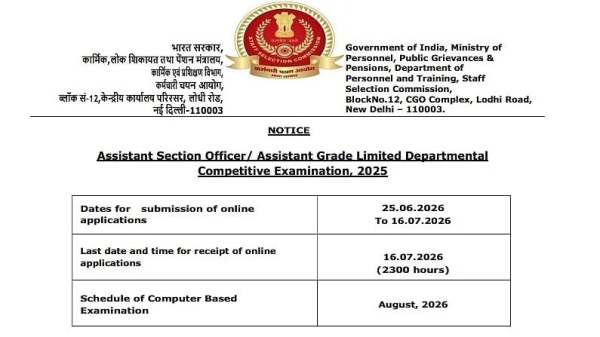
SSC ASO LDCE 2025 Notification Out: Registration Begins For 341 Assistant Section Officer Posts; Apply Online By July 16
-
Taylor Swift, Travis Kelce To Host 2-Day Wedding At Madison Square Garden In New York, Nearly 2,000 Guests Expected To Attend

-
'I Wake Up Every Day Praying There's No Trigger': Mom-To-Be Samantha Ruth Prabhu Opens Up About Living With Myositis Amid Pregnancy