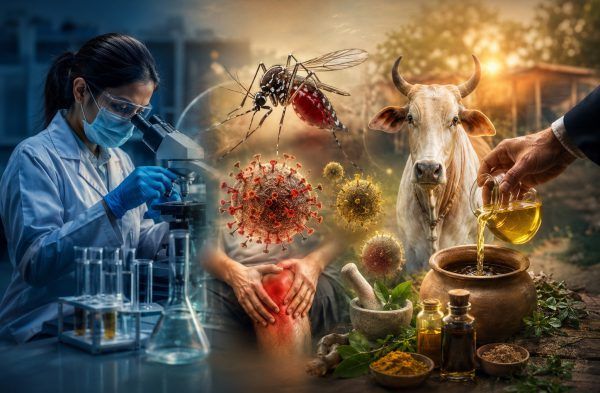
New Delhi . Amid the search for effective treatment against viral diseases spread by mosquitoes, scientists at the Indian Institute of Technology Roorkee have presented an important research result. Researchers at the institute have identified bioactive compounds in Cow Urine Distillate that have shown significant antiviral effects against Chikungunya Virus at laboratory level. Scientists believe this discovery could form the basis for the development of new drugs in the future, although it should not be seen as a direct treatment yet.
This study was conducted by scientists from the Department of Biosciences and Bioengineering, IIT Roorkee. Collaboration of various Ayurvedic and biomedical institutions was also taken in the research. During the study, scientists tested the effect of cow urine distillate on cells infected with Chikungunya virus. Tests conducted in the laboratory found that when used in limited quantities, it was able to reduce the activity of the virus to a great extent.
According to the researchers, during the test, a significant reduction in the amount of virus was recorded when cow urine distillate was added to the infected cells. The study also found that the activity of the virus decreased further as the concentration was increased. However, these results have only been obtained under controlled laboratory conditions and several early stages of scientific testing remain to be done to link them to human treatment.
During the research, scientists identified many important bioactive compounds in cow urine distillate. These include elements like benzoic acid, hippuric acid and oleic acid. The study indicated that these compounds may affect proteins and enzymes that play important roles in the life cycle of the virus. This may result in the virus’s ability to replicate and spread in the body becoming weaker.
Another important aspect of the study was that when cow urine distillate was tested in combination with some natural compounds, more effective results were seen against the virus. Scientists believe that the combination of different natural compounds can become the basis for the development of new antiviral drugs in the future.
However, experts have also advised caution regarding this research. He says there can be a big difference between the results obtained in the laboratory and the actual effect in the human body. Any potential drug has to go through several stages of pre-clinical and clinical trials before it is approved for use. Therefore, on the basis of this study, direct consumption of cow urine or adoption of home remedies cannot be considered appropriate.
Health experts believe that this research is scientifically important because it presents an example of coordination of traditional knowledge and modern biotechnology. If further trials also yield positive results, new options may be developed for the treatment of chikungunya and other mosquito-borne viral diseases.
-
Read this also Collector issued orders regarding prevention of dengue
Chikungunya cases are reported every year in India during the monsoon and subsequent months. In such a situation, such research can prove useful in the direction of discovering affordable and accessible medicines. At present, the scientific community is viewing this research as an initial but encouraging achievement. Experts say that detailed clinical studies and long-term trials remain needed to reach final conclusions.
-
Kia India Deepens Tennis Premier League Partnership As Principal Partner Of All Eight Franchises

-
Europe Heat Wave Explained: Why Adults Are More At Risk Of Extreme And Deadly Heat? Here's The Reason

-
Deadly Pakistan Bus Accident: 40 Killed After Quetta-Peshawar Coach Plunges Into Ravine In Khyber Pakhtunkhwa | Video

-
Ketan Agarwal murder: Accused Siya, Chetan sent to judicial custody

-
Evicted tribal family allowed back after reconversion vow