Going bald? This new hair-loss drug could restore up to 86% more coverage in just 6 months and reverse Androgenetic Alopecia
ETimes | June 24, 2026 9:40 PM CST

For hundreds of years, people have dealt with receding hairlines and thin hair issues. With multiple haircare products, home remedies, and advanced treatments, a new scientific breakthrough could offer fresh hope for many. Researchers have now unveiled a promising baldness treatment that increases hair coverage up to 86% within 6 months, sparking a hint of excitement among patients and experts.
Only for male-pattern hair loss
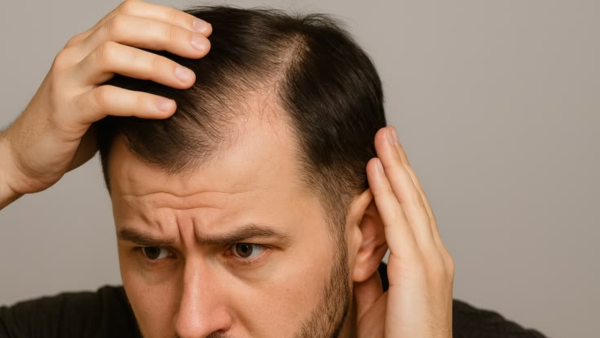
Male pattern hair loss, or androgenetic alopecia , is a common hereditary condition that is mainly a hormonal condition affecting men of all ages. It starts with noticeable hair loss on top of the head, or a receding hairline, which affects the follicles, making them shrink and stop the production of hair growth.
In this busy marketplace, a newcomer has now made its entry, which is a non-hormonal drug with promising results in phase 3 clinical trials. It is developed by US-based biopharmaceutical firm Veradermics, VDPHL01, and is an extended-release minoxidil oral tablet. If this drug sounds familiar to you, it is because it has been used for decades as a medicine for high blood pressure.
When doctors noticed that patients with high blood pressure started to look more hairy, they developed a topical minoxidil from it. Veradermics’ VDPHL01 is mainly an extended-release oral formulation of the topical treatment minoxidil, which leverages extended-release technology to deliver a minoxidil product that improves the efficacy and safety of the product for use.

How was it tried and tested?
In a clinical trial, experts gathered 519 males with mild-to-moderate pattern hair loss and assigned them to receive either VDPHL01 8.5 mg once daily, or VDPHL01 8.5 mg twice daily, or a placebo. Improvements were seen in hair growth after six months, with once-daily and twice-daily volunteers witnessing an average increase in hair count of around 30.3 hairs/cm² and 33 hairs/cm², respectively, from baseline compared with 7.3 hairs/cm² in the placebo group.
What were the final results?
The results revealed that 79.3% in the once-daily cohort and 86% of the twice-daily cohort had an improvement in hair coverage, compared with 35.6% taking a placebo. Also, 48.4% of the once-daily cohort and 62.9% of the twice-daily cohort were witnessed, which came under the ‘much improved’ and ‘improved’ segment. But, on the other hand, the placebo patients saw only a 13.4% change.
According to a report in E-news, Dr Maryanne Makredes Senna, assistant professor of dermatology at Harvard Medical School and a member of Veradermics’ scientific advisory board, said, “Based on the results of the trial, VDPHL01, if approved, has the potential to transform the treatment landscape for male pattern hair loss.”
Michael Gold, study trial investigator and dermatologist, also added, “Dermatology has been treating hair loss with a drug borrowed from cardiology in a formulation never intended for our patients at doses we arrived at informally. VDPHL01 is the first oral minoxidil formulation developed specifically for pattern hair loss and now the first to generate positive phase 3 results of efficacy and safety.”
Following the successful late-stage clinical trials with male candidates, the firm will next start the first phase with female participants for women with pattern hair loss. If approved, Veradermics states that VDPHL01 would stand to be the only FDA-approved oral non-hormonal treatment for male and female patients showcasing such fast hair growth coverage.
Only for male-pattern hair loss
Male pattern hair loss, or androgenetic alopecia , is a common hereditary condition that is mainly a hormonal condition affecting men of all ages. It starts with noticeable hair loss on top of the head, or a receding hairline, which affects the follicles, making them shrink and stop the production of hair growth.
In this busy marketplace, a newcomer has now made its entry, which is a non-hormonal drug with promising results in phase 3 clinical trials. It is developed by US-based biopharmaceutical firm Veradermics, VDPHL01, and is an extended-release minoxidil oral tablet. If this drug sounds familiar to you, it is because it has been used for decades as a medicine for high blood pressure.
When doctors noticed that patients with high blood pressure started to look more hairy, they developed a topical minoxidil from it. Veradermics’ VDPHL01 is mainly an extended-release oral formulation of the topical treatment minoxidil, which leverages extended-release technology to deliver a minoxidil product that improves the efficacy and safety of the product for use.
How was it tried and tested?
In a clinical trial, experts gathered 519 males with mild-to-moderate pattern hair loss and assigned them to receive either VDPHL01 8.5 mg once daily, or VDPHL01 8.5 mg twice daily, or a placebo. Improvements were seen in hair growth after six months, with once-daily and twice-daily volunteers witnessing an average increase in hair count of around 30.3 hairs/cm² and 33 hairs/cm², respectively, from baseline compared with 7.3 hairs/cm² in the placebo group.
What were the final results?
The results revealed that 79.3% in the once-daily cohort and 86% of the twice-daily cohort had an improvement in hair coverage, compared with 35.6% taking a placebo. Also, 48.4% of the once-daily cohort and 62.9% of the twice-daily cohort were witnessed, which came under the ‘much improved’ and ‘improved’ segment. But, on the other hand, the placebo patients saw only a 13.4% change.
According to a report in E-news, Dr Maryanne Makredes Senna, assistant professor of dermatology at Harvard Medical School and a member of Veradermics’ scientific advisory board, said, “Based on the results of the trial, VDPHL01, if approved, has the potential to transform the treatment landscape for male pattern hair loss.”
Michael Gold, study trial investigator and dermatologist, also added, “Dermatology has been treating hair loss with a drug borrowed from cardiology in a formulation never intended for our patients at doses we arrived at informally. VDPHL01 is the first oral minoxidil formulation developed specifically for pattern hair loss and now the first to generate positive phase 3 results of efficacy and safety.”
Following the successful late-stage clinical trials with male candidates, the firm will next start the first phase with female participants for women with pattern hair loss. If approved, Veradermics states that VDPHL01 would stand to be the only FDA-approved oral non-hormonal treatment for male and female patients showcasing such fast hair growth coverage.
READ NEXT
-
Who Will Officiate the Colombia vs DR Congo Match?

-
Will England Seal World Cup Knockout Qualification with a Win Over Ghana Tonight?

-
Liverpool Face Summer Raid from Tottenham Hotspur as Wales Star Draws Interest

-
Thomas Tuchel Drops John Stones and Nico O'Reilly from England Starting Line-up Against Ghana

-
Gurukul degree colleges to get UGC pay scale, SC students laptops