Elon Musk’s rise is the perfect American myth of the lone visionary who bends the future through sheer will and brilliance. But Musk, the world’s first trillionaire, built his empire substantially on public money and the stock market debut of his company SpaceX represents the final act of that extraction.
On June 12, Musk’s SpaceX raised $75 billion in its initial public offering, ending its first day on the public markets with a market capitalisation of around $2.2 trillion.
Despite concerns about the SpaceX IPO being grossly overvalued, now a significant portion of Americans’ retirement savings and pension accounts will be tied to the company’s market value – a result of how present-day retirement investing functions.
Public money and government subsidies are at the heart of Musk’s empire.
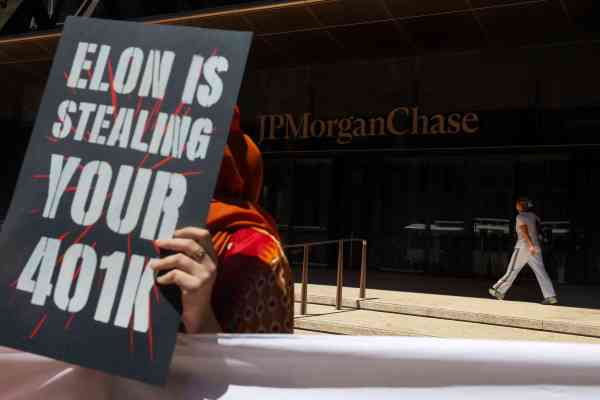
In 2006, SpaceX received $278 million from the National Aeronautics and Space Administration, for a demonstration programme on commercial cargo transport to space when it had nothing yet to show. The addition of a few more milestones eventually boosted the total contract value to up to $396 million.
This was followed at the end of 2008 by a $1.6 billion contract for 12 commercial-resupply flights – which Musk himself credited with saving the company.
A Washington Post analysis found that Musk’s companies have received at least $38 billion in government contracts, loans,...
Read more
-
Arsenal eye £100m move for Morgan Rogers as Aston Villa and England forward shows interest in Emirates transfer

-
Why is the NPS Vatsalya scheme gaining popularity? Registrations cross 3 lakh; find out why this scheme is special for children..

-
FD vs. Post Office Scheme: Should you opt for a bank FD or open an account at the Post Office for a tenure of 1 to 5 years? Find out here..
-
PhonePe New Rules: PhonePe will now levy charges; will money be deducted directly if the wallet isn't used?

-
Great news for women in Punjab! ₹1,500 will be credited directly to their accounts on July 1; find out who is eligible..