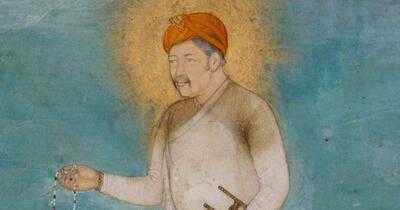
I almost never write a response to articles – especially not in Indian publications – but this subject matters to me far too deeply, and I have simply done too much research over the past 30 years to let it pass without comment (“Was Akbar really a ‘secular’ icon?”).
As a consequence of India’s intensely politicised climate, it has become nearly impossible to say anything remotely objective about the Mughals. This otherwise valuable contribution by Syed Ali Nadeem Rezavi once again demonstrates how even the remaining serious Indian historians feel compelled to defend a figure such as Akbar against the most simplistic caricatures of his empire propagated by Hindutva pamphleteers.
Yet, Rezavi neglects to mention that the very circle of Aligarh historians with whom he twice seeks to associate himself with are themselves largely responsible for the anachronistic image of Akbar as a secular, proto-nationalist ruler. It is, to say the least, somewhat paradoxical that Rezavi continues to rely on these same authors precisely while attempting to nuance the notion of Akbar as a secular icon. That image emerged from the political need of the global Left, both in India and in the West, to portray Akbar simultaneously as the perfect Muslim and the perfect...
Read more
-
Lionel Messi vs Cristiano Ronaldo: Why the Comparison Never Truly Made Sense

-
FIFA World Cup 2026: Latest Updates, Historical Facts and Key Highlights

-
Raphinha’s camp addresses injury updates, transfer rumours, and personal life speculations amid World Cup concerns

-
Gujarat Police Intensify Security Measures Ahead Of Muharram Processions
-
Portugal vs Uzbekistan preview: Can Cristiano Ronaldo open his World Cup account?