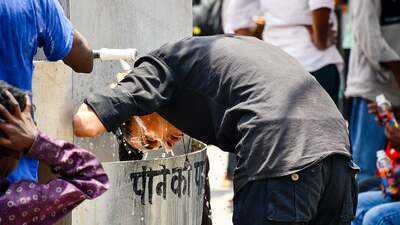
Access to clean and potable water is a fundamental right and the government has a constitutional obligation to ensure its availability to all citizens, the Bombay High Court observed on Monday, 22 June, while expressing concern over worsening water scarcity in Maharashtra.
The remarks came as a bench of Justices A.S. Gadkari and Kamal Khata sought to know from the state government when the issue would be resolved and what concrete measures were being taken to address it.
The court was hearing a batch of petitions concerning deaths of infants, pregnant women and lactating mothers linked to malnutrition in the tribal Melghat region of Amravati district in Vidarbha.
During the hearing, the bench was informed that the area had been grappling with an acute shortage of clean drinking water, particularly during the peak summer months. At an earlier hearing in April, the court was told that 13 people had died after allegedly consuming contaminated water.
On Monday, the state government said potable water was being supplied through tankers at regular intervals. However, the petitioners contended that the supply remained erratic and inadequate. The court responded sharply, observing that the government was not doing any "favours" by supplying drinking water.
When tap water remains a pipe dream"Access to clean and potable water is a fundamental right enshrined in the Constitution, and the government has a duty to provide the same to all its citizens. Not just the Melghat region but the entire state is facing the issue of water scarcity," the bench said.
It directed the government to place on record the steps taken to address the crisis and provide a timeline for resolving the issue. The matter has been posted for further hearing on Tuesday.
The observations come amid growing concerns over India's long-term water security. Several studies have warned that the country is facing a looming water crisis driven by rapid urbanisation, declining groundwater reserves, erratic rainfall patterns linked to climate change and rising demand from agriculture and industry.
According to government estimates and independent assessments, a large proportion of India's districts are already experiencing varying degrees of water stress, while groundwater levels continue to decline in many regions. Experts have repeatedly cautioned that without major investments in water conservation, storage, recycling and distribution infrastructure, several parts of the country could face severe shortages in the coming decades.
Maharashtra has been among the states periodically affected by drought-like conditions and water scarcity, particularly in rural and tribal areas, where access to safe drinking water often remains dependent on tanker supplies during summer months.
Against this backdrop, the high court's remarks underscored that access to safe drinking water is not merely an administrative responsibility but a basic right that governments are required to guarantee.
With PTI inputs
-
Is Lionel Messi Fit to Play for Argentina Against Austria? Latest World Cup 2026 Injury Update

-
Tottenham Eye Surprise Transfer for Manchester United Star Marcus Rashford

-
Kylian Mbappé to Make 100th Appearance for France in Landmark Match

-
Lucknow fire: Once filled with dreams, now reduced to ashes
-
Redmi A7 Pro Review: Built To Last A Day, But Not A Gaming Session