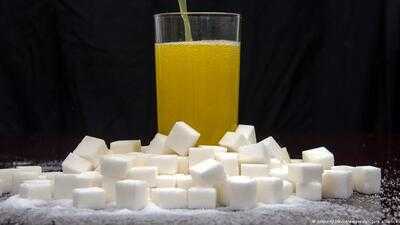
Nigeria's sugary drinks tax was meant to stop rising diabetes rates, but soaring inflation has eroded its impact. Experts say the levy is too small to change behavior and urge higher rates and reforms.Non-communicable diseases (NCDs) account for 29% of deaths in Nigeria and place a heavy burden on the country's health systems, according to the World Health Organization (WHO). Leading experts warn that NCDs are quietly becoming a major health concern, particularly in cities where ultra-processed foods high in salt, unhealthy fats, and sugar have become increasingly common. Approximately 11 million Nigerians are living with diabetes, but millions more are likely undiagnosed. The country currently ranks among the leading African countries in terms of prevalence. In 2022, the Nigerian government introduced a tax on sugar-sweetened beverages (SSB)to curb the rising cases of diabetes and other diet-related non-communicable diseases (NCDs). The tax, at 10 Naira ($0.65, €0.57 cents) per liter, was expected to discourage excessive sugar consumption while generating revenue for healthcare. But four years later, public health advocates and economists say the levy has become too weak to influence consumer behavior and change health outcomes. As Nigeria's inflation" soars and drives up the cost of goods, it raises questions about whether the country's SSB tax is functioning as an effective health policy. "Nigeria's 10 (Naira) per liter, which translates to barely 2% of the retail price, is pocket change, not policy," Ikemesit Effiong, Managing Partner at SBM Intelligence, told DW, alluding to the WHO-recommended 20%. Some experts say increasing the current SSB excise tax from 10 Naira per liter to 130 Naira would raise retail prices by about 39% and potentially reduce annual per-capita sugary beverage consumption by 29%. Nigeria's Coordinating Minister of Health and Social Welfare, Muhammad Pate, noted that the government could secure at least 40% of the revenue generated to fund health programs. According to a study led by the Center for the Study of Economies of Africa on SSB consumption patterns in the country, Nigeria ranks 4th globally in SSB consumption, with annual sales of about 38.6 million liters (10.2 million gallons) and a projected market value growth of 16.63% Impact of inflation on Nigeria's sugar tax Since the tax was introduced, Nigeria has experienced a cocktail of economic shocks, especially following the removal of the fuel subsidy, which has further exacerbated the country's cost-of-living crisis. Food prices have soared, while the prices of beverages and household items have equally climbed sharply. For many Nigerians, the cost of soft drinks has more than doubled over the last few years, largely due to inflation and rising production costs rather than the sugar tax itself. "The common drink size in the country is 50cl (centiliter) or smaller, meaning the tax adds only about 5 Naira or less per bottle. Because it is not percentage-based, the levy does not adjust for inflation or manufacturers' price hikes. So, its impact erodes over time," Opeyemi Ibitoye, Program Officer on SSB Tax Campaign at the Corporate Accountability and Public Participation Africa (CAPPA)," told DW. The SSB tax currently represents just 2% of a bottle's cost, down from 6.7% five years ago, when the tax was introduced, Adewunmi Emoruwa, Lead Strategist at Gatefield, said. "That amount was just not enough, and it could easily be absorbed by the beverage industry, he told DW, stressing that the design was flawed because it doesn't target formulation. "If the tax is fixed and is not based on the sugar content or sugar volume, then there is really no incentive for the industry to change their formulas or recipes, or reduce the sugar content in their drinks." Pushback from the industry The campaign for a raise has not gone down well with the beverage industry. During a parliamentary hearing"late last year, the Manufacturers Association of Nigeria (MAN) opposed the proposed amendment, arguing that an increase could trigger job losses in the manufacturing sector and raise operational costs. But according to Adewunmi, the beverage industry always turns to this playbook to slow reforms. "One of the classic things is weaponizing the country's economic precarity. When people are in this economic state, where inflation is the order of the day and unemployment is widespread, they start to scaremonger," he said, before adding that the debilitating impact of sugary beverage-related diseases is more severe on the economy than what the industry would have paid in tax revenue. The tax on sugary drinks has significant potential. Experts and health advocates in the country often cite the implementation of the tax in countries like Mexico and South Africa and its demonstrable impact on consumption. Mexico, for instance, is one of the world's leading consumers of sugary drinks; one in three children in the country is overweight, while at 100,000 deaths a year, diabetesthat companies label foods is the nation's second-leading cause of death. The implementation of a 10% tax on all sweetened drinks in 2014 led to a nearly 10% drop in consumption. By 2020, the country passed a law mandating companies to label food and drinks that contain excess sugar, calories, and saturated fat. Effiong proposed that Nigeria's sugary beverages tax should be indexed to inflation so it doesn't evaporate, tie revenue to health budgets so people see the benefit, and pair it with mandatory warning labels. "Nigeria adopted the tax but refused to enforce the playbook. The result is a policy that looks good on paper but does nothing on the ground," he added. For Ibitoye, tax revenue should be ringfenced for healthcare and the management of non-communicable diseases. This would mean more accessible screening, affordable medicines, and better community health services for Nigerians. In a country where families often pay out of pocket for chronic care, earmarking revenue is not just good governance; it is a lifeline that could save lives and reduce the crushing financial burden of NCDs. Edited by: Chrispin Mwakideu
-
Not Alia Bhatt, Sharvari Wagh dominated Samay’s show, spread glamor wearing a stylish skirt top, wore such an expensive outfit

-
Mahashivratri 2026: Top 3 Designer Sarees under Rs 600, Try With Traditional Jewelery

-
Think 100 times before selling Juno smartphone! Privacy is more valuable than price. Gujarati
-
FIFA World Cup 2026: Spain’s 4-0 victory with the goals of Yamal-Oyarjabal, Iran-Belgium match remained goalless

-
15 year old Vaibhav Suryavanshi can create history on the same Belfast ground where Rohit Sharma made his international debut.