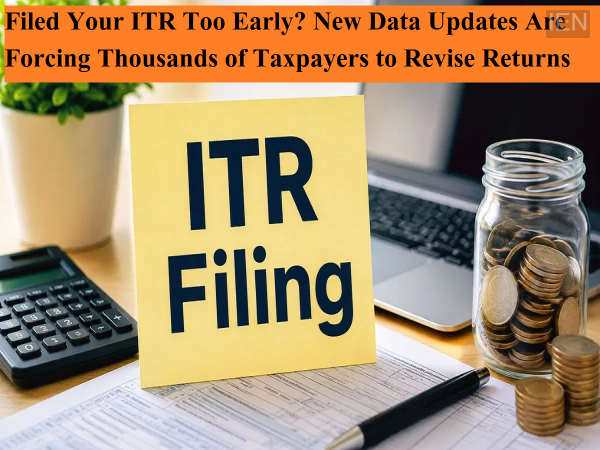
Many taxpayers rush to file their Income Tax Returns (ITRs) as soon as the filing season begins, hoping to avoid last-minute stress and secure faster refunds. However, tax experts are increasingly warning that filing too early can sometimes create unexpected complications.
A growing number of taxpayers are finding themselves in a situation where they need to revise their returns after submission because new financial information appears in the Income Tax Department's records later. As India's tax ecosystem becomes more data-driven and interconnected, taxpayers are being advised to verify all available information carefully before filing their returns.
Why Early ITR Filing Can Become a ProblemIn previous years, filing an ITR early was generally considered a smart move. However, the tax reporting system has evolved significantly, and financial information now flows into government databases from multiple sources throughout the year.
Banks, employers, mutual fund companies, stockbrokers, insurance providers, and other financial institutions continue updating taxpayer data even after the financial year ends.
As a result, taxpayers who file their returns immediately may later discover that additional income, investment, or transaction details have been reported to the tax department after their return was already submitted.
When this happens, the taxpayer may need to file a Revised Return to correct the information and avoid future discrepancies.
AIS Has Become More Detailed Than EverOne of the primary reasons behind the increase in revised returns is the growing importance of the Annual Information Statement (AIS).
The AIS now contains a wide range of financial information, including:
-
Salary income
-
Bank interest earnings
-
Fixed deposit interest
-
Dividend income
-
Mutual fund transactions
-
Share market trades
-
Property transactions
-
Foreign remittances
-
High-value expenditures
-
Other reportable financial activities
Because information is received from multiple institutions at different times, the AIS may continue to change even after the taxpayer initially reviews it.
This can create a mismatch between the filed return and the latest data available with the Income Tax Department.
AIS and TIS Are Not Static DocumentsMany taxpayers assume that once they download their AIS or Taxpayer Information Summary (TIS), the information remains unchanged. In reality, both documents can be updated periodically as financial institutions submit fresh data.
This means the figures available today may not be identical to those available a few weeks later.
As tax reporting systems become increasingly automated, taxpayers who file too quickly may miss important updates that could affect their final tax calculations.
Advanced Technology Is Increasing Tax ScrutinyThe Income Tax Department is now using sophisticated data analytics and technology-driven verification systems to identify inconsistencies in tax returns.
These systems can compare information reported by taxpayers with data received from banks, employers, brokers, and other reporting entities.
Even minor discrepancies may be flagged automatically for further review.
Because of this enhanced monitoring, many taxpayers prefer to proactively correct errors through revised returns instead of waiting for notices or clarification requests from the tax department.
Deadline for Filing a Revised ReturnFor Assessment Year 2026-27, taxpayers currently have the option to file a Revised Return until December 31, 2026.
However, this option remains available only if the tax assessment has not already been completed by the department.
There are also proposals to extend the revision window further, potentially allowing taxpayers additional time to make corrections. Nevertheless, tax professionals advise against relying on future extensions and recommend ensuring accuracy from the outset.
If the revised return deadline is missed, taxpayers may still be able to use the Updated Return facility in eligible cases. However, this route generally involves additional tax liability and extra compliance costs.
How to Avoid the Need for a Revised ReturnExperts recommend taking a few extra days before filing instead of rushing to submit the return immediately.
Before filing, taxpayers should reconcile information from:
-
Annual Information Statement (AIS)
-
Taxpayer Information Summary (TIS)
-
Form 26AS
-
Form 16
-
Bank statements
-
Interest certificates
-
Investment records
-
Capital gains statements
Any mismatch should be investigated and resolved before submitting the return.
Filing Correctly the First Time Is the Best StrategyWhile the tax system allows taxpayers to revise returns when necessary, repeated corrections can be time-consuming and increase compliance complexity.
A carefully prepared return based on fully reconciled financial information can help taxpayers avoid unnecessary revisions, potential notices, and future disputes.
As tax reporting becomes increasingly data-centric, experts emphasize that accuracy is now more important than speed. Taking the time to verify AIS, TIS, Form 26AS, and supporting financial documents before filing can save taxpayers significant effort later and ensure a smoother tax filing experience.
-
Build a career in medicine without a NEET score; admission to these courses is based on Class 12 marks..

-
Private schools in Punjab will not be able to hike fees by more than 5% annually; preparations underway to enact a law..

-
UP TET 2026 city intimation slip released; find out how to download it and get the latest update on the admit card..

-
Bank Holiday: Banks to remain closed for three consecutive days starting June 26..
-
ITR Filing 2026: Avoid making these mistakes at all costs while filing your tax return, or you might receive a notice..