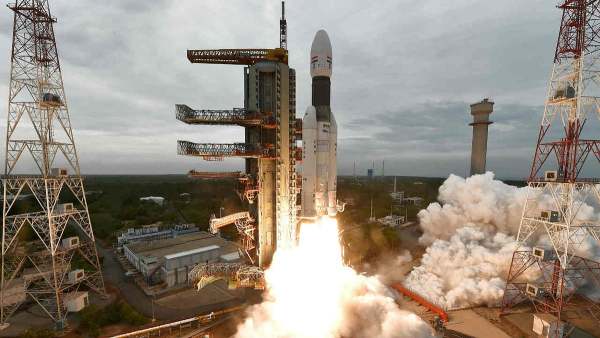
India's space economy is projected to grow from $8 billion to $40-45 billion over the next decade, driven by policy reforms, private sector participation and technology commercialisation. With over 400 space startups, rising investments, expanding global partnerships and ambitious missions like Gaganyaan, India aims to increase its share of the global space economy to 8% by 2030.
New Delhi: India's space economy is projected to grow five-fold from the current $8 billion to $40-45 billion over the next decade, driven by policy reforms, rising private sector participation and growing commercialisation of space technologies, an official fact-sheet said on Sunday.
The fact-sheet highlighted that India currently accounts for about 2-3 per cent of the global space economy, with the country's share targeted to rise to 8 per cent by 2030.
The rapid growth is being supported by a series of structural reforms undertaken in recent years, including the opening up of the space sector to private players, the establishment of the Indian National Space Promotion and Authorisation Centre (IN-SPACe), and the creation of NewSpace India Limited (NSIL) to commercialise technologies developed by the Indian Space Research Organisation (ISRO).
According to the government, India has witnessed a sharp rise in private participation in the space sector.
-
Barcelona legend Alexia Putellas to finalise new club this week as two NWSL sides challenge London City Lionesses for two-time Ballon d'Or winner

-
Start the week with a film: In 'Strange Days', a dystopia that is already here

-
Podcast: Why a historian of capitalism believes the neoliberal order is dying

-
UK Prime Minister Keir Starmer Announces Resignation: What's Next for Labour?

-
Keir Starmer Resigns as UK Prime Minister and Labour Leader