DON'T MISS A MOMENT OF THE WORLD CUP
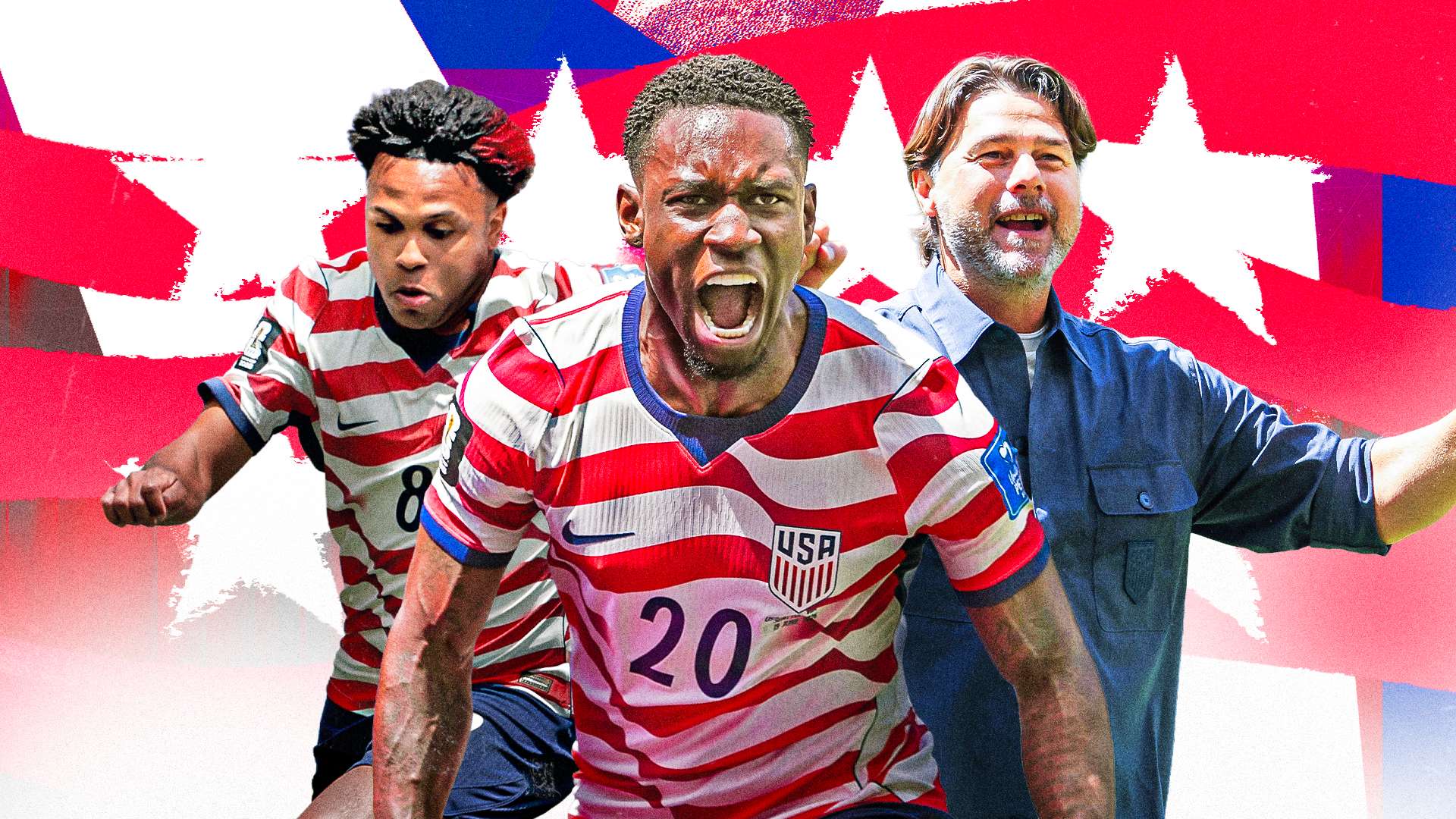
Tactical Analysis: Mauricio Pochettino’s Bold Strategy Driving USMNT’s Dominant World Cup Wins Over Paraguay and Australia
GOAL provides a detailed breakdown of the tactical contrasts and consistencies in the USMNT’s opening two World Cup fixtures.
Paraguay coach Gustavo Alfaro conceded after the final whistle that his side had simply been outmatched. The United States Men’s National Team had put four past his team in their World Cup opener, and Alfaro admitted there was nothing his players—or he himself—could do to stop it.
“They’re a team that presents many challenges,” he said. “They have answers for every problem.”
The architect behind those solutions, naturally, is Mauricio Pochettino. Appointed as USMNT manager in the autumn of 2024, Pochettino was brought in to lead not just a cultural transformation, but also a tactical evolution capable of propelling the U.S. to new heights on home soil.
Pochettino arrived with an elite résumé, and through two World Cup matches, his methods—combined with a talented squad—are creating a potent mix. For the first time since 1930, the USMNT have won consecutive World Cup games, topping their group with a match to spare. They have achieved those results in two distinct styles, though united by shared tactical principles that underpin their approach.
After two group-stage victories, here’s a closer look at how Pochettino set up his side for success against Paraguay and Australia.
The Paraguay ‘Pentagon’
Alfaro described the USMNT’s shape as a “Pentagon,” an apt depiction of their attacking structure. At nearly every phase, five players occupied advanced areas, though in practice, six typically pushed high up the pitch.
Those six included Folarin Balogun leading the line; Christian Pulisic, Weston McKennie, and Malik Tillman operating centrally; and Antonee Robinson and Sergiño Dest flying down the flanks. This configuration consistently created numerical superiority in attack, which the Americans exploited relentlessly.
A typical move saw McKennie surge forward, dragging his marker and opening space for Tillman to exploit. When defenders shifted toward Tillman, the ball would be quickly switched wide to either Pulisic or Dest, both capable of beating opponents one-on-one. Paraguay never managed to adapt, leaving themselves repeatedly exposed.
McKennie’s late runs caused confusion, while Pulisic and Dest tormented defenders down both wings. Balogun’s pace in transition further punished Paraguay whenever they attempted to push forward. Each time they committed men upfield, Balogun’s threat forced them to retreat, leaving them perpetually outnumbered and overwhelmed.
The sequences varied slightly, but the intent remained the same: to attack with numbers and dismantle Paraguay’s deep defensive block. The result was four unanswered goals and a statement victory.
‘Their Quality Is Clear’
In the next match, Pochettino faced a new challenge: replacing the injured Christian Pulisic. The solution came in the form of Ricardo Pepi, whose inclusion quickly proved decisive against Australia.
The Socceroos’ game plan was predictable—compact, physical, and counter-oriented with a five-man backline. Pochettino’s adjustment was simple yet effective: deploy two strikers, Balogun and Pepi, to occupy Australia’s central defenders, forcing one-on-one duels for the U.S. wide players. The idea was to create overloads on the flanks rather than centrally.
The approach paid off, especially on the right. Sergiño Dest and McKennie combined fluidly, alternating between overlapping runs and underlapping movements. Australia’s centre-backs were pinned by Balogun and Pepi, both dangerous in front of goal, while the U.S. exploited the wide channels repeatedly.
“Their quality is clear, their power is clear, their athleticism is clear,” said Australia coach Tony Popovic. “There were no surprises in what they did.”
The sustained pressure forced Australia deep into their own half. Even when the U.S. didn’t produce a direct chance, they regained possession quickly through an aggressive counterpress, keeping the Socceroos pinned back.
“To be honest, [Pochettino] always gives us different attacking ideas, so playing with Pepi today wasn’t a surprise,” Balogun explained. “It wasn’t like a plan B because CP [Christian Pulisic] was out. It just felt like another solution to win.”
Common Threads
Despite tactical variations between the two matches, the underlying philosophy remained consistent—creating numerical advantages and controlling transitions. Yet, the team’s defining characteristic wasn’t their attacking patterns but their relentless work off the ball.
The USMNT’s pressing game has been ferocious and highly coordinated. The moment possession is lost, they swarm in unison, often with seven players pressing high. Neither Paraguay nor Australia managed to cope with this intensity.
Even defenders Tim Ream, Chris Richards, and Alex Freeman maintained advanced positions, often stationed well inside the opponent’s half to intercept long clearances. Their dominance was reflected in the numbers: 65% possession against Paraguay, with 277 passes completed in the attacking half compared to Paraguay’s 68, and 53 touches in the penalty area to just 11 for their opponents. Against Australia, the U.S. registered 63% possession and again doubled their opponent’s attacking-half passes.
The takeaway is clear: while their attacking flair grabs attention, it’s the off-ball organisation and pressing intensity that dictate the tempo of their matches.
“They’re very powerful and cohesive,” Popovic added. “Even the substitutes bring experience and quality.”
The Defining Word
The word most associated with this USMNT side is “aggressive.”
For Pochettino and his players, aggression goes beyond physicality—it defines their tactical identity. Every action, with or without the ball, is proactive. In possession, they seek to unbalance opponents; out of possession, they press with urgency to regain control. Every phase is purposeful, fast, and assertive.
This is the essence of Pochettino’s philosophy: football played on his terms. The USMNT dictate games through structure and freedom in equal measure—clear principles that empower players to adapt within a disciplined framework. It’s a balance between tactical clarity and individual creativity.
The big question now is whether these patterns can remain effective as the tournament progresses. Opponents will study their methods, and stronger teams may resist being overrun. Eventually, the U.S. will face sides capable of imposing their own pressure.
How the USMNT respond in those moments will determine their ultimate ceiling. But based on their opening performances, Pochettino appears to have equipped his players with both the structure and belief to meet those tests head-on.
-
One Year After Its Discounted IPO, Why Is The Market Cheering For BlueStone?

-
Sensex, Nifty advance amid improving global risk sentiment

-
Public representatives cannot afford to ignore technology: Rajeev Chandrasekhar

-
Rajasthan PTI Recruitment Exam Postponed to 2027

-
Bluetooth Battery Usage: Find out how much battery is consumed by keeping Bluetooth on all the time.