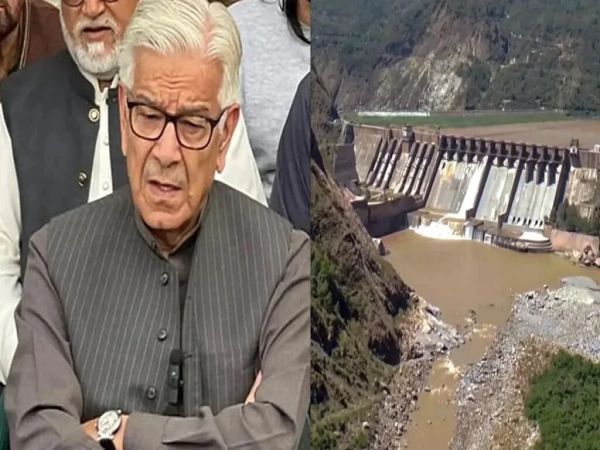
Friends, once again tensions have started increasing with the neighboring country, this time the reason for dispute is regarding water sharing issues. Pakistan’s Defense Minister Khawaja Asif has warned that if it feels its water security is threatened, Islamabad may take the path of military action. These statements of his have come at a time when Pakistan is facing severe water shortage, let us know the complete details.
Khawaja Asif warned India
Pakistan’s Defense Minister Khawaja Asif said that water security is directly to Pakistan’s national security.
He said:
“The moment we feel that water is a matter of our national security and is in danger, we will wage war against India. Definitely.”
Asif further claimed that if evidence emerges that shows India is taking aggressive steps to cut off Pakistan’s water supplies, Islamabad will consider taking military action.
Controversy to Indus Water Treaty
This controversy further increased when India’s Jal Shakti Minister C.R. A video statement of Patil surfaced, in which he indicated that the flow of Indus river water to Pakistan could be stopped by June 2028.
Relations between the two countries further deteriorated after the deadly terrorist attack in Pahalgam, Jammu and Kashmir, in which 26 people lost their lives. In response, India suspended the 1960 Indus Water Treaty and said the agreement would remain in place unless Pakistan took concrete action against cross-border terrorism.
Importance of Indus Water Treaty
The Indus Water Treaty, brokered by the World Bank in 1960, has long governed water sharing arrangements between India and Pakistan.
Key points about the treaty:
Under this agreement, Pakistan gets about 80% of the water of the Indus Basin.
This river system provides water to about 80% of Pakistan’s agricultural land.
This treaty has endured despite several wars and tense periods between the two countries.
Khawaja Asif accused India of “weaponizing water” and said that India was manipulating the flow of the Chenab River and not providing important hydrological data.
Pakistan claims that it is not getting recent information
Asif said Pakistan has historically been monitoring Indian projects through inspections permitted under the framework of the treaty. According to him, Pakistani teams have conducted inspections about 115 times in the last few years.
He admitted that Pakistan does not have the latest information about the developments that have taken place since the treaty was suspended.
Pakistan is in the grip of serious water crisis
This warning from Pakistan’s Defense Minister comes at a time when the country is facing increasing water shortage, especially in Sindh and Balochistan provinces.
According to data from Sindh Irrigation Department:
There is 64.1% water shortage in the North West Canal.
A 38% reduction is being reported in the Rice Canal.
There is an alarming 82% shortage of water in Dadu Canal.
About one-third of Pakistan’s population is affected by this water crisis.
Concerns increased due to disputes between provinces
Sindh officials have accused Punjab province of taking more water than its allotted share.
The main allegations include:
Punjab reportedly withdrew 53,394 cusecs of water.
The sanctioned share was 44,000 cusecs.
Additional utilization is estimated at more than 21%.
With water availability decreasing in low-lying areas, regional leaders have warned of dire economic consequences and rising tensions between provinces.
-
Sandro Tonali seals £100m move to Tottenham, reveals the ‘magic’ that inspired his switch from Newcastle to north London

-
‘Neymar builds on what Ronaldinho created’ – Former Brazil star Juliano Belletti explains how 2002 World Cup champion inspired the nation’s all-time top scorer after emotional retirement

-
Declan Rice unfazed by altitude as England celebrate memorable Azteca victory and prepare for World Cup quarter-final against Norway

-
Rapidly Spreading Claremont Fire Triggers Emergency Response in Boise Foothills
-
Heartbroken Ronaldo in tears after Spain strike at the death to end Portugal's World Cup dream