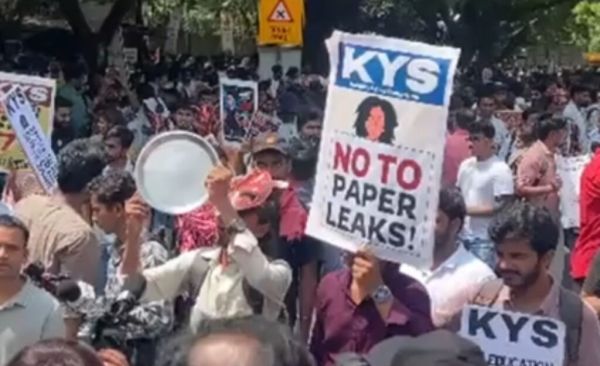
New Delhi: The emergence of the Cockroach Janta Party (CJP) has become one of the most striking youth-driven political developments of 2026. What began as an online expression of anger and satire has rapidly evolved into a street-level movement, drawing attention to issues ranging from unemployment and exam controversies to broader concerns about the future of young Indians.
This growing frustration was on full display at Delhi’s Jantar Mantar on June 6, where hundreds of supporters gathered for the CJP’s first major public protest. Protesters beat plates and spoons, turning everyday household items into symbols of what they described as a generation struggling to be heard. The demonstration focused on alleged irregularities in the National Eligibility cum Entrance Test (NEET), concerns over the CBSE’s evaluation process, and wider anxieties surrounding education and employment opportunities.
Founded on May 16, 2026, by Abhijeet Dipke, a public relations student at Boston University with experience in digital political communications, the CJP traces its origins to a controversy involving Chief Justice of India Surya Kant’s remarks comparing unemployed youth to “cockroaches.” The term was quickly reclaimed by many young Indians, who transformed it into a symbol of resistance against unemployment, economic uncertainty, and what they perceive as political indifference.
In a matter of weeks, the movement expanded rapidly across social media platforms, attracting significant attention among students and first-time voters. Organizers claim the party has received more than one lakh membership sign-ups, while its social media presence has grown substantially. However, several figures cited by the organization, including demographic data about its membership base, have not been independently verified.
The Jantar Mantar protest marked a significant moment for the movement, signaling its attempt to move beyond digital activism and establish itself as a platform for youth-led political mobilisation. Whether the CJP can translate online support into sustained political influence remains uncertain, but its rise reflects a growing sense of frustration among young Indians over education, employment, and governance.
-
Mexico accused of enjoying 'grossly unfair' Azteca edge over England – but Declan Rice says Three Lions ready for 'just another ground'

-
Cape Verde depart World Cup with pride after Sidny Lopes Cabral’s stunning goal takes Argentina to the edge

-
Main Vaapas Ayunga feels like Mumbai rains on a parched landscape

-
Ram Temple Introduces Dress Code After Donation Row: What Are The New Rules?

-
New-Age Tech Stocks Rally On Improving Investor Sentiment; WeWork, ixigo Lead Gains