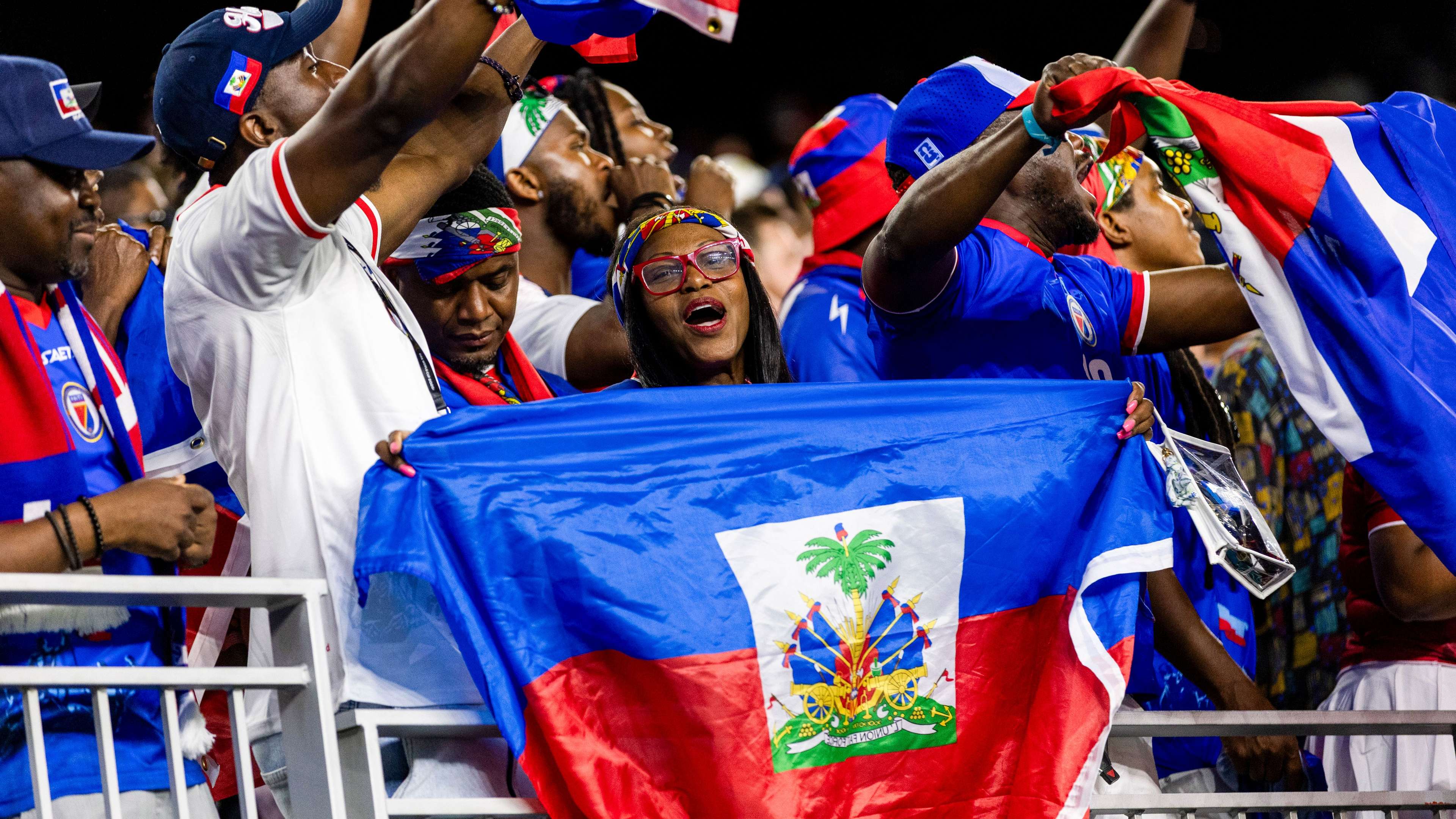
Brazil have long served as a source of inspiration for Haiti through some of its most difficult times. Now, as Les Grenadiers prepare to face them on the World Cup stage, the Haitians are determined to prove that they belong alongside the giants, not merely admire them from afar.
PHILADELPHIA — On 17 February 1971, Pele graced Haiti with his presence. His Santos club was set to play an unofficial friendly against the Haitian national team. Even today, the final score remains a matter of debate, with some reports suggesting a 2-0 victory for the Brazilian side.
The actual result, however, mattered little. What truly endured were the emotions and energy of that day in Port-au-Prince — tears among spectators, and unrelenting cheers from the stands for the full 90 minutes.
A day earlier, Pele had received a “national honour of merit certificate,” personally signed by then-president François Duvalier. The gesture cemented a long-standing relationship between the two nations — one that blended sporting admiration with a deep cultural kinship.
That connection, both in football and spirit, has persisted ever since. Haitians have idolised Brazilian football for its flair, creativity, and samba style, often trying to replicate it. Many in Haiti still cheer for Brazil first. But on Friday night, the two nations will finally meet in a World Cup match — a symbolic moment that brings their shared footballing journey full circle.
“Brazil has always been a powerhouse. Watching their players inspired us. That’s why, in Haiti, you’ll find many fans who are absolutely passionate about Brazil,” said Gerald Jean, a former Haitian national player from the 1970s, speaking to GOAL.
Jean knows this bond intimately. Raised during Brazil’s golden era, he carved his own path in the sport. Though he only featured in two FIFA-sanctioned matches for Haiti, he played countless others both at home and later in Brazil.
His Brazilian peers even gave him a nickname. “They used to call me Jair — short for Jairzinho, from the 1970 World Cup-winning squad,” Jean recalled with a laugh while standing on a lively Philadelphia street.
Jean modestly downplays his achievements. Between 1974 and 1978, he represented Haiti at both professional and amateur levels, competing in local leagues before moving to the United States in the late 1970s, where he transitioned into a career as a financial advisor.
“It was different back then. We had the Super League and a few other competitions. I played for several teams, but not on a fully professional basis because the financial structure didn’t allow it,” he explained.
Despite his loyalty to Haitian football, Jean, like many of his compatriots, grew up a devoted admirer of Brazil. He fondly remembers the days of Pele and Jairzinho, though his personal favourite was Edu, the prolific Santos forward of the 1960s and 70s. Over the years, he played alongside or against Brazilian greats such as Carlos Alberto and Rivellinho in friendlies. What began as rivalry often turned into friendship.
“It was incredible,” he said with a smile, draped in a Haitian flag and wearing his country’s jersey.
Having lived in New York for nearly five decades, Jean continues to follow both Haiti and Brazil closely. But on Friday night, his allegiance will be firmly with Haiti. “We know we have to compete. We’re playing for a reason. We’re in the World Cup now. We’ve qualified, and we’re here to prove ourselves,” he said.
This determination resonates across the Haitian diaspora in Philadelphia. Numa St. Louis, born in New York but raised in Haiti, is a self-proclaimed ‘massive football fan’. A regular player since his school days, he understands the emotional connection between the two nations.
“Most Haitians support Brazil — the style, the rhythm, the culture. But there’s also a deeper historical and cultural bond between Haiti and Brazil that many people overlook,” St. Louis shared. “Haitians have always admired Brazil’s brand of football — the flair, the passing, the dribbling. There’s a mutual respect there.”
Yet, St. Louis believes the connection extends beyond sport. “Outside of Africa, Haiti and Brazil have the largest Black populations. Both nations have preserved a strong sense of African heritage. Whether it’s religion — Santeria or Vodou — or music and dance — Kompa and Samba — there’s a shared cultural rhythm. And there’s a significant Haitian community in Brazil,” he said.
That shared identity makes it easier for Haitians to root for Brazilian players, he added. “For many of us who are politically aware, football isn’t just a game. It’s a reflection of culture, geopolitics, and history. When we see Brazil, we see a team that represents the Black diaspora. That connection evokes real emotion.”
Haiti’s journey to this World Cup carries extraordinary weight. They are the only team to qualify without playing a single home match due to the nation’s ongoing political instability. Their supporters are unable to travel to the tournament. Their qualification itself stands as a near-miracle of resilience.
“The country is in chaos, but that just shows the heart of these players,” Jean remarked.
For St. Louis, seeing Haiti back on football’s grandest stage brings immense pride. He recalls the stories of the 1974 Haitian team, which also made history. That side’s star, Emmanuel Sanon, famously broke Italian goalkeeper Dino Zoff’s record of 1,142 minutes without conceding a goal — fulfilling his own pre-match promise to score, despite earning just $200 a month at the time.
Those tales shaped St. Louis’s belief. After promising showings in the Gold Cup, hope began to bloom again. Half a century after their previous appearance, Haiti’s return means everything to fans worldwide. “For us, it’s about more than participation. It’s about pride, culture, and showing what we’re capable of,” he said.
That sense of pride is palpable in Philadelphia. The city’s 11,000-strong Haitian community has been joined by thousands more travelling from New York and Miami. A volunteer distributing flags across the city said he had printed 19,000 of them to hand out ahead of the match.
The celebrations have been vibrant — street festivals with live music, food stalls, and dancing. Though not official football events, nearly everyone wore a jersey or waved a flag. Chants filled the air from morning till night. In “Little Haiti,” about five miles north of downtown, bars and restaurants were overflowing.
“It’s going to be jam-packed,” said a server from Guo’s, a popular Haitian restaurant, speaking hurriedly over the phone.
The excitement has even captured the attention of non-football fans. Marcus Palmer, who first got into football through playing FIFA, admitted he was drawn in by family ties. “My son’s thrilled. We bought flags and searched for Haiti jerseys right away. Everyone’s ready for Haiti to shine,” he said.
By Saturday, streets were filled with supporters wearing both Brazil and Haiti shirts. Yet this time, Haitians are not just celebrating participation — they believe they can compete. With one loss to Scotland already, Haiti likely need a win and a draw against Morocco and Brazil to progress. Brazil, meanwhile, are coming off a goalless draw with Morocco.
The two nations have met before, most memorably in 2004, when Brazil faced Haiti in a UN-backed peace match in Port-au-Prince amid political unrest. Brazilian President Luiz Inácio Lula da Silva attended, along with Haiti’s interim leaders. The Seleção fielded a star-studded lineup featuring Ronaldo Nazario, Ronaldinho, Roberto Carlos, and Adriano. Around 15,000 fans packed the stadium, and nearly 100,000 filled the streets. Brazilian and Haitian flags waved side by side. That day, Brazil won 6-0 — but the result mattered far less than the symbolism.
This time, though, everything is on the line. And against all odds, Haiti believes. “People say, ‘We’re here now.’ But we’re not just here to take part; we’re here to compete like everyone else,” Jean declared.
Hundreds of thousands of fans share his conviction.
How far can Brazil go in this World Cup?
-
Leo Daily Horoscope Today (Jul 23 - Aug 22), June 20, 2026: Challenges Will Fade, Your Aura Will Shine
-
Cancer Daily Horoscope Today (Jun 21 - Jul 22), June 20, 2026: Experience Greater Harmony and Meaningful Conversations with Loved Ones
-
Virgo Daily Horoscope Today (Aug 23 - Sep 22), June 20, 2026: Resources Will Grow, Avoid Financial Transactions
-
Gemini Daily Horoscope Today (May 21 - Jun 20), June 20, 2026: Personal efforts will bring progress and preserve your dignity
-
Best ways to organize your kitchen