The easing of tensions in West Asia and consequently in energy and commodity prices, along with the possibility of a lasting peace deal and reopening of the Strait of Hormuz, augur well for India’s exports, which continue a healthy run of growth with $45.20 billion of shipments in May 2026. However, low usage of FTA benefits and a widening trade deficit stand as a major bottleneck to India realising its true export potential.
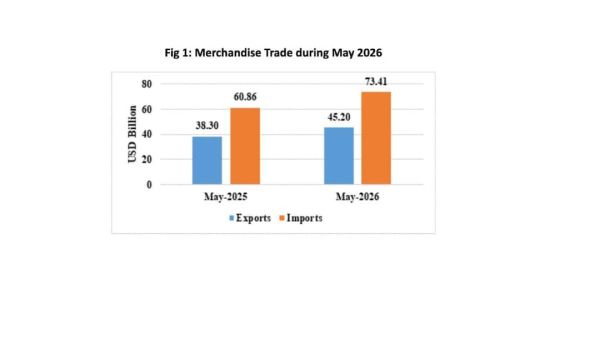
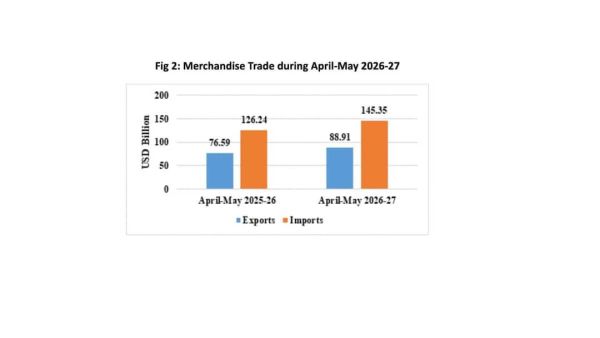
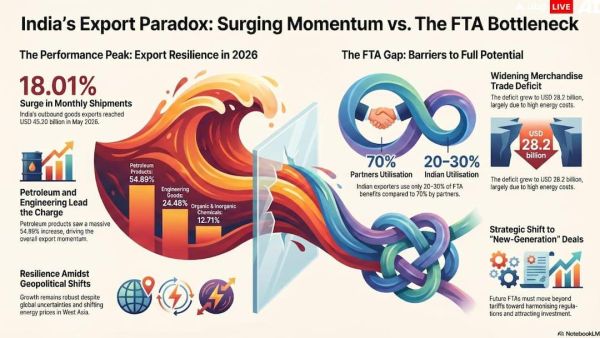
For the moment, sentiments are upbeat as India’s exports register robust growth not only on a monthly basis but also over the first two months of the current financial year FY2026-27, with outbound shipments of goods in May 2026 growing 18.01 per cent to $45.20 billion and recording a robust growth of 16.09 per cent cumulatively in April-May at $88.91 billion, in a show of resilience, adaptability and global competitiveness. (See Fig 1 & 2)
Petroleum, Engineering Goods Lead Export Growth
The trade performance, majorly driven by exports of petroleum products, engineering goods, organic and inorganic chemicals, electronic goods and gems and jewellery, comes as a highly encouraging sign for India's external sector despite global economic uncertainties and amidst a diplomatic breakthrough in West Asia and an emerging peace framework.
President, FIEO, SC Ralhan, describes this as a positive development for global trade, shipping and supply chains, reflecting the positive impact of policy reforms, enhanced market access initiatives, growing manufacturing capabilities and sustained efforts of exporters across sectors.
Expectations are high with India’s key export sectors delivering strongly in May, led by a 54.89 per cent increase in petroleum products exports, a 24.48 per cent increase in engineering goods, a 12.71 per cent rise in organic and inorganic chemicals, an 11.62 per cent increase in electronic goods and a 6.66 per cent increase in gems and jewellery exports.
West Asia Peace Hopes Could Aid Trade Flows
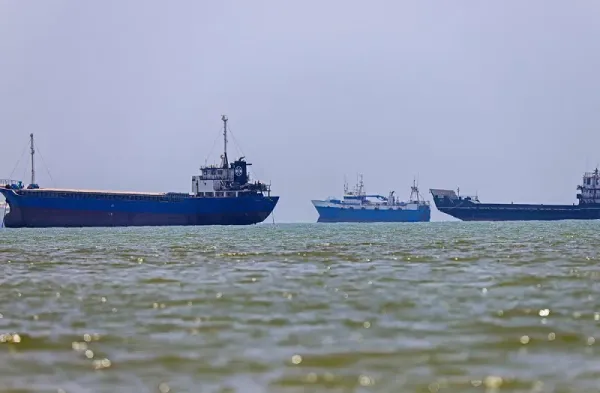
Now, the much-anticipated reopening of the Strait of Hormuz, accompanied by de-escalation of geopolitical tensions, is expected to improve the movement of goods, stabilise freight and insurance costs, as well as enhance predictability in international trade flows for Indian exporters, hopes Ralhan.
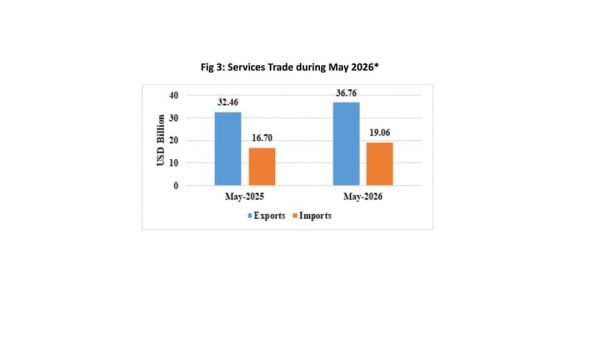
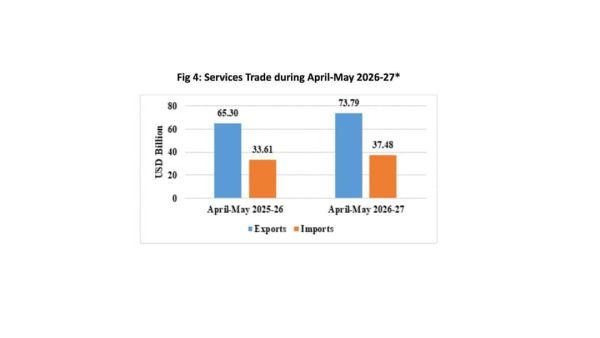
This, importantly, will boost exports in the coming months as Gulf Cooperation Council (GCC) member states are among India’s key markets and a prospective free trade agreement partner with which India has long been negotiating a trade deal. (See Fig 3 & 4)
FTA Ambitions Face a Reality Check
The GCC is, however, not the only FTA in India’s long list of “waiting to be done” deals in various stages of inaction, but reflects a deeper challenge for India to bring home the dividends and match expectations of New Delhi’s rapidly expanding FTA network in recent years.
This is particularly crucial at a time when India needs to make deeper inroads for its exports amidst intensifying protectionism and competitiveness among nations.
Export Markets Remain Concentrated
Take India’s top five export destinations, as per Government data, in terms of change in value and exhibiting positive growth in May 2026: Singapore, South Africa, Tanzania, Italy and Sri Lanka.
The top five export destinations in April-May 2026-27 were also Singapore, Tanzania, Sri Lanka, South Africa and China, with not much diversification to show even though India's leading export destinations during April-May 2026-27 included the USA, UAE, Netherlands, United Kingdom, Bangladesh, Germany and Saudi Arabia, none of which figure in the top five pecking order.
FTAs in Waiting: Big Opportunities Yet to Materialise
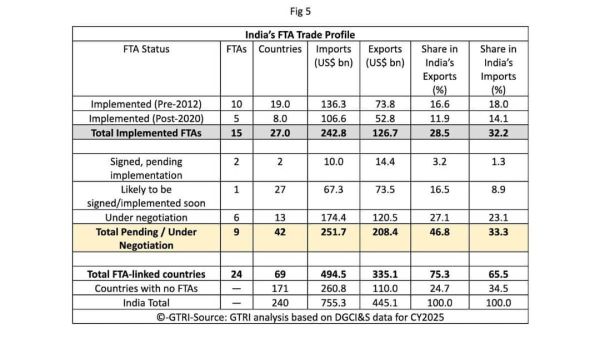
This is despite India currently having 15 implemented FTAs covering 27 countries with a share of 28.5 per cent of India’s exports and 32.2 per cent of its imports, points out Ajay Srivastava, Founder, Global Trade Research Initiative.
The 10 FTAs concluded before 2012 and covering 19 countries account for 16.6 per cent of exports and 18.0 per cent of imports. The five FTAs signed since 2020 with eight countries, UAE, Oman, Australia, Mauritius and the four EFTA members (Switzerland, Norway, Iceland and Liechtenstein), account for 11.9 per cent of exports and 14.1 per cent of imports, Srivastava’s GTRI report shows. (See Fig 5)
Nine More Trade Pacts Still in the Pipeline
The untapped potential of trade expansion through FTAs is obvious.
“India has nine additional FTAs involving 42 countries awaiting implementation or under negotiation. Together, these countries account for 46.8 per cent of India’s exports and 33.3 per cent of its imports. Two signed agreements with the UK and New Zealand account for 3.2 per cent of exports and 1.3 per cent of imports and are awaiting implementation.
The European Union, comprising 27 countries, accounts for 16.5 per cent of exports and 8.9 per cent of imports, making it India’s largest pending FTA partner with the deal awaiting signatures,” adds Srivastava.
Besides, six ongoing FTA negotiations covering 13 countries, including the United States, Canada, Israel, Peru, the GCC member states and the Eurasian Economic Union countries, account for 27.1 per cent of exports and 23.1 per cent of imports, the largest share among all FTA categories.
India’s New-Generation FTAs Aim Beyond Tariffs
“In the past six years, India has signed nine FTAs with 38 different countries, which are at various stages of implementation. Today India’s FTAs are deeper and much more nuanced,” says Commerce Secretary Rajesh Agrawal.
He feels that with India’s engagement with the world now expanding beyond tariffs and towards harmonisation of regulations, there is a need to broaden the aim of FTAs beyond increasing trade and towards creating the right foundation for attracting investment, both domestic and foreign.
Why Exporters Are Not Fully Using FTA Benefits
Amidst all the hype over signing FTAs to open up markets for exports, “just 20-30 per cent of India's eligible exports utilise FTA benefits, compared with 60-70 per cent utilisation by exporters shipping to India”, according to Srivastava.
Most of India's FTA partners are already open economies with low tariffs. Average tariffs under the most favoured nation (MFN) framework are close to zero in Singapore and below 4 per cent in Japan, Australia, Malaysia and the UAE.
In contrast, India's trade-weighted MFN tariff is about 12.6 per cent, with rates ranging from zero to 150 per cent. As a result, when India cuts tariffs under an FTA, exporters from partner countries gain a significant price advantage in the Indian market.
Market Access Gains Remain Limited
Indian exporters, says Srivastava, often gain little additional market access because tariffs in partner countries were already low or zero before the agreement.
In India, however, only about 6 per cent of imports enter duty-free under MFN treatment. As a result, FTAs often give foreign exporters a much bigger advantage in the Indian market than Indian exporters receive abroad.
Indian exporters thus see little benefit in exporting under an FTA. Even where MFN tariffs are low, for instance, 1-3 per cent, the savings are often too small to justify the costs of complying with rules of origin, certification requirements and paperwork.
Many small firms prefer to avoid the compliance burden for modest tariff savings.
Trade Deficit Continues to Cast a Shadow
Another worry, even as India’s exports buck the trend, is the merchandise trade deficit.
“Trade deficit has been widening sharply to $28.2 billion in May 2026 from $22.5 billion in the year-ago month, largely on account of a higher net oil import bill driven by the surge in global energy prices,” says Rahul Agrawal, Principal Economist, ICRA.
Gold Imports Add to External Sector Pressures
Not only that, India’s imports of gold, silver and precious metals in May 2026 at $46.09 billion have surged ahead of exports of the same products last month, as well as surpassed imports of gold, silver and precious metals in May 2025 at $41.44 billion.
In fact, as Agrawal points out, gold imports rose sharply by 34 per cent on a year-on-year basis in the month, although this was entirely driven by higher prices.
Have FTAs Helped Imports More Than Exports?
The GTRI founder links trade deficit woes to FTAs as the difference between India's tariff structure and those of its FTA partners has often led to imports growing faster than exports after FTAs.
Between 2007-09 and 2023-25, India's trade deficit with ASEAN grew by 381 per cent, with Japan by 318 per cent and with South Korea by 268 per cent.
In comparison, India's trade deficit with the rest of the world increased by 142 per cent.
Over the past three years, India's average annual trade deficit with ASEAN, Japan and South Korea has reached about USD 62 billion.
Industry Calls for Better Market Access
Chadha suggests that while India has signed a slew of FTAs with major partners, industry needs to understand key challenges in market access in these countries to make the most of such deals, including the need for addressing the protectionist approach taken by some countries.
"While bilateral trade agreements are essential in the growing protectionism, it is essential that the government and industry, along with the Indian Missions abroad, collaborate to identify and address the non-tariff measures that create market access challenges," says the EEPC India chairman.
Global View: FTAs Are About More Than Tariffs
On the flip side, the international community views India’s FTAs as spearheading a more liberal and strategic approach.
“India's recent engagements with the European Union, UK, EFTA, New Zealand and Oman clearly highlight the multidimensional nature of modern FTAs. This reflects an important evolution in India's trade policy,” says Mikiko Tanaka, Head, Subregional Office for South and West Asia, UNESCAP.
The Road Ahead: Turning Trade Deals Into Trade Gains
Speaking at the CII AGM in May 2026, Tanaka was of the opinion that with geopolitical tensions, supply chain disruptions, rising protectionism and climate-related risks reshaping how countries think about trade, FTAs are no longer viewed only as tools for tariff reduction.
The GTRI report, however, contends that most of India's FTA partners had already rationalised their tariff structures before embarking on the FTA journey, ensuring that FTA-led tariff cuts did not trigger import surges or worsen inverted duty structures.
India continues on FTAs without reviewing its regular tariff structure. It calls for systematically eliminating inverted duty structures by reducing tariffs on industrial inputs used by domestic manufacturers and creating an FTA Impact Monitoring Authority to track utilisation, sectoral gains, import surges and trade deficits.
-
CEO Tim Cook warns AI data centers are hogging memory chips: What you need to know

-
Trump denies reports of $300 billion payment to Iran
-
US-Iran deal is very important for India…. Prices of petroleum products may reduce
-
The first traditional Hindu temple was completed in France, carved stones were brought from India; There will be a 15 day grand festival in September

-
Gut Health Warning Signs: These 10 big signs indicate poor digestive system and intestinal weakness; never ignore