The opening round of matches at the 2026 FIFA World Cup has wrapped up, and already, several pre-tournament predictions are beginning to look rather foolish.
Now that every team has played once, the competition is still in its early stages, but some of the bold pre-World Cup statements have not aged well at all.
Here’s a look at a few forecasts that are already proving to be off the mark.
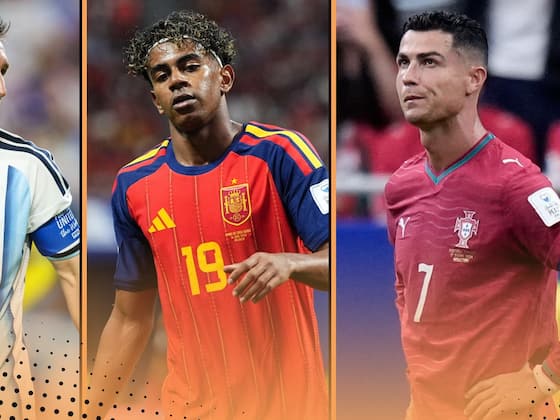
Many pre-tournament picks for the Golden Ball featured familiar names such as Kylian Mbappe, Harry Kane, and Ousmane Dembele, yet 2022’s winner was often overlooked.
With Lionel Messi now plying his trade in Major League Soccer and turning 38, many assumed his influence would have diminished compared to his glory days in Europe.
However, he has emphatically silenced those doubters.
Messi netted a hat-trick in Argentina’s World Cup opener, reaffirming his legendary status and dismissing any notion that he might be past his prime.
His goals had that signature Messi brilliance. The first was a sublime curling strike beyond the goalkeeper’s reach. The second showcased his composure and awareness, seemingly playing in slow motion compared to everyone else. The third was another pinpoint effort tucked neatly into the corner.
Argentina did show moments of vulnerability, but with Messi in the side, they possess what feels like an unbeatable advantage. Even as he nears 39, he continues to redefine greatness.
Spain entered the tournament as one of the favourites, with many expecting this World Cup to be the coming-of-age moment for Lamine Yamal.
However, their campaign began with adversity after a surprising draw with Cape Verde — ranked 67th in the world compared to Spain’s second.
Unexpected results are part of the World Cup’s charm — Spain themselves lost their opener in 2010 — but what will concern manager Luis de la Fuente most is that the result was not purely due to Cape Verde’s brilliance but rather Spain’s wastefulness.
Of their 27 attempts on goal, only seven were on target. Mikel Oyarzabal, who many tipped for the Golden Boot, went a full 30 minutes without touching the ball — a record since data tracking began.
It’s not time for panic just yet, but Spain’s status as clear favourites is already looking shaky.
While Messi has defied expectations positively, Cristiano Ronaldo has done the opposite.
Portugal, boasting a team built around the backbone of Paris Saint-Germain’s Champions League-winning side, were viewed as strong contenders. However, their 1-1 draw with DR Congo has raised doubts about their ability to succeed with Ronaldo still leading the line.
The veteran forward was largely ineffective, registering three off-target shots and fewer touches in the box than a substitute who came on at halftime.
Despite that, head coach Roberto Martinez reaffirmed Ronaldo’s untouchable status with his post-match remark: “It makes no sense to take out the best goal scorer in world football in a game where you need goals.”
Given Martinez’s likely move to Ronaldo’s club Al-Nassr, his allegiance is unsurprising. Yet, many within the squad understand that starting Ronaldo can harm Portugal’s overall play.
When Martinez sought to add striker Goncalo Ramos while chasing a goal, he substituted holding midfielder Vitinha instead — a move that sacrificed team balance just to keep Ronaldo on the pitch.
Ronaldo is almost certain to start the next match, but the question remains: can Portugal’s other players carry the team despite him?
It may sound absurd now, but some analysts had written off Germany as mere dark horses heading into this World Cup.
While their emphatic win came against the smallest nation in the tournament, scoring seven goals with six different players finding the net is a clear statement of intent, regardless of opposition quality.
This may not be a side as complete as the 2014 champions, but their attacking depth alone could take them deep into the competition.
Key players are also stepping up for the national side. Florian Wirtz looks transformed compared to his club form at Liverpool. Jamal Musiala is thriving in the number 10 role, orchestrating attacks, and Kai Havertz has already netted twice.
The tougher challenges are yet to come, but those who dismissed Germany will be rethinking their stance.
Much criticism has been directed at FIFA’s expansion of the World Cup to 48 teams, with many calling it a money-making scheme. However, one prediction that has not materialised is that the new format would lead to more lopsided scorelines.
While Curacao suffered a heavy defeat to Germany, such outcomes are rare — even powerhouses like Brazil have endured similar results in the past. Aside from that, the underdogs have performed admirably.
New Zealand, the lowest-ranked team in the tournament, managed a draw in their opener. Haiti narrowly lost by a single goal, and Ghana began with a win over Panama.
Cape Verde’s goalless draw with Spain stands out as one of the biggest shocks in World Cup history.
While critics argue that the expanded format dilutes the competitiveness of the group stage — as a single win may now suffice for qualification — the smaller nations have proven that they belong on this stage.
-
Teboho Mokoena’s Late Penalty Keeps South Africa’s World Cup Campaign Alive with Draw Against Czechia
-
How England Could Overtake Spain in the FIFA World Rankings During the World Cup Group Stage
-
Elliot Anderson poised to prove he is England’s next £100m football star
-
Alphonso Davies returns from injury, but Canada coach Jesse Marsch remains undecided on his role against Qatar in crucial World Cup encounter
-
Lionel Messi Issues Statement on Father Jorge’s Health, Calls Out Media for Intrusion