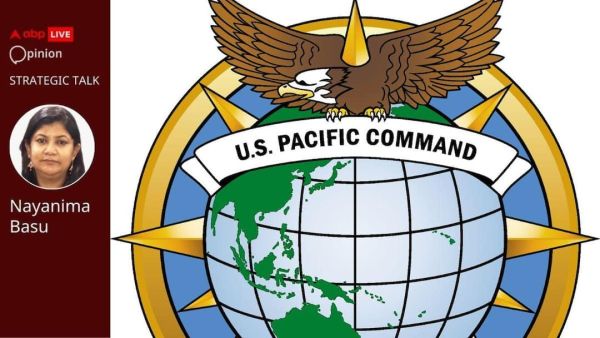
After eight years of being referred to as the U.S. Indo-Pacific Command (USINDOPACOM), the U.S. Pacific Command (USPACOM), on June 16, officially dropped the 'Indo' from its title and reverted back to being U.S. Pacific Command. This change in nomenclature signifies a critical shift in how the U.S. perceives its strategic priorities, suggesting that it no longer views the Indo-Pacific region as the paramount arena for contemporary geopolitical dynamics. This action serves as a significant signal for India, which is recognised as a 'Major Defence Partner' of the United States. Notably, the timing of this move-occurring less than a month after the Quad Foreign Ministers’ Meeting in New Delhi-suggests that India was likely aware of it in advance.
Despite the change in the nomenclature, it needs to be noted that the importance of this region remains profound. The Indo-Pacific region serves as a crucial stage where the competition among major global powers will unfold across various domains-including political influence, military capabilities, technological advancements, and economic strategies. Additionally, the dynamics within the Indo-Pacific will significantly impact international relations and could reshape global power structures in the years to come. The ongoing contestation within this area reflects broader trends and challenges that warrant close attention from policymakers and analysts alike.
The United States Indo-Pacific Command (USINDOPACOM), formerly known as the United States Pacific Command (USPACOM), is recognized as the "oldest and largest" of the U.S.'s unified combatant commands. Established in 1947 by President Harry S. Truman, it operated under this name until 2018 when President Donald Trump officially renamed it. Throughout its history, this command has been closely linked to significant global events and has played a crucial role in various military conflicts, including the Korean War and the Vietnam War. These engagements have not only influenced the outcomes of those wars but have also contributed to shaping global geopolitics and international alignments.
The USPACOM covers roughly 36 countries and territories across the Indo-Pacific-including East Asia, Southeast Asia, South Asia, Oceania, and the Indian Ocean-spanning over 100 million square miles, the largest of any combatant command. It has several subordinate commands under it, namely, U.S. Army Pacific (USARPAC), U.S. Pacific Fleet (PACFLT), Pacific Air Forces (PACAF), U.S. Marine Corps Forces Pacific (MARFORPAC), and U.S. Space Forces Indo-Pacific.
Much has been analysed by global strategic experts and commentators regarding the decision to revert to the old nomenclature, with many suggesting that it was solely aimed at India. However, the reality may be somewhat different. The press statement issued alongside this announcement clearly stated, “USPACOM’s vast area of responsibility-spanning from the waters off the West Coast of the United States to the western border of India-remains exactly the same. The command's fundamental mission and its unwavering commitment to maintaining a free and open theatre alongside regional allies and partners are unchanged.”
Therefore, to draw a rushed inference that the change in title is aimed at diminishing India's position as a reliable partner for the United States in the Indo-Pacific region would be an overly simplistic interpretation. Such an assertion overlooks the complexities of international relations and the multifaceted dynamics at play.
What is undeniably true, however, is that Washington is increasingly frustrated with New Delhi's rather indifferent approach towards the Quad alliance and various other strategic initiatives, which are mainly aimed at China. These initiatives were designed to feature a robust military focus, yet their effectiveness has been significantly blunted due to India's reluctance to take a firm stand that might provoke China. This tepid response is seen as a point of contention, particularly in light of the growing strategic partnership between the U.S. and its Indo-Pacific allies.
Given this backdrop, it would be unwise to presume that a significant military command, such as the United States Indo-Pacific Command (USPACOM), headquartered in Camp H.M. Smith, Hawaii, would undergo a name change solely because of American dissatisfaction with India's actions. The USPACOM has a storied legacy in shaping military operations and strategies, and its name reflects its longstanding role and significance in global military affairs. It is crucial to recognise that decisions regarding such fundamental institutional elements are influenced by a broad spectrum of factors that extend far beyond bilateral tensions with India.
During his maiden visit to India last month as the US Secretary of State, Marco Rubio has made it clear that under Trump 2.0, the Indo-Pacific will be seen purely from a geopolitical lens and not from the lens of geography. Addressing a joint press conference with External Affairs Minister S. Jaishankar in New Delhi, Rubio categorically stated that the West Asia crisis has compelled the Trump administration to include the Gulf too within the larger gambit of the Indo-Pacific Region (IPR).
“There is a tremendous strategic alliance between our countries and agreement on that point. Likewise on the unimpeded flow of commerce, especially in international airspace and international waters. This is true in the Indo-Pacific, ensuring that there is a free and open Indo-Pacific, but it extends beyond the Indo-Pacific. We share as a strategic value the fact that no international waterway, no international airspace should ever be used or nationalised by any country in the world, and that that should never be accepted as a new normal-another area of strong strategic alignment,” Rubio stated.
During his remarks, Rubio emphasised that the Quad nations-comprising the United States, India, Japan, and Australia-are poised to reshape their approach to intellectual property rights (IPR) in alignment with the strategic vision of Washington in the wake of the Iran War. This shift is pivotal, as it reflects not only a response to evolving geopolitical dynamics but also showcases a commitment to enhancing cooperation among these key democracies.
As a result, the recent meeting of the Quad Foreign Ministers marked a significant advancement in their collaborative efforts, transitioning from basic maritime domain awareness to a more Indo-Pacific Maritime Surveillance Collaboration (IPMSC). This escalation underscores the importance of joint initiatives aimed at ensuring security and stability in the Indo-Pacific region, highlighting the Quad's intention to tackle emerging challenges effectively.
The move to revert back to USPACOM might also be done keeping in mind the growing Chinese belligerence and the growing tensions in the Taiwan Straits.
The USPACOM Chief Adm. Samuel J. Paparo has reportedly warned the US Congress of a potential war with China even as he sought billions of dollars toward the procurement of brand new armaments.
Coming to India, it will be prudent to focus on its own maritime domain and ensure that in the zeal to toe the US’ line when it comes to the Indo-Pacific strategic construct, it does not lose focus from its own maritime vision of SAGAR (Security and Growth for All in the Region) and MAHASAGAR (Mutual and Holistic Advancement for Security and Growth Across Regions), launched in 2015 and 2025, respectively. However, both these initiatives continue to elude India’s foreign policy even as the government emphasises on India's growing maritime prowess.
Nayanima Basu is a senior independent journalist.
[Disclaimer: The opinions, beliefs, and views expressed by the various authors and forum participants on this website are personal and do not reflect the opinions, beliefs, and views of ABP News Network Pvt Ltd.]
-
India emerging as 'trusted partner' to the world: PM Modi

-
Haryana: Candidates appearing for NEET re-exam to be provided free travel facility in roadways buses

-
J-K's Kathua to get express corridor link, gas pipeline: Jitendra Singh

-
Janmasthan Seva Sansthan files complaint against Falahari Maharaj

-
Pakistan Captain Fatima Sana Earns The Hundred Wildcard Contract After ICC Women's T20 WC 2026 Heroics In SA Clash