By. Sudhir Anand
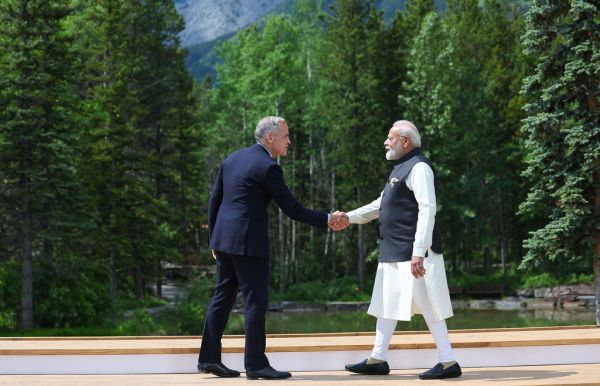
Canadian Prime Minister Mark Carney says India’s participation in the G7 summit demonstrates that the organization can no longer address the world’s biggest challenges without working closely with major countries outside its traditional membership.
Speaking during an appearance at Trinity College Dublin ahead of the summit in Évian les Bains, France, Carney said the global balance of power has changed significantly. He suggested that the G7, even if it once dominated international affairs, no longer controls the direction of the world on its own.
Carney said inviting countries such as India recognizes the need for wider international cooperation. He argued that major global problems require perspectives and solutions from countries representing a greater share of the world’s population, economic activity and regional influence.

The prime minister said the summit would include representatives from India, Brazil, Egypt, Kenya and several Gulf nations alongside the traditional G7 members. According to Carney, their participation would bring broader perspectives and strengthen efforts to address international challenges.
Carney said the gathering could help define the shape of an emerging global order. His comments echoed themes from his earlier speech at the World Economic Forum in Davos, where he encouraged middle powers to cooperate more closely amid growing geopolitical tensions and uncertainty.
The summit agenda included global economic stability, energy security, public health, the wars in Ukraine and the Middle East and the rapid development of artificial intelligence. Carney said these issues extend beyond the capacity of any small group of countries to resolve independently.
Artificial intelligence was expected to be a major subject of discussion. Carney warned that AI technologies are advancing quickly while international regulation remains limited. He said governments must work toward shared safeguards, standards and principles to manage the benefits and risks of the technology.
The G7 consists of Canada, France, Germany, Italy, Japan, the United Kingdom and the United States. The European Union also participates through the presidents of the European Commission and European Council.
The summit brought together United States President Donald Trump, French President Emmanuel Macron, Canadian Prime Minister Mark Carney, Italian Prime Minister Giorgia Meloni, Japanese Prime Minister Sanae Takaichi, British Prime Minister Keir Starmer and German Chancellor Friedrich Merz.
Macron also invited several leaders from outside the G7, including Indian Prime Minister Narendra Modi, Brazilian President Luiz Inácio Lula da Silva, Egyptian President Abdel Fattah el Sisi, South Korean President Lee Jae Myung and Kenyan President William Ruto.
India’s participation reflects its growing importance in global economic, technological and diplomatic affairs. As one of the world’s largest economies and most populous countries, India has become an increasingly significant partner in discussions involving trade, energy, security, artificial intelligence and international development.

Carney’s remarks suggest that the G7 is seeking to adapt to a more diverse and multipolar world. While its members continue to possess substantial economic and political influence, the organization increasingly depends on cooperation with countries such as India to build effective international agreements.
-
ITV’s Commentators, Pundits and Presenters for England vs Croatia Revealed
-
Father’s Day: ‘Papa never cries’… But what really? The pain of Indian men burdened with responsibilities
-
Work-life balance of the younger generation: new thinking and challenges

-
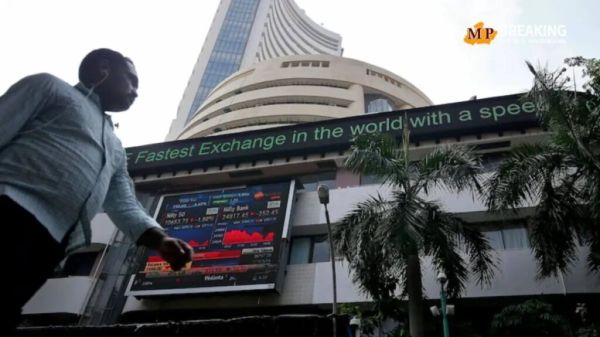
Today the Indian stock market fell, Sensex fell by 50 points, pressure was seen on IT-media.
-
Rajkumar Hirani reveals original PK twist