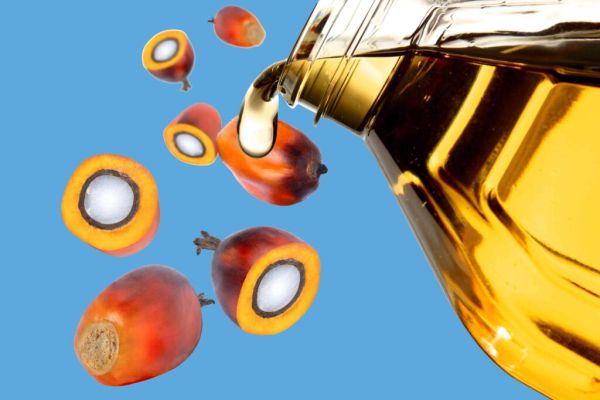
Though the health reports on this common food additive are conflicting, it can still be part of a healthy diet. Just be mindful of the source.
Reviewed by Dietitian Sarah Pflugradt, Ph.D., RDN, CSCS
What to Know About Palm Oil
- Palm oil is a good source of vitamin A and may provide heart and cognitive health benefits.
- It is high in saturated fat and is often added to shelf-stable foods.
- Palm oil is a commonly used cooking oil in the African Heritage Diet.
As the name implies, palm oil comes from the fruit of the oil palm tree. It is native to West and Central Africa and has been cultivated for thousands of years. Today, oil palm trees are cultivated worldwide, mostly in Southeast Asia. You can find palm oil in many international grocery stores, often sold in jars or bottles as red palm oil.
Unrefined palm oil has a deep red-orange color and a distinct taste and aroma. When further processed, it becomes refine palm oil, which is lighter in color, more neutral in taste and smell and has a longer shelf life and higher smoke point. Because of these qualities, refined palm oil is often used in a wide range of packaged foods and household products. In fact, unless you actively avoid it, you’ve likely eaten or used products containing palm oil.
But is palm oil actually bad for you? Here’s what to know about its nutritional profile, potential health effects, environmental impact and how it may fit into a balanced diet.
Why We Love Palm Oil
It’s a Good Source of Dietary Fat
In general, dietary fats play several important roles in overall health. They help the body absorb fat-soluble vitamins like vitamins A, D, E and K, support cell growth and help form important compounds such as hormones, including estrogen and testosterone. Dietary fat also provides energy, contributes to brain health and can help meals feel more satisfying and filling.
Like other oils, palm oil is a source of dietary fat. It contains a mix of saturated and unsaturated fats, which contribute to its texture, stability and versatility in cooking.
It’s Rich in Vitamin A
The beta carotene found in unrefined palm oil is converted to vitamin A in the body and also acts as an antioxidant. According to Cordialis Msora-Kasago, M.A., RD, this can be especially important for people whose diets lack vitamin A-rich foods. “With many African heritage diets lacking a variety of foods rich in vitamin A, palm oil can serve as an important source of this nutrient,” she says.
Vitamin A plays an essential role in vision, immune health and healthy pregnancy outcomes.
It May Support Heart and Brain Health
Palm oil contains tocotrienols, a form of vitamin E with antioxidant properties. Research suggests these compounds may help support the health of several organs, including the heart and brain, while also helping reduce inflammation and LDL (“bad”) cholesterol levels.
“Palm oil, particularly the red, unrefined variety, is a great source of vitamin E,” confirms Gregory Lafortune, M.S., RDN, LD. “Because these powerful compounds may lower cholesterol, reduce inflammation and reduce one’s risk for cognitive decline, incorporating unrefined palm oil can be a great addition to a healthy diet in spite of any common negative associations.”
It’s a Good Source of Antioxidants
Palm oil is rich in carotenoids, a family of antioxidant compounds that give unrefined palm oil its distinctive red-orange color. It is also a good source of vitamin E, another powerful antioxidant. Antioxidants help neutralize free radicals—unstable compounds that can damage cells and DNA over time and contribute to chronic conditions like cancer and atherosclerosis.
Nutrition Information
Like other cooking oils, palm oil is nearly 100% fat, with about 120 calories per tablespoon. Roughly half of the fat in palm oil is saturated fat, while the remainder comes from monounsaturated and polyunsaturated fats. Its higher saturated fat content is also what gives palm oil its semisolid texture at room temperature.
One tablespoon of unrefined red palm oil provides:
- Calories: 130
- Carbohydrates: 0 g
- Dietary Fiber: 0 g
- Total Sugars: 0 g
- Protein: 0 g
- Total Fat: 14 g
- Saturated Fat: 6 g
- Monounsaturated Fat: 6 g
- Polyunsaturated Fat: 1.5 g
- Cholesterol: 0 mg
- Sodium: 0 mg
- Vitamin A: 720 µg
- Vitamin E: 1.5 mg
Is Palm Oil Safe For Everyone?
Despite its potential benefits, palm oil has sparked debate because of its saturated fat content. Diets high in saturated fat have long been associated with increased LDL (“bad”) cholesterol levels, which can raise the risk of cardiovascular disease. However, research on palm oil specifically has been mixed, and some reviews suggest there is not enough strong evidence directly linking moderate palm oil consumption with heart disease risk.
The 2025-2030 Dietary Guidelines for Americans recommend limiting saturated fat consumption to less than 10% of total daily calories, meaning palm oil is best enjoyed in moderation as part of a balanced diet.
That said, it’s important to remember that overall dietary patterns, physical activity levels and lifestyle habits likely play a much larger role in heart health than any single ingredient alone. And as Msora-Kasago points out, “No food is the sum of a single ingredient.”
Ways to Enjoy Palm Oil
Palm oil is used primarily in culinary applications. In the African Heritage Diet, unrefined palm oil is found in many kitchens and is a commonly used cooking oil. In most of the world, including the U.S., refined palm oil is widely used, largely due to its attributes as a semisolid fat at room temperature and a high smoke point oil.
If you’d like to incorporate palm oil into your cooking, here are a few simple ways to use it:
- Use it for sautéing and frying. Thanks to its high smoke point, palm oil works well for high-heat cooking methods like sautéing and frying.
- Blend it into dips or sauces. Stir palm oil into homemade hummus, marinades or sauces for richness and depth of flavor.
- Roast vegetables with it. Toss vegetables with a small amount of palm oil before roasting to add flavor and help them caramelize.
- Use it in soups and stews. Unrefined palm oil is commonly used in traditional soups, curries and stews, where it adds color, richness and flavor.
Our Expert Take
Palm oil is widely used around the world in both culinary and nonculinary products. While it is higher in saturated fat than some other oils, unrefined palm oil also contains antioxidant and anti-inflammatory compounds that may support overall health, particularly when consumed as part of a balanced dietary pattern like the African Heritage Diet.
If you choose to use palm oil, consider where it comes from and how it’s produced, and opt for sustainably sourced varieties whenever possible. As Msora-Kasago points out, “Palm oil in a stew of leafy greens, lean protein, tomatoes and aromatics, such as kontomire stew, is not the same as a palm oil that is used in cookies, cakes and other foods.”
Frequently asked Questions
What is unhealthy about palm oil?
Even though palm oil is plant-based, it is high in saturated fat and this type of fat has been linked to an increased risk of cardiovascular disease.
Why is palm oil avoided?
Palm oil frequently receives attention not just for its nutrition but also for its impacts on the environment. In Indonesia and Malaysia, where nearly 90% of commercially used palm oil is harvested, unsustainable palm oil production has destroyed forests, habitats and the wildlife within them. While these effects certainly negatively impact the planet, destroying these ecosystems also hurts the people who rely on them as sources of traditional foods, medicinal herbs and even potable water. That said, do keep in mind that not all palm oil plantations are owned and operated by large corporations. Many small farmers and growers cultivate oil palm in a way that is sustainable, minimizes environmental impact and adheres to fair labor practices. Products with certifications from organizations such as the Roundtable on Sustainable Palm Oil assist consumers in making the best choice possible.
Why is palm oil added to foods?
Palm oil can replace other types of fats because it is versatile and stable at room temperature. It is often also cheaper than other oils.
-
Shivam Dube Love Story: Took the rounds and also read the Nikah… When Shivam Dube got clean bowled in love with a Muslim girl, there was a lot of uproar.

-
John Abraham is crazy about cricket, becomes co-owner of Rotterdam Dockers, will now make a splash in the European T20 League

-
India defeated Bangladesh in a one-sided match, hopes of semi-finals remain intact, now there will be a big match with Australia.

-
IND vs IRE: Today Vaibhav Suryavanshi will get a chance or will have to wait, India’s possible playing in the first T20 will be like this

-
Revealed, where are the silver bricks missing from Ram temple, SIT gets important clue