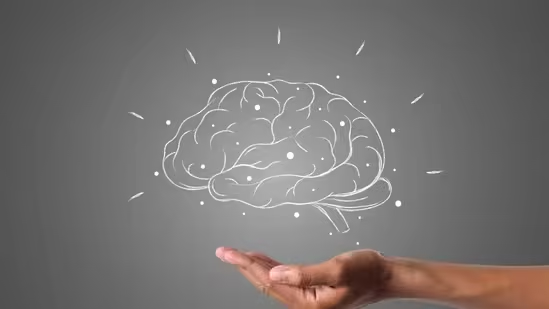
Almost everyone has experienced it. You’re lying in bed trying to fall asleep when your brain suddenly decides to replay an awkward conversation from years ago. Or perhaps you’re commuting to work when a memory from school resurfaces — a mistake, a mispronounced word, or an embarrassing moment you wish had never happened.
The strange part is that these memories often return with remarkable clarity, even though they may seem completely insignificant today. So why does the brain hold on to these moments for so long?
Your Brain Prioritizes Emotion, Not Importance
Every day, we experience countless events, conversations, and interactions. Yet we don’t remember most of them.
The reason is simple: the brain tends to store emotionally charged experiences more strongly than ordinary ones. Moments associated with embarrassment, fear, shame, anxiety, or social discomfort often leave a deeper imprint than routine daily activities.
From the brain’s perspective, emotional experiences are worth remembering because they may contain lessons that could help us avoid similar situations in the future.
The Role of Emotional Memory
When an event triggers strong emotions, regions of the brain involved in processing feelings work closely with memory centers to strengthen the storage of that experience.
This is why you might struggle to remember what you ate last Tuesday but can instantly recall a humiliating moment from years ago. The emotional reaction attached to the event makes the memory more vivid and long-lasting.
Why Do Old Memories Suddenly Reappear?
The brain constantly works through patterns and associations.
A particular smell, song, location, social situation, or even a random thought can activate a network of memories. Once triggered, an old experience can return almost instantly, even if you haven’t thought about it for years.
This process happens automatically and is a normal part of how memory functions.
Why It Happens More Often at Night
Many people notice that embarrassing memories tend to surface when they’re alone, relaxing, or trying to sleep.
During busy periods, the brain is occupied with work, conversations, tasks, and distractions. But when things become quiet, there is more mental space for memories and thoughts to emerge.
Late at night, during a commute, or while daydreaming, the brain often starts wandering through old experiences, including ones you’d rather forget.
The “Spotlight Effect”
Psychologists use the term “spotlight effect” to describe our tendency to overestimate how much other people notice our mistakes.
In reality, most people are focused on their own lives and concerns. The awkward moment that keeps you awake at night is likely something others barely remember, if they noticed it at all.
However, because the event felt significant to you, your brain may continue to treat it as important.
Modern Life Can Make It Worse
Certain lifestyle factors can make embarrassing memories feel more intense, including:
- Stress
- Poor sleep
- Mental fatigue
- Burnout
- Anxiety
- Constant social media comparison
When the mind is already under pressure, it becomes easier to fall into cycles of rumination and self-criticism.
How to Stop Getting Stuck in the Past
The key is not to judge yourself for having these memories.
Instead of viewing an embarrassing moment as proof that you failed, try seeing it as a normal part of being human. Everyone makes mistakes, says awkward things, and experiences uncomfortable situations.
Healthy habits can also help the brain process emotions more effectively:
- Get adequate sleep
- Exercise regularly
- Eat a balanced diet
- Maintain meaningful social connections
- Practice self-compassion
The Bottom Line
Embarrassing memories don’t return because something is wrong with you. They return because your brain is designed to remember emotionally significant experiences.
The good news is that while you can’t always control which memories appear, you can control how you respond to them. The next time an old awkward moment pops into your head, remind yourself that it was simply one small moment in a much bigger life story — and chances are, nobody else is thinking about it nearly as much as you are.
-
What happened when Rakul and Jackky entered an AI car?

-
ABP LIVE Doc Talk | Can Super El Niño Heat Waves Damage Your Lungs? Experts Warn of Rising Respiratory Risks

-
Tarun Bhartiya's 'Em No Nahi' photobook shows deep political, emotional engagement with Khasi Hills

-
At Vizag plant where nine died, workers highlight production pressure, safety hazards

-
Scotland hang on for first Fifa World Cup win since 1990 with 1-0 victory over Haiti