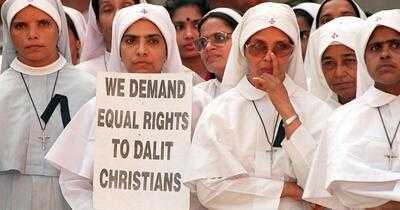
When the Supreme Court in March reiterated that the exclusion of Dalit converts from Scheduled Caste status is “absolute and admits no exception”, it does more than settle a doctrinal question.
It revives a foundational constitutional dilemma: can the law deny protection against caste-based discrimination simply because an individual has changed religion? More critically, does caste itself disappear upon conversion, or does the law merely choose not to see it? This tension between constitutional text and social reality lies at the heart of the debate on SC status for converts to Islam and Christianity.
The legal position rests on Clause 3 of the Constitution (Scheduled Castes) Order, 1950. Originally limited to Hindus, and later extended to Sikhs and Buddhists, the Order continues to exclude Muslims and Christians. The Supreme Court has consistently read this provision strictly: SC status is a matter of legal recognition, not lived identity.
A Dalit who converts to Christianity or Islam immediately loses access to reservations, scholarships, and protections under the SC/ST (Prevention of Atrocities) Act, 1989. The Court has clarified that this bar is categorical – possessing an SC certificate is irrelevant if the individual no longer professes a qualifying religion.
This formal clarity sits uneasily with empirical reality. NCRB data shows that tens of thousands of atrocities against Scheduled...
Read more
-
Hyderabad Police arrest two in fake job racket, gold recovered

-
Harish Rao accuses NIMS of not taking care of Khammam rape victim
-
HCU to launch online certificate courses in Malariology and Sanskrit
-
Osmania University refutes claims of anomalies in test grading
-
Video: Siddaramaiah expresses displeasure over Congress MLA