DON'T MISS A MOMENT OF THE WORLD CUP
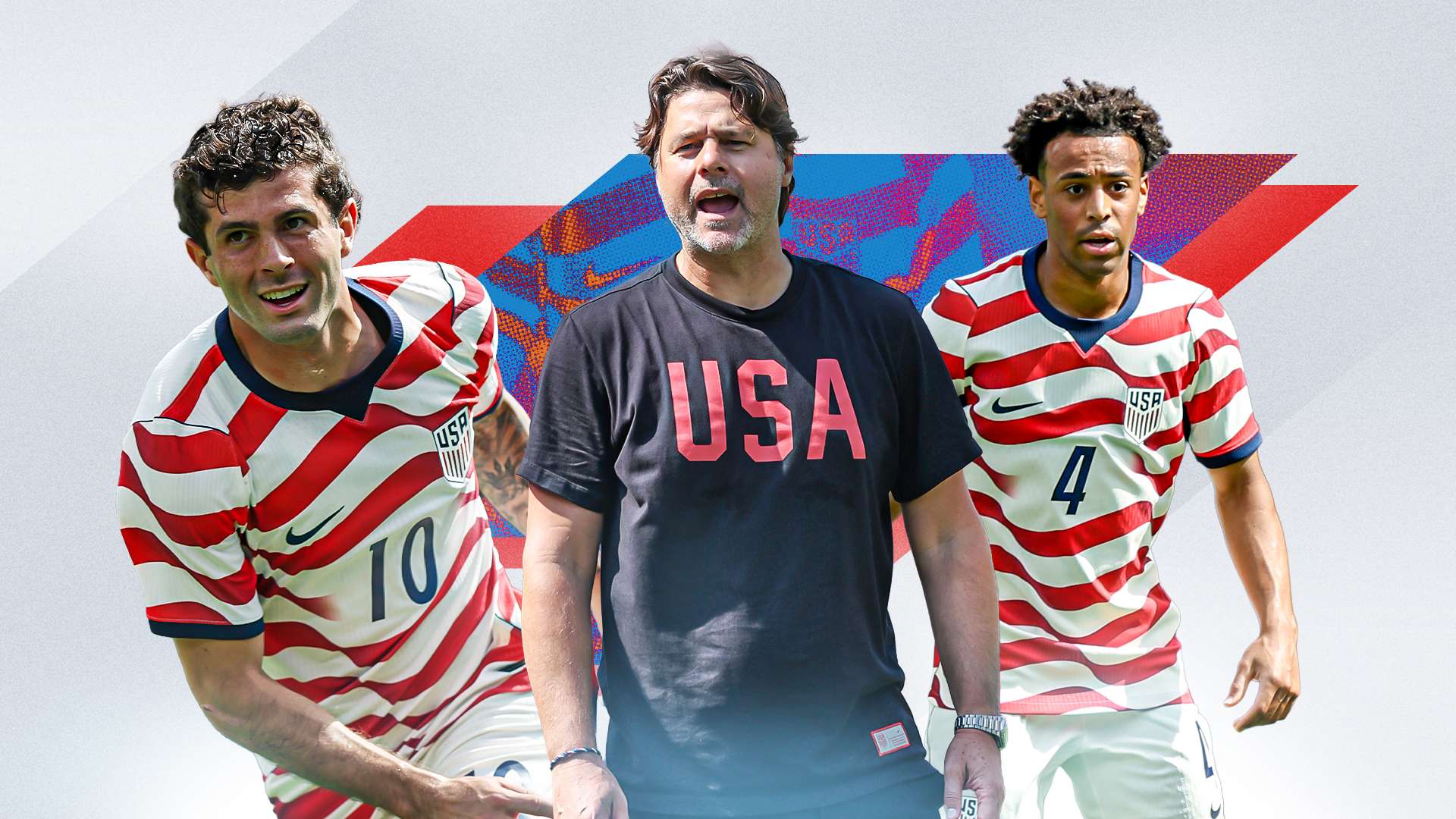
America’s Great Expectation: Can Mauricio Pochettino and the USMNT’s ‘Golden Generation’ Rise to Their World Cup Challenge?
Back in March, following consecutive defeats to Belgium and Portugal, U.S. men’s national team coach Mauricio Pochettino openly questioned the quality of his squad. Whether his remarks were meant as an honest evaluation or a motivational ploy remains known only to him. But one thing was clear — his assessment was brutally direct: man for man, his team wasn’t yet at the level of the global elite.
“We are the USA,” Pochettino stated. “We are competing against Belgium and Portugal. I think for sure Belgium and Portugal have, in the top 100 players, a few or some players playing in that top 100. I think we don’t have that. That is why it’s good to play against these types of teams.”
His observation was a sobering reminder of the standards required at the top. It also served as a wake-up call for a generation of American players who, despite their progress, still have plenty to prove on the biggest stage.
Nearly ten years have passed since the so-called ‘golden generation’ first began to take shape. In many ways, they have justified that label — with players now representing major clubs like AC Milan, Juventus, Monaco and PSV. After decades of American footballers fighting for recognition in Europe, this group has earned its respect, collecting significant silverware along the way.
Yet, questions persist at home about whether they can truly live up to the hype. Despite individual success, collective achievement remains elusive. The current USMNT has not yet surpassed the accomplishments of its predecessors on the international stage. Their talent is undeniable, but in terms of legacy, they still have everything to prove.
However, all that may no longer matter. This generation was raised for one defining moment — the 2026 World Cup on home soil. This is their opportunity to carve their names into history and perhaps alter the trajectory of American football forever.
The time for excuses has passed. These are no longer inexperienced youngsters. They are seasoned professionals, entering their prime, ready to perform when it matters most. The stage is set for what could be the most significant summer in American football history.
So, can this ‘golden generation’ truly shine? That is the central question — not only for this World Cup but for the entire decade of U.S. soccer.
Passing the Baton
To understand the rise of this generation, we must revisit its origins. The turning point came in 2017, though the groundwork was laid earlier. On October 10 of that year, the U.S. failed to qualify for the 2018 World Cup after a disastrous defeat to Trinidad & Tobago in Couva. It was a dark day in American football history — one that demanded deep introspection and change.
A month later, in Leira, Portugal, the rebuilding began. It was there that Tyler Adams and Weston McKennie made their debuts, joining Christian Pulisic, already an emerging star, to form the nucleus of a new era. McKennie scored on his debut at 19, while Adams was just 18.
“Getting called into that camp after we didn’t qualify for the World Cup was a wake-up call for both of us,” Adams said in 2024. “They relied on both of us to come in and change the narrative of U.S. Soccer. We just laughed, thinking, ‘Can you believe they’re counting on us to fix everything?’ But looking back, we really were those guys.”
Over the years, more young talents joined. Tim Weah and Antonee Robinson arrived in 2018, followed by Sergino Dest in 2019. In 2020 came Brenden Aaronson, Chris Richards, Gio Reyna, Mark McKenzie and Yunus Musah. Matt Turner and Ricardo Pepi broke through in 2021, and by 2022, Joe Scally, Haji Wright and Malik Tillman had joined the ranks. A new generation had taken shape — young, ambitious, and eager to prove themselves.
When they reached Qatar in 2022, they were one of the youngest teams in the tournament — ready to test their mettle against the best in the world.
Beaten but Not Broken
At the 2022 World Cup, the U.S. met expectations. They advanced through the group stage, performing respectably. A 1-1 draw with Wales, a goalless battle with England, and a crucial win over Iran — courtesy of Pulisic’s courageous goal — secured a place in the knockouts. But a 3-1 defeat to the Netherlands exposed the difference between good and great.
“We were young and maybe a little inexperienced,” Reyna later admitted. “Holland was more experienced, cleverer with the game — it was too much for us at that stage.”
The tournament also became infamous for Reyna’s fallout with then-manager Gregg Berhalter. That chapter is now closed, with both player and team having grown from the experience.
The core of the squad remained stable afterward, but by mid-cycle, the team’s progress had stagnated. That’s when Mauricio Pochettino was brought in to reset the culture and rebuild from the ground up.
Rollercoaster of a Cycle
The period after Qatar was turbulent. Berhalter’s contract expired amid controversy, and though he was reinstated in 2023, the project faltered. The 2024 Copa America ended in humiliation, with the U.S. crashing out in the group stage as hosts. The Berhalter era was over, and Pochettino was appointed to lead the new dawn.
Early results under Pochettino were encouraging, but the 2025 CONCACAF Nations League brought setbacks — losses to Panama and Canada left the U.S. trophyless for the first time in that competition. Pochettino responded by enforcing strict accountability: no player, no matter how famous, was guaranteed a spot.
“If you come to camp just to relax, play golf, or visit friends, then you’re in the wrong place,” Pochettino insisted. “We’re here to focus, to give everything for the national team. If we want to be good a year from now, we have to treat today as the most important day.”
His approach led to friction. Pulisic was left out of the 2025 Gold Cup after a disagreement over participation in pre-tournament friendlies. Musah also withdrew and never returned. McKennie missed the September camp, while Scally and Reyna rejoined only later that year. Meanwhile, new faces like Alex Freeman, Sebastian Berhalter and Matt Freese seized their opportunities, earning key roles for 2026.
The result is a rejuvenated, more competitive squad — one that knows reputation alone no longer secures selection.
Benefits of Brotherhood
Despite the changes, camaraderie remains a cornerstone. During World Cup camp in Atlanta, Brenden Aaronson briefly left to marry, with Pochettino’s permission. It was a reminder of the bond this group shares — forged over years of shared growth, challenges and milestones.
“I love seeing all my guys here,” Weah said. “We’re like brothers. I’ve known some of these guys since we were kids. We’ve grown up together.”
Adams echoed that sentiment: “These are my people — the ones I’d invite to my wedding. That shows how close we’ve become.” Reyna added, “Everyone genuinely enjoys being together. You can see on the field that we play for each other.”
Yet now, they’re playing for something bigger — for their country and for the future of American football.
Responsibility
This World Cup represents far more than just a tournament. Soccer in the U.S. is still developing, and 2026 offers a once-in-a-lifetime platform to accelerate its growth. The players understand that they carry not only their own ambitions but also the hopes of a nation.
Chris Richards described a moment during a visit home to Alabama: “A parent told me, ‘You have no idea what you’re doing for soccer here. Kids are picking up the ball because they see it’s possible.’ That means more to me than any trophy.”
That sense of duty drives this team — from staying late to sign autographs to embracing media and fans. As goalkeeper Matt Turner put it: “We feel the responsibility every time we step on the field — to grow the game and inspire our community. We know the world doubts American soccer, but we’re here to change that. This World Cup could redefine everything.”
Expectations
So, the ultimate question remains: are they ready? After nearly a decade of preparation, this ‘golden generation’ faces its defining test. Since Qatar, progress has been uneven, but the potential remains enormous.
Is this the strongest U.S. team ever assembled? Possibly. But potential means nothing without performance. ‘Golden generations’ are defined not by promise, but by delivery — and the next few weeks will decide their legacy.
The failures of the 2026 cycle could be forgotten if the USMNT makes a deep run. Their story won’t be written in the Nations League or Gold Cup — it will unfold on the world stage, starting with matches against Paraguay, Australia and Turkiye.
After almost nine years of rebuilding, this is the culmination. The players have been groomed for this moment — one that could transform American football permanently.
Can they rise to the occasion? Or will it slip away again? The world will find out soon enough.
-
Hyderabad woman sentenced to 10 yrs RI for killing abusive husband

-
US launches strikes on Iran; Trump says Tehran will ‘pay the price’

-
Oman ship attack: US diplomat summoned after 3 Indians go missing

-
Meenakshi Natarajan, Congress’ inside job, halt to her RS entry

-
Video: Rakhi Sawant performs Umrah for 9th time