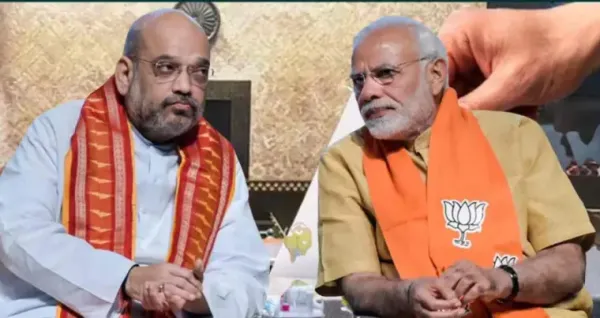
Elections are going to be held on June 18 for 26 Rajya Sabha seats in 12 states of the country. These include 24 regular seats and 2 by-election seats. This time a total of 28 candidates are in the fray, making the contest quite interesting.
New Delhi: The political turmoil in the country has once again intensified as the equations regarding the Rajya Sabha elections 2026 seem to be changing continuously. Voting is to be held on 26 seats in 12 states on June 18, which include 24 regular seats and 2 by-election seats. This time a total of 28 candidates are in the fray, making the contest very interesting in many states.
The presence of additional candidates, especially in Madhya Pradesh and Jharkhand, has further complicated the political mathematics. This election is also being considered important because after this the NDA can get closer to the target of two-thirds majority in the Rajya Sabha.
Why is Rajya Sabha election 2026 special?
The tenure of many big and influential leaders is ending in this election, including:
-
- Former Prime Minister H.D. Deve Gowda
-
- Congress president Mallikarjun Kharge
-
- Congress leader Digvijay Singh
-
- Union Minister Ravneet Singh Bittu
-
- george kurian
The presence of these names makes this election very important at the national level.
What is the election mathematics in Madhya Pradesh?
There is competition for 3 Rajya Sabha seats in Madhya Pradesh. BJP has fielded three candidates:
-
- Tarun Chug
-
- Rajneesh Agarwal
-
- Mahesh Kevat
Whereas Congress has made Meenakshi Natarajan its candidate.
-
- Assembly numbers and equations
-
- Total Assembly seats: 230 (effective 228)
-
- Votes required to win a seat: 58
-
- BJP has: 164 MLAs
-
- Congress has: 64 MLAs
According to the numbers, the chances of BJP getting two seats and Congress getting one seat are considered strong. But BJP’s third candidate is complicating the equation. If there is cross voting then the contest on the third seat could be interesting. According to experts, if Congress gets less than 58 votes then the role of second preference votes can be decisive.
Why is the contest in Jharkhand interesting?
INDIA alliance has 56 MLAs in Jharkhand, which is equal to the required number for both the seats. But this time the situation has changed because independent candidate Parimal Nathwani has got the support of NDA. BJP and NDA have about 24 MLAs. If the NDA wants its supported candidate to win, it will need additional votes from the opposition camp. Here too the role of cross voting and second preference votes can be decisive.
Equations in other states
-
- Gujarat: BJP has fielded 4 candidates and has 161 MLAs. With the opposition not contesting, BJP’s victory on all the seats is almost certain.
-
- Rajasthan: There is a direct contest between BJP and Congress on 3 seats. BJP has made Satish Poonia and Alka Gurjar its candidates.
-
- Karnataka: Here Congress has presented a strong claim, while BJP has fielded M. Nagaraj.
-
- Andhra Pradesh and North-Eastern States: NDA is getting additional strength with the support of TDP and Janasena.
164 seats are required for two-thirds majority. The NDA has already crossed the simple majority and now aims to reach 164 seats. Cross voting has become the biggest factor in this election due to additional candidates in states like Madhya Pradesh and Jharkhand. This is the reason why the results on many seats may be different from numerical strength.
-
Body will get cooling and energy in summer! Make Nutritious Jaggery-Makhana Lassi in an instant, note down the recipe

-
Hair Growth Tips: This is how women of old times kept their hair thick and beautiful, you should also know

-
In Gorakhpur, minor murdered blood relatives, killed elder brother, sister-in-law and nephew

-
Upcoming Smartphone: Nothing will explode again? Phone 4b will come to India after Phone 4a? Design leaks

-
Money will be deducted from the bank without your knowledge, turn off ‘Auto-Pay’ like this? The process is very easy