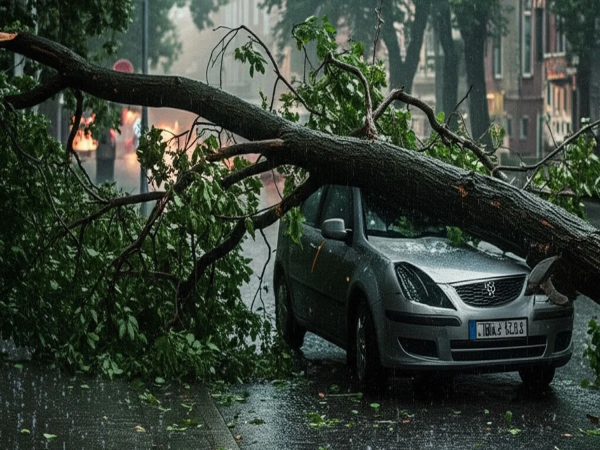
With the monsoon season approaching and weather conditions becoming increasingly unpredictable, many parts of the country are witnessing strong winds, thunderstorms, and heavy rainfall. While these weather events often bring relief from intense summer heat, they can also lead to unexpected property damage and vehicle-related accidents.
One common concern among car owners is what happens if a tree falls on a parked vehicle during a storm. The damage can be significant, leaving owners worried about expensive repair bills. The good news is that whether you receive compensation largely depends on the type of motor insurance policy you have purchased.
Here's a detailed look at how insurance coverage works in such situations and the steps you should take if your vehicle is damaged by a fallen tree.
Does Car Insurance Cover Damage Caused by a Fallen Tree?Insurance coverage for storm-related vehicle damage depends entirely on the nature of your insurance policy.
Not all motor insurance plans offer the same level of protection. While some policies provide only basic legal coverage, others offer extensive protection against natural disasters and unforeseen incidents.
Understanding the difference can help determine whether your claim will be approved.
Third-Party Insurance: Limited ProtectionMany vehicle owners opt for third-party motor insurance because it is mandatory under law and generally more affordable than comprehensive plans.
However, third-party insurance offers protection only for damages caused by your vehicle to another person, vehicle, or property.
What It Covers-
Injury or death of a third party
-
Damage caused to another vehicle
-
Damage caused to third-party property
-
Damage to your own vehicle
-
Theft of your car
-
Natural disaster-related losses affecting your vehicle
-
Damage caused by falling trees, storms, or floods
Therefore, if a tree falls on your car during a storm and you only have third-party insurance, you will typically have to bear the repair expenses yourself.
Comprehensive Insurance Provides Better ProtectionVehicle owners with a comprehensive motor insurance policy are generally in a much safer position when it comes to weather-related incidents.
Comprehensive plans are designed to protect against a wide range of risks, including natural disasters and accidental damage to your own vehicle.
Depending on the policy terms, comprehensive coverage may include protection against:
-
Storms and strong winds
-
Heavy rainfall
-
Flooding
-
Cyclones
-
Earthquakes
-
Landslides
-
Falling trees and branches
-
Other natural calamities
Many premium plans, including bumper-to-bumper and zero-depreciation policies, offer broader coverage that can significantly reduce out-of-pocket expenses after an accident.
If the damage falls within the policy's covered risks, the insurer may pay for repairs after assessing the claim.
What Should You Do If a Tree Falls on Your Car?Taking the right steps immediately after the incident can improve the chances of a smooth and successful insurance claim.
1. Gather Evidence ImmediatelyDocument the scene as thoroughly as possible.
Take clear photographs and videos showing:
-
The fallen tree
-
The damaged vehicle
-
The surrounding area
-
Weather-related conditions, if visible
Visual evidence helps establish that the damage occurred due to a storm or natural event.
2. Inform Your Insurance Company QuicklyContact your insurer as soon as possible after the incident.
Most insurance companies require prompt reporting of accidents and damage claims. Delays in notifying the insurer may complicate the claim process or lead to additional verification requirements.
3. Avoid Moving the Vehicle PrematurelyUnless there is an immediate safety risk, avoid removing the tree or relocating the vehicle before receiving guidance from your insurer.
The original condition of the accident site may be important during claim verification.
4. Wait for the Surveyor's InspectionInsurance companies generally appoint a surveyor to inspect the vehicle and assess the extent of the damage.
The surveyor's report plays a crucial role in determining claim approval and estimating repair costs.
5. Keep Essential Documents ReadyTo speed up the claim process, ensure that you have the necessary paperwork available.
Important documents may include:
-
Vehicle Registration Certificate (RC)
-
Driving Licence
-
Insurance policy document
-
Claim application form (if required)
-
Photographs and videos of the incident
-
Any additional documents requested by the insurer
Providing accurate information and complete documentation can help prevent unnecessary delays.
Why Comprehensive Coverage Matters During Monsoon SeasonExtreme weather events can occur without warning, especially during the monsoon months. Strong winds, heavy rainfall, and falling trees can cause substantial damage to parked vehicles, even when owners have taken all reasonable precautions.
A comprehensive insurance policy offers an additional layer of financial protection during such situations. While the premium may be higher than third-party coverage, the broader protection can prove valuable when unexpected incidents occur.
Check Your Policy Before the Rains ArriveAs monsoon activity intensifies across various regions, vehicle owners should review their insurance policies to understand exactly what is covered. Knowing your policy benefits in advance can help you avoid unpleasant surprises during an emergency.
If your car is protected under a comprehensive insurance plan, damage caused by a fallen tree during a storm is generally covered, subject to policy terms and conditions. Taking prompt action, preserving evidence, and following the correct claim procedure can significantly improve the likelihood of a hassle-free settlement.
-
Man Utd set to make move for Tottenham captain Cristian Romero as next signing after Ederson deal

-
Manchester United push ahead in Mateus Fernandes pursuit as West Ham raise asking price

-
Manchester United confident of landing Elliot Anderson and overtaking City in £100m chase for England midfielder

-
France Player Ratings vs Northern Ireland: Michael Olise Proves World Cup-Ready with a Hat-Trick as Didier Deschamps’ Side Finish Warm-Ups in Style

-
Kylian Mbappe faces the same ‘superstar’ challenge at Real Madrid as Cristiano Ronaldo, says Rafael van der Vaart amid ‘arrogant’ criticism of the French striker