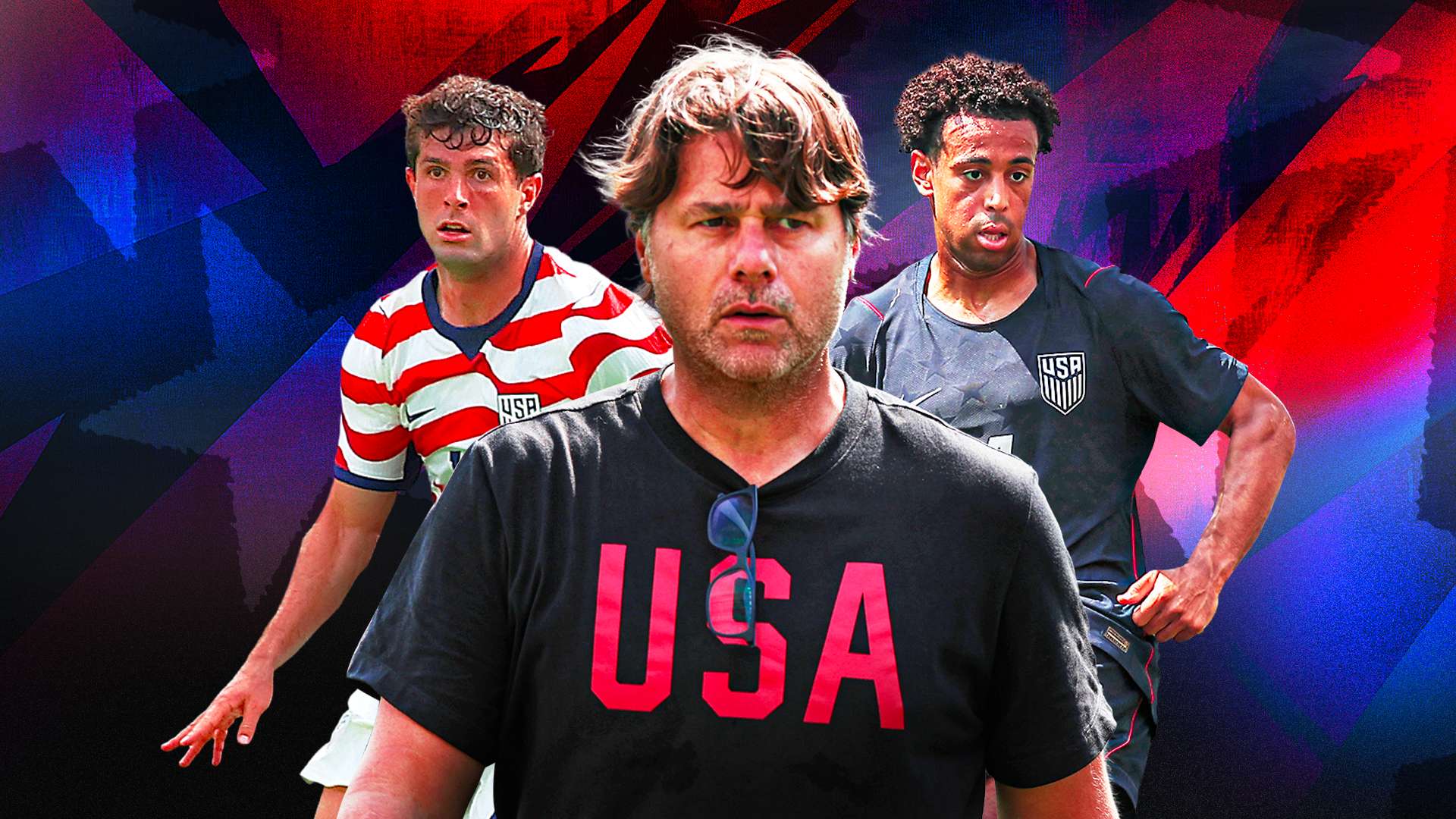
The United States Men’s National Team (USMNT) responded well after going 1-0 down to Germany, but ultimately had to settle for a hardworking defeat against a superior side — an outcome that felt all too familiar.
In the 48th minute of the match, Bayern Munich defender Jonathan Tah allowed Christian Pulisic a moment to shoot. The American winger dashed down the right flank, looked to feed Folarin Balogun, but instead feinted inside before trying to break wide. Tah calmly blocked the attempt, making the play look effortless — a telling contrast in quality between the two teams.
That moment summed up the contest. The U.S. fought hard, pressing and chasing, while Germany approached the game with control and composure. Die Mannschaft opened the scoring from a set piece and added another through a well-crafted move, never needing to move beyond second gear.
The Americans, in contrast, played with urgency and intensity, producing some decent passages of play. Still, Germany’s 2-1 victory rarely looked in doubt — they managed the game with ease.
There was plenty of talk from the U.S. camp about “fight” and “nearly getting there.” But the truth was clear: Germany were never truly tested. The USMNT’s best efforts were met with comfort by one of the World Cup favourites. That reality raises questions about the direction of this team and the high-profile coach leading it.
An improved display
Saturday’s performance did mark an improvement. For nearly half an hour, the USMNT looked their most cohesive since Mauricio Pochettino took charge. The Argentine has spent much of his tenure trying to reinvent this side. This was close to full strength, and for once, the U.S. were not completely outclassed — a small step forward, if nothing else. Moving from “completely dominated” to “respectably beaten” can still be progress.
Yet the gulf in class persisted. Germany struck early, Kai Havertz heading home unmarked from a free kick. The visitors continued to control the game with fluid interplay. Florian Wirtz and Jamal Musiala created openings, Havertz moved intelligently, and Joshua Kimmich dictated tempo with crisp passing. Germany even had another goal disallowed after the ball went out before Leroy Sane’s cutback.
The U.S. then rallied. Their pressing became sharper; Malik Tillman hustled to win possession, Pulisic buzzed with energy, and Sergiño Dest surged into attack. Balogun chased tirelessly. For a spell, they had Germany unsettled.
Germany’s composure endures
Germany, though, remained largely untroubled. The U.S. had managed just three touches in Germany’s box after 25 minutes. Their first shot on target — a volley from Antonee Robinson, who had only nine career goals before this match — found the net. His acrobatic celebration suggested confidence, but Germany never panicked.
However, the Americans’ aggressive pressing left them exposed, and it cost them. Around the hour mark, Musiala found space, fed Havertz, and Sane finished clinically. That sealed the result. Both sides made substitutions, but neither bench changed the flow. The U.S. saw more of the ball late on but created little. Three of their four shots on target came after halftime, yet not a single clear-cut chance.
The closing minutes were marred by frustration. Tim Weah’s heavy challenge angered David Raum, prompting Nico Schlotterbeck to shove him. Players from both benches reacted, and Weah and Schlotterbeck were booked. It was a needless flashpoint in a game already decided.
Afterwards, Pochettino questioned the officiating but praised his team’s response. “Germany were a little aggressive from the start, and I don’t think the referee managed it well. That created a feeling that we had to be aggressive too. But it’s good — both teams care and want to compete,” he said.
Yet, for a program built on work rate and grit, that alone is no longer enough. The U.S. have only one knockout-stage win in their history, and expectations are higher now. Based on this showing, it’s hard to see where that breakthrough victory might come from — and it puts scrutiny on Pochettino’s appointment.
The Argentine, with stints at Tottenham, Paris Saint-Germain, and Chelsea, earns a reported $5 million for his first seven months in charge — more than triple what Gregg Berhalter made. Only Brazil’s Carlo Ancelotti earns more among international managers. Despite flashes of promise, the U.S. can’t keep equating effort with progress.
Echoes of past defeats
Saturday’s loss felt like a nostalgic reminder of the USMNT’s past identity — the underdog spirit of scrappy fighters who made up for technical gaps with heart and hustle. That narrative has long defined American footballing culture. But at some point, passion must translate into results.
Perhaps the only encouraging takeaway was the response after conceding early. Robinson noted postgame that the team didn’t collapse as they might have before. “Disappointed we lost, but many positives to take,” he said. “We could have crumbled, but we fought back, played some really good football, and looked competitive.”
Captain Tyler Adams agreed: “You never expect to concede in the first minute. When it happens, you have to rally together.”
Even Germany’s coach Julian Nagelsmann acknowledged that the match wasn’t easy. “You have a good coach, a very nice person and a good coach,” he said. “They have great intensity and speed in many positions.” His tone, however, carried a hint of condescension.
Promises and reality
When Pochettino was unveiled in September 2024, he spoke like a visionary. “We need to believe in big things,” he declared. “Not just winning one game, but winning the World Cup.” His first press conference was full of optimism, ambition, and confidence. He urged Americans to adopt the winning mindset seen in other U.S. sports: to play bold, attacking football without fear.
He dismissed concerns about time before 2026, insisting the players were intelligent and adaptable. Above all, he stressed mentality. After a disappointing Copa America and a poor September window, he aimed to inject belief. “I don’t see weakness in this squad,” he said. “We’re positive. We have very talented players.”
But almost a year later, those words remain unfulfilled. Following consecutive defeats to Belgium and Portugal, Pochettino defended his record: “We are USA. We’re competing against Belgium and Portugal. They have players among the world’s top 100 — we don’t. That’s why it’s good to test ourselves against them.”
Yet the question remains — has U.S. Soccer truly got something new for its money, beyond a high-profile name and a bigger paycheque?
Is it enough?
The U.S. should aspire to be more than plucky underdogs. Pochettino was hired not only for his reputation but to transform this team into one that imposes itself. At present, neither their football nor their aura instils fear. If the best takeaway from this World Cup send-off is that they “didn’t crumble,” that’s a low bar.
This is a costly, elite appointment meant to elevate standards. Yet, the transformation remains minimal. Pochettino’s résumé is glittering, but the on-field revolution hasn’t arrived. The U.S. still play with intensity and spirit but fall short against top-class opposition — much like under Berhalter and others before him.
Under Pochettino, too, the pattern remains: brave performances, narrow defeats, and post-match optimism. Mexico were superior in the Gold Cup final. Belgium and Portugal outclassed them in March. Germany did the same here. The U.S. scored once, lost 2-1, and lost their composure late on.
World Cups often hinge on energy, chemistry, and belief — and the U.S. certainly have those qualities. They’re a tight-knit group that doesn’t give up easily. That spirit is admirable, but the question lingers: when will grit turn into greatness?
For now, the message seems to be that fighting hard is good enough. But as the historic 2026 World Cup approaches on home soil, the real test will be whether effort alone can finally deliver results.
-
Hanoians displaced by bridge project adapt to life in rented homes

-
Sophie Turner hints at emotional strain after Joe Jonas custody

-
Child Height Growth Tips: These nutrients can help in increasing the height of children, know what to include in the diet

-
Generational Differences Of Summer Fun

-
Daily Tarot Horoscope For Tuesday, June 9, 2026