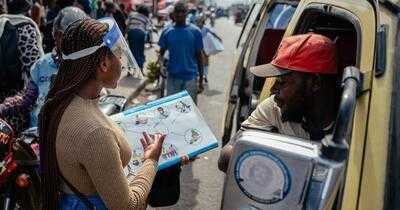
The latest Ebola outbreak is showing no signs of slowing.
On April 24, the first suspected case of the rare Bundibugyo strain of Ebola was detected in the Democratic Republic of the Congo. On May 17, the World Health Organisation declared the outbreak a “Public Health Emergency of International Concern”.
The current Ebola outbreak is the third-largest in world history, with 906 suspected cases and 223 deaths in the DRC alone as of May 27.
And it may have spread to other continents. Health authorities are now investigating a suspected case in Italy, and two possible cases in Brazil. All three are believed to be travellers returning from either the DRC or Uganda. One American man who tested positive for Ebola is currently being treated in Germany.
As concerns grow, the Coalition for Epidemic Preparedness Innovations has committed more than A$86 million in funding to fast-track the development of three potential vaccines, targeting the Bundibugyo strain.
But in the meantime, could this outbreak spread further? And how concerned should we be?
A deadly virusEbola is a rare but potentially fatal virus that mainly spreads through direct contact with the bodily fluids – such as blood, faeces and vomit – of an infected person.
Early symptoms of Ebola include sore throat, headaches, fever, fatigue and body pain. Severe Ebola cases can cause skin rashes, shortness of breath, vomiting, diarrhoea, abdominal pain and seizures.
Ebola was first identified in humans in...
Read more
-
Zepto IPO: Aadit Palicha, Kaivalya Vohra to hold stake; Nexus Ventures biggest seller in OFS

-
Jose Mourinho Poised for Return to Real Madrid with Club Legend Pepe Joining Staff

-
US Government Initiates Major Denaturalization Actions Against 17 Citizens

-
6.4 Magnitude Earthquake Hits Off Cuba's Coast

-
New York Knicks vs. San Antonio Spurs Game 3 preview: Starting lineup, injury report, how to watch and more