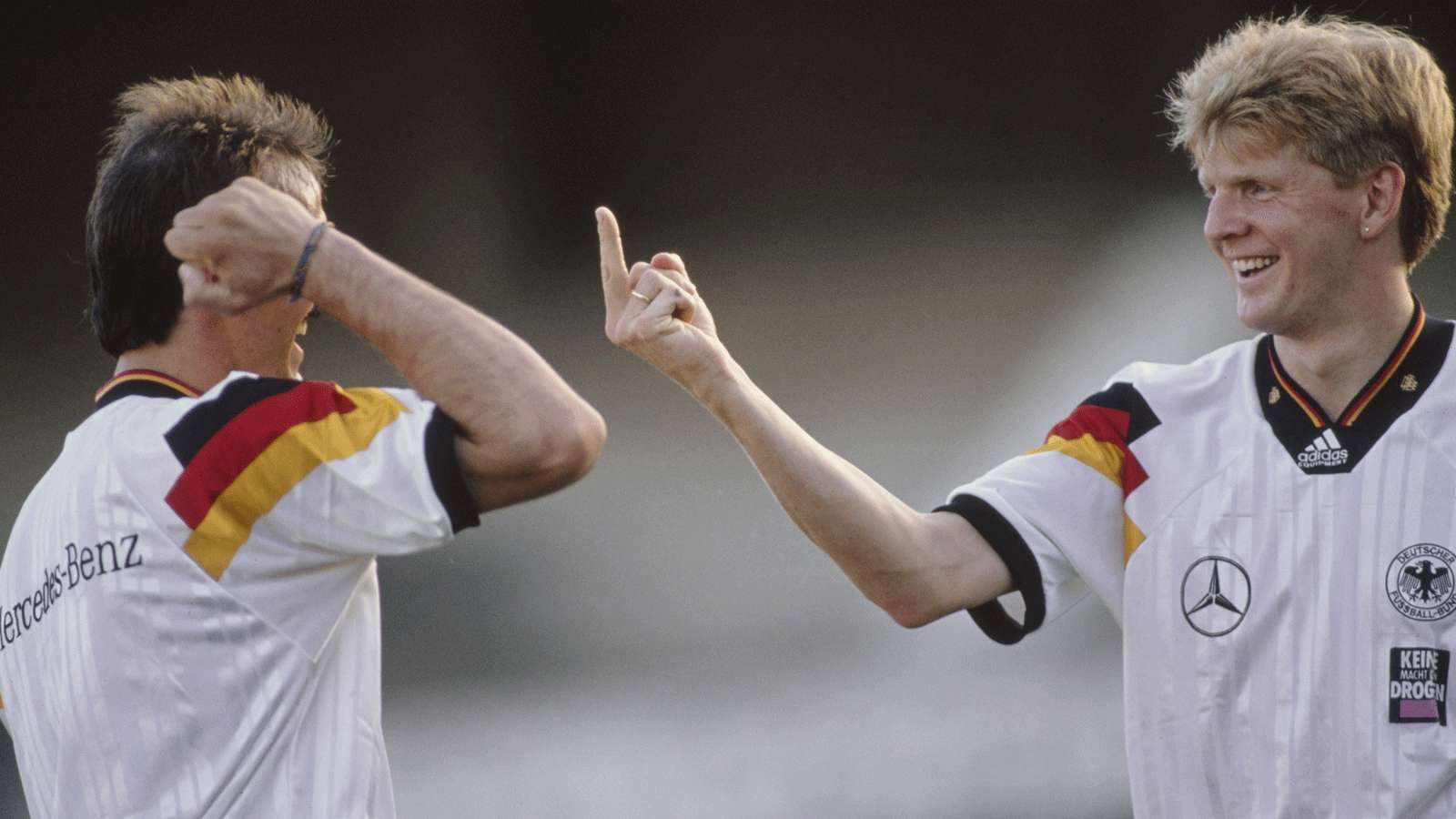
Stefan Effenberg was once viewed as one of German football’s most exciting prospects. However, instead of transforming his immense talent into a stellar international career, he became infamous for an act of rebellion during the 1994 World Cup—raising his middle finger at supporters—which led the DFB to expel him. Add to that his clashes with teammates, an affair with a colleague’s wife, drink-driving cases, and a tell-all autobiography filled with provocative photos and errors, and Effenberg’s image as a football rebel was complete. This story is Part 14 of the Rebel United series.
Effenberg’s rise began during the 1987/88 season with Borussia Mönchengladbach. Then-manager Wolf Werner recognised the potential of the 18-year-old and quickly promoted him to the first team. From the start, Effenberg stood out for his unorthodox style—he was bold, outspoken, and played with a mix of aggression and authority that defied the traditional German midfielder stereotype.
By the age of 20, he was already leading a Mönchengladbach side far removed from its 1970s glory days, yet his individual performances shone brightly. However, Effenberg’s refusal to conform soon became apparent. Whether confronting a teammate or a referee, he never hesitated to speak his mind—and often lost his temper. His career became synonymous with yellow cards, disputes, and dressing room drama.
It didn’t take long for FC Bayern Munich to take notice. His transfer to the German giants seemed like the perfect step toward international stardom, and for a while, things looked promising. Effenberg impressed with goals, assists, and commanding displays that made him vital to the team.
Nonetheless, his rebellious streak followed him to Munich. He clashed with coaches and players, unwilling to fit neatly into any system. The 1991/92 season highlighted the instability at Bayern: the club endured a poor campaign, flirted with relegation, and finished a disappointing tenth, cycling through three coaches—Jupp Heynckes, Sören Lerby, and Erich Ribbeck.
With several senior figures gone, leadership in the dressing room was lacking. Effenberg, already a national player, sought to fill that void but wasn’t yet ready. His conflict with Heynckes escalated when he reportedly shouted, “Hey Heynckes, let’s take this outside!” Not long after, Heynckes was replaced, and Effenberg’s first stint in Munich came to an abrupt end.
One moment at the 1994 World Cup would change everything for him.
After two inconsistent years with Fiorentina, during which the team experienced both relegation and promotion, Effenberg’s defining moment arrived—not from a goal or trophy, but from a single gesture that made him the most controversial figure in German football. At 25, he was in his prime—physically strong, technically brilliant, and among Europe’s elite midfielders—yet it was his temper, not his talent, that made headlines.
In Germany’s final group stage match against South Korea, the reigning world champions led 3–0 at half-time. However, under the sweltering 48-degree Dallas heat, Korea fought back to 3–2, leaving German fans frustrated by their team’s lacklustre effort. When coach Berti Vogts substituted Effenberg in the 75th minute, the crowd jeered loudly. Exhausted and irritated, Effenberg responded with a defiant middle finger toward the stands—a gesture he held as he walked off the pitch, calm but confrontational.
Though no video evidence exists, Effenberg’s infamous gesture remains one of the most enduring images in German World Cup history.
The reaction was immediate and furious. The German media erupted, and the DFB swiftly took action. That night, DFB President Egidius Braun and Vogts decided to expel Effenberg from the squad—a move that many of his teammates still consider excessive.
The 1994 German team was rife with internal conflict. Disputes over player behaviour, the Bodo Illgner incident, and tension between captain Lothar Matthäus and Vogts had already fractured unity. Franz Beckenbauer, covering the tournament as a columnist, openly criticised Vogts, adding fuel to the fire. “Vogts was left in tatters,” recalled an ARD documentary on Germany’s 1994 World Cup collapse.
As discipline and trust disintegrated, Effenberg became the scapegoat. When he refused to apologise publicly, he was dismissed from the squad and flown home immediately—no fine, no suspension, just exile. Many players felt the punishment was excessive for such a minor incident, deepening the fissures within the team.
“Then they would have had to expel at least four or five more players too,” Mario Basler later remarked about the infamous gesture. Germany’s campaign ended ignominiously in the quarter-finals against Bulgaria, and Effenberg’s international career ended with it.
His final competitive appearance for the national team was that match against South Korea. Aside from two friendlies in 1998 against Malta and Romania—both under Vogts—he never represented Germany again. His downfall wasn’t due to form or injury, but rather his inability to restrain himself for a fleeting moment.
At FC Bayern, under Ottmar Hitzfeld, Effenberg reinvented himself as the team’s “boss.”
Even after his World Cup expulsion, Effenberg refused to express regret. In fact, more controversies followed. After a three-year return to Borussia Mönchengladbach—arguably the most stable phase of his career—he rejoined Bayern Munich, accepting an offer too good to reject.
Sportingly, the move was a triumph. As Bayern’s undisputed leader, Effenberg guided the team to three consecutive Bundesliga titles from 1999 to 2001 and a Champions League triumph in 2001, defeating Valencia in a dramatic penalty shootout. After Mehmet Scholl’s miss, Effenberg confidently converted his penalty to equalise, setting the stage for Bayern’s glory.
Despite his fiery character, coach Ottmar Hitzfeld trusted him implicitly, naming him the on-field general responsible for uniting the so-called “FC Hollywood.” Even a drink-driving offence in October 1998, when he was caught with a blood-alcohol level of 1.1 per mille, did little to shake Hitzfeld’s faith—though the club fined him heavily.
But conflict was never far. His most public feud was with Lothar Matthäus, a World Cup winner and Ballon d’Or recipient. The two clashed repeatedly in the media, forcing teammates to take sides in a divided dressing room. Off the field, Effenberg’s affair with teammate Thomas Strunz’s wife, Claudia, created front-page headlines and further turmoil within the squad. Undeterred, he later married Claudia in December 2004 after divorcing his first wife, Martina.
His long-standing confrontations with the Munich press only added to his legend. Effenberg often referred to himself in the third person—famously declaring, “You can’t break a Stefan Effenberg”—and never hesitated to criticise journalists to their faces.
In his autobiography, Effenberg took aim at everyone from teammates to the media.
After retiring in 2004 following a brief stint with VfL Wolfsburg, Effenberg remained in the spotlight. His 2003 autobiography, I Showed Them All, reignited old controversies. The book was filled with personal attacks on former managers, players, and journalists, and he unapologetically stood by every scandal of his career—from the middle finger incident to his affair. The inclusion of intimate photos of him and Claudia, along with numerous spelling mistakes, made the book an object of ridicule in the press.
Whether admired or despised, Stefan Effenberg was one of German football’s most outspoken and colourful characters. He thrived on controversy, and that defiance defined him as much as his talent. He had the ability to become a German football icon—but he always insisted on living by his own rules.
-
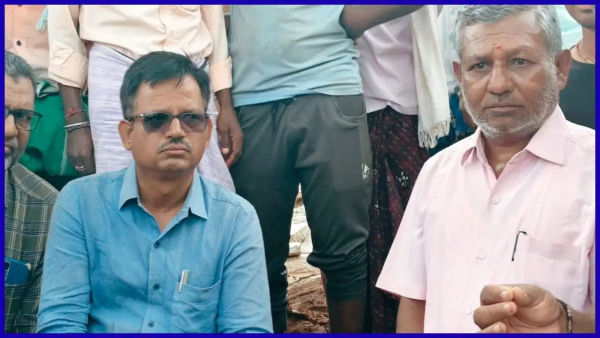
Karnataka: Villagers detain officials over water scarcity
-
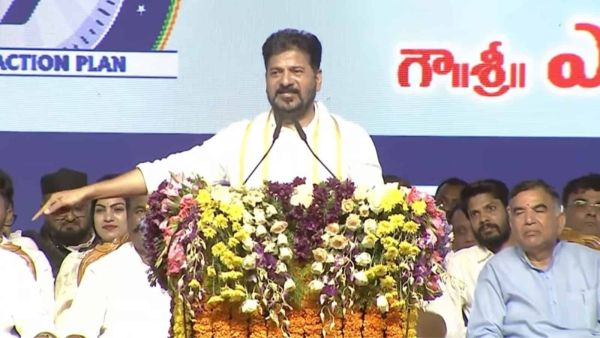
Will build 1 lakh LIG, MIG houses in Hyderabad: CM Revanth
-
‘Illegal’ temples, mosques razed for road widening in Jaipur

-
No Union minister faced corruption charges in 12 Years under PM Modi: BJP

-
Why well-paid software engineer driving Rapido in Bengaluru?