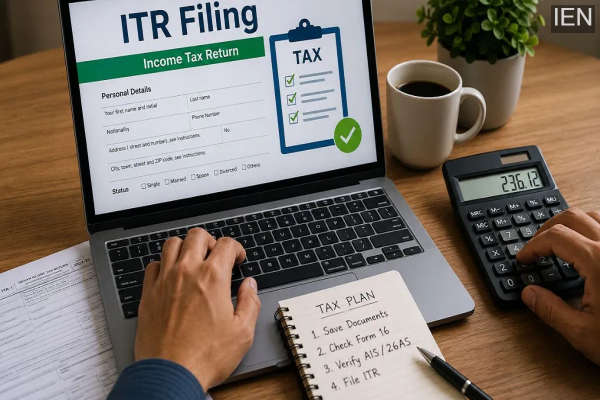
ITR Filing 2026: The income tax return filing season for Assessment Year 2026-27 is now underway, and tax authorities have already released the required return forms. While many taxpayers tend to wait until the final days before filing, financial experts warn that delaying your Income Tax Return (ITR) can lead to penalties, interest charges, and the loss of several important tax benefits.
Filing your return well before the deadline not only helps you avoid unnecessary stress but also strengthens your financial profile and ensures smoother access to loans, credit facilities, and tax refunds.
Why Filing ITR Early Is a Smart Financial Move
Many taxpayers postpone filing their returns until the last moment, assuming there is plenty of time available. However, waiting until the deadline often results in technical issues, portal congestion, missing documents, and filing errors.
Submitting your return early provides sufficient time to review details, correct mistakes, and ensure that your income, deductions, and tax payments are accurately reported.
Late Filing Can Lead to Interest and Penalties
One of the biggest drawbacks of missing the prescribed deadline is the financial penalty that may follow.
Although taxpayers can still file a belated return after the due date, additional costs may apply.
Interest on Outstanding Tax
If any tax remains unpaid, interest may be charged under applicable provisions of the Income Tax Act.
The interest is generally calculated at 1% per month or part of a month on the outstanding tax liability until the return is filed and dues are cleared.
Late Filing Fee
Taxpayers who miss the due date may also have to pay a late filing fee:
-
₹5,000 if total income exceeds ₹5 lakh.
-
₹1,000 if total income is up to ₹5 lakh.
These additional costs can easily be avoided by filing within the prescribed timeline.
Missing the Deadline Could Impact Tax-Saving Opportunities
Many taxpayers invest in:
-
Shares
-
Mutual funds
-
Real estate
-
Business ventures
Sometimes these investments result in capital losses.
Tax rules generally allow eligible taxpayers to carry forward certain losses and adjust them against future gains, helping reduce tax liability in subsequent years.
However, this benefit is usually available only when the return is filed within the specified due date. Delayed filing may result in losing the opportunity to carry forward eligible losses.
ITR Strengthens Your Financial Profile
An Income Tax Return is much more than a tax compliance document.
It serves as an official record of your:
-
Income
-
Financial discipline
-
Tax compliance history
-
Earning capacity
This information becomes important when applying for financial products and services.
Easier Loan Approval
Banks and financial institutions frequently request ITR records while processing:
-
Home loans
-
Personal loans
-
Car loans
-
Business loans
-
Credit card applications
Consistent and timely ITR filing demonstrates financial stability and improves credibility in the eyes of lenders.
Helpful for Visa Applications
Many foreign embassies and consulates ask applicants to provide ITR documents as proof of income.
Countries often review tax records to assess an applicant's financial standing and ability to support travel expenses.
Timely filed returns can therefore strengthen visa applications for tourism, education, or employment purposes.
Important ITR Filing Deadlines for AY 2026-27
Taxpayers should keep track of the applicable due dates based on their category.
Salaried Individuals and Pensioners
Individuals filing returns without audit requirements generally need to submit:
-
ITR-1
-
ITR-2
Due Date: July 31, 2026
Freelancers and Small Business Owners
Taxpayers filing:
-
ITR-3
-
ITR-4
without audit requirements typically have a later deadline.
Due Date: August 31, 2026
Audit Cases
Businesses and professionals requiring a tax audit must file their returns by:
Due Date: October 31, 2026
Belated Return Filing
If a taxpayer misses the applicable deadline, a belated return can still be filed.
Last Date for Belated Return: December 31, 2026
However, penalties, interest charges, and loss of certain benefits may apply.
Common Mistakes to Avoid While Filing
Before submitting your return, make sure to:
-
Verify Form 16 and salary details.
-
Match information with AIS and Form 26AS.
-
Report all sources of income.
-
Disclose capital gains and investment income accurately.
-
Check bank account details carefully for refunds.
-
Review deductions and exemptions before submission.
A thorough review can help avoid notices and future complications.
Final Thoughts
Filing your Income Tax Return on time is not merely about meeting a legal requirement. It helps you avoid penalties, preserve valuable tax benefits, maintain a strong financial profile, and simplify future loan or visa applications. Instead of waiting until the last few days, taxpayers should complete their tax assessment early and file their returns well before the deadline to enjoy a hassle-free experience.
Disclaimer: Tax rules and filing requirements may change based on government notifications and individual circumstances. Taxpayers should consult a qualified tax professional or refer to official Income Tax Department guidelines before making tax-related decisions.
-
Working Under Intense Sun For Long Hours? Tips To Stay Safe In Scorching Heat

-
Lord Jagannath Temple's Sacred Food 'Abaadha': Name That Has United India For Centuries

-
Apple Dropped Titanium From iPhone Pro, But Is It Gone Forever?

-
Parliamentary Panel Seeks Answers From NTA, CBSE On NEET Paper Leak And OSM Controversy

-
‘Was Directing Aamir Khan And Dating Sushmita Sen But Had No Money’: Vikram Bhatt