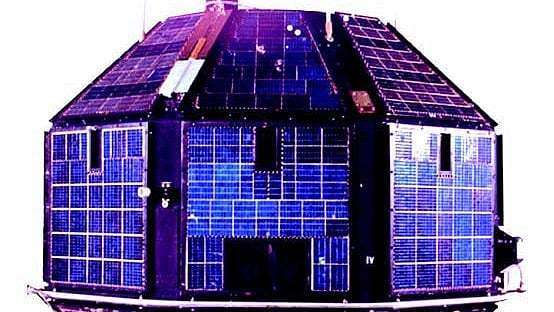
Bhaskara I was a 7th-century Indian mathematician and astronomer who was a leading scholar of Aryabhata's school, expanding upon his work. The satellite was launched by the Soviet Union's Intercosmos programme from the Kapustin Yar launch site in present-day Russia.
Bhaskara-I, India's first low-orbit Earth observation satellite, was launched on June 7, 1979, marking a major milestone in the country's space programme. Named after the renowned Indian mathematician and astronomer Bhaskara I, the satellite was developed by the Indian Space Research Organisation (ISRO) to gather valuable data about Earth's surface and atmosphere.
About Bhaskara-I
Bhaskara I was a 7th-century Indian mathematician and astronomer who was a leading scholar of Aryabhata's school, expanding upon his work. The satellite was launched by the Soviet Union's Intercosmos programme from the Kapustin Yar launch site in present-day Russia. Weighing around 444 kilograms, Bhaskara-I was designed primarily for remote sensing and scientific research. It orbited the Earth at a low altitude, enabling it to capture detailed information about land, water, and weather conditions.
Soviet Union's Intercosmos programme
-
Petrol and Diesel Prices Updated Across India Today; Check Fuel Rates in Major Cities

-
SIP Payments Failing? These 4 Overlooked Reasons Could Disrupt Your Investments and Trigger Penalties

-
Will Protest In Multiple States If Pradhan Doesn't Resign: CJP Founder Dipke

-
AirTrunk Announces $30 Billion Investment To Build 5GW AI-Driven Data Centre Infrastructure In India By 2030
-
Ram Gopal Varma Says Inde Navarrette's Obsession Scene Reminded Him Of Urmila Matondkar In Kaun; Netizens React