Canada have wrapped up their World Cup warm-up fixtures, but questions still linger. GOAL takes a closer look at Moïse Bombito’s injury and the main challenges facing Jesse Marsch’s squad.
MONTRÉAL – In front of an enthusiastic sea of red at Stade Saputo, the Canadian players walked around the pitch applauding their fans, who responded with spirited chants of “olé, olé, olé” as the nation’s World Cup co-hosting dream drew nearer.
The outcome wasn’t exactly as hoped. A 1-1 draw with a youthful Ireland side wasn’t the ideal finale, yet optimism around Jesse Marsch’s team persisted. Even Irish supporters, many of whom reside in Canada, joined in with “Let’s go Canada” as the players made their lap of appreciation.
With the pre-World Cup fixtures now concluded, Canada’s tune-up window featured a 2-0 victory over Uzbekistan in a rain-soaked Edmonton, followed by the draw in Montreal. The real challenge awaits: the World Cup opener on June 12 against Bosnia and Herzegovina at Toronto Stadium, before Group B clashes with Qatar and Switzerland at BC Place in Vancouver.
However, just as the mood was high, Canada may be dealing with a major setback at a crucial moment. TSN reported that Moïse Bombito is expected to be replaced on the World Cup roster after medical assessments ruled his surgically repaired leg unfit for competition, with the decision made to safeguard his long-term health.
If confirmed, it is a significant blow. Bombito has become a key defender under Marsch, providing recovery speed, physicality, and athleticism vital to Canada’s pressing style. His absence could leave the team thinner and more vulnerable at centre-back, mere days before the biggest tournament in their history.
“I don’t think we’re overly anxious or excited about the World Cup... we want to give our country something to be really proud of,” Marsch said after the Ireland match. “This team is full of incredible men with powerful stories, immense talent, and great character. Canadians love a winner, and they also love good people — we want to show we can be both.”
GOAL breaks down the key talking points from Canada’s two warm-up matches and the issues they must address for success on home soil.
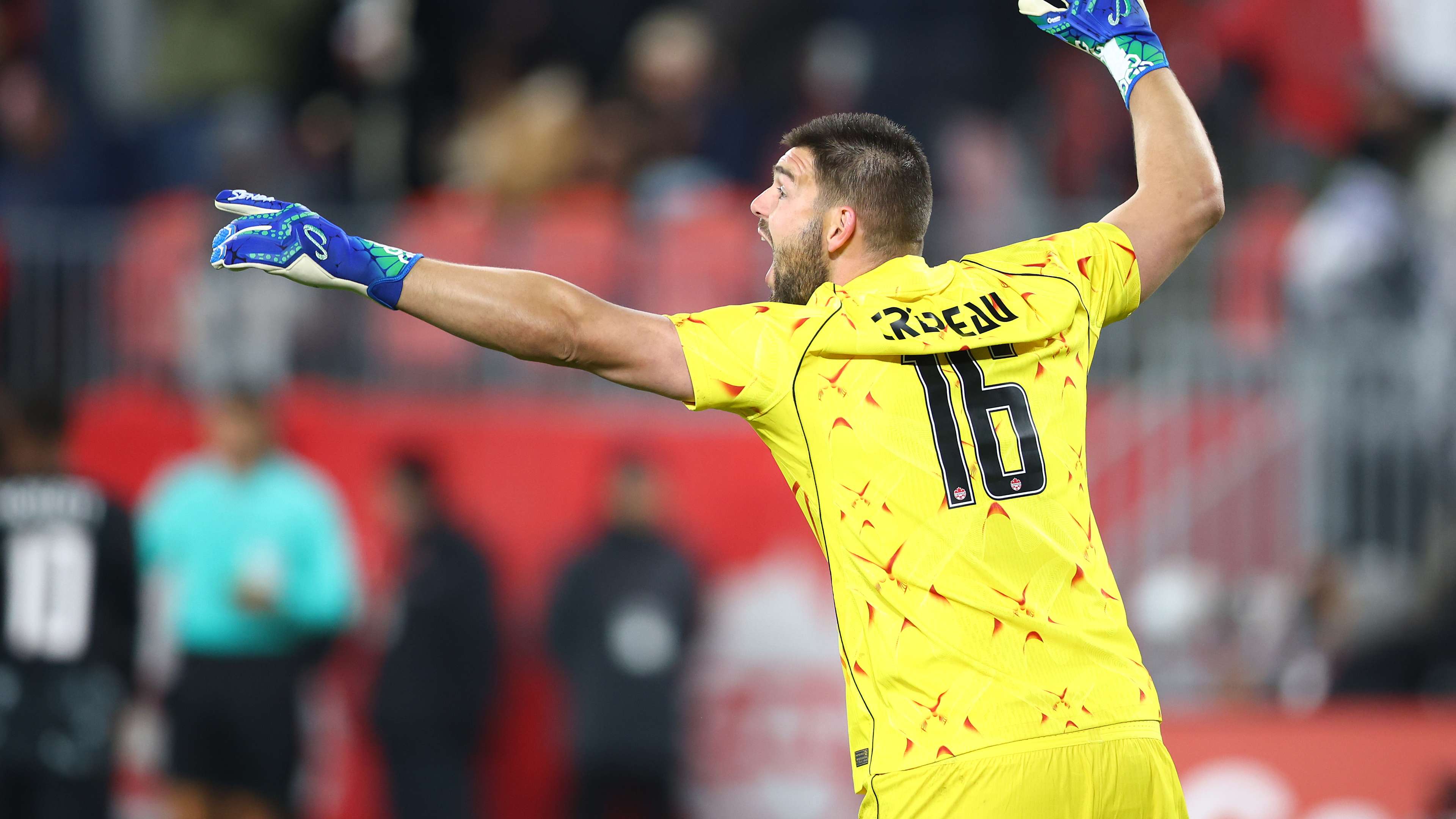
Why Maxime Crépeau is Canada’s first-choice goalkeeper
After sharing starts over Marsch’s initial 30 games, Maxime Crépeau has edged out Dayne St. Clair to claim the No. 1 goalkeeper role for the home World Cup.
The decision was based on Crépeau’s composure and leadership rather than purely on statistics — which might have favoured St. Clair. Both have had mixed club form in MLS, but Marsch trusted Crépeau’s steadiness and experience.
The announcement carried symbolic weight, made in the CF Montréal coffee room at Stade Saputo — the same spot where Marsch, as Montreal Impact coach, signed an 18-year-old Crépeau to his first professional deal.
Crépeau showed his worth in the friendlies, making two vital saves against Uzbekistan and again proving decisive versus Ireland — denying Mason Melia’s breakaway and saving Troy Parrott’s penalty in front of hometown fans in Montréal.
“I had chills, man. This team is ready, and everyone in this core has given everything,” Crépeau told TSN after the Ireland match. “We’re ready to represent 41.5 million people. We don’t take that lightly.”
Defensive transitions remain the biggest concern
Canada’s most pressing issue remains their vulnerability in defensive transition. Marsch’s high-energy counter-pressing system — dubbed “Maplepressing” — demands immense stamina, and fatigue often sets in late in games.
Against Ireland, Melia broke through late, forcing Crépeau into a key save after Canada had largely controlled the match. Similar lapses appeared against Uzbekistan, and earlier in March, Orri Óskarsson exploited them to score twice for Iceland in a 2-2 draw in Toronto.
“If you’re patient against Canada, you’ll get chances — and you have to take them,” Ireland coach Heimir Hallgrímsson remarked. “Canada should have won this match in the first half, but we could have nicked it in the end.”
De Fougerolles emerging as a bright spot
Moïse Bombito did not look near his best. Once rated among the top centre-backs in the Americas and the fastest in MLS and later Ligue 1, he struggled for rhythm in his return from an eight-month layoff against Uzbekistan.
Although he began camp claiming he’d be “100 percent” for the opener against Bosnia and Herzegovina, his movements looked laboured, leading to a collision with Derek Cornelius early on. After just 30 minutes, he exited with discomfort in his repaired leg and missed the Ireland match entirely.
In his absence, 20-year-old Luc De Fougerolles stepped up impressively. The Fulham defender, on loan at FCV Dender in Belgium, displayed poise and confidence, carrying the ball forward from the back.
“I’ve always had a bit of that, but I’ve really improved my decision-making by playing more games,” he told GOAL. “In men’s football, you’ve got to be smarter — you can’t always rely on physical battles. It’s about reading situations and finding solutions on the pitch.”
Set-piece evolution
Since Marsch’s arrival, set pieces have been a cornerstone of Canada’s play, guided by specialist coach Nicolas Gagnon. However, predictability had crept into their approach — until the Ireland match, which showcased new routines and clever variations.
Early on, Richie Laryea played a quick pass to Liam Millar instead of lofting a cross, while Cyle Larin darted to the near post. Stephen Eustáquio later opted for a short setup for Ismaël Koné’s long-range shot — a move that caught Ireland off guard.
Canada’s goal came from an Eustáquio corner delivered sharply into the danger area rather than floated high — a subtle yet effective tweak. “We scored off a set piece, which is great, but we can still be more dangerous,” De Fougerolles said. “We also conceded from a long throw, so there’s room to improve on both ends. It’s a work in progress.”
With training sessions now closed to the media, there may still be more tactical surprises in store as Marsch’s side fine-tunes its set-piece play ahead of the tournament.
Finding the finishing touch up front
For over a year, Marsch has maintained that goals will eventually come. Yet, across two games and 30 shots, Canada produced only six on target and three goals.
The forwards struggled. Larin’s international goal drought continued despite his club resurgence at Southampton, while Tani Oluwaseyi looked lively but couldn’t score. Juventus striker Jonathan David managed just one shot over 180 minutes.
Each contributed in build-up play, but finishing remains a major concern. Promise David, who had an offside goal versus Uzbekistan and looked threatening in limited minutes, could offer an alternative. However, he’s played more than 45 minutes only once in 10 international appearances.
Marsch has one week to decide how to balance his lineup and whether to reinforce attack or defence, especially after Marcelo Flores’ ACL injury opened a roster spot.
“It’s about making the right decisions,” Marsch explained. “When we create advantages, we must be cleaner in the final action — the timing, combinations, and speed to finish chances. We have firepower, and the goals will come.”
-
Indian envoy Vinay Mohan Kwatra meets senior US counter-terror official

-
Private Jet Crashes During Emergency Landing in Dominican Republic

-
Lewis Hamilton KISSES Kim Kardashian at Monaco Grand Prix; says 'It's amazing to have her support' - WATCH

-
Americans And Brits Have Completely Different Ideas Of What Middle-Class Means

-
Daily Tarot Horoscope For Monday, June 8, 2026